Scientists Achieve First-Ever Demonstration of 'Quadsqueezing' in Quantum Physics
Oxford researchers create powerful new method to control quantum systems using trapped ions, making previously hidden quantum behaviors visible and potentially revolutionizing quantum technology.

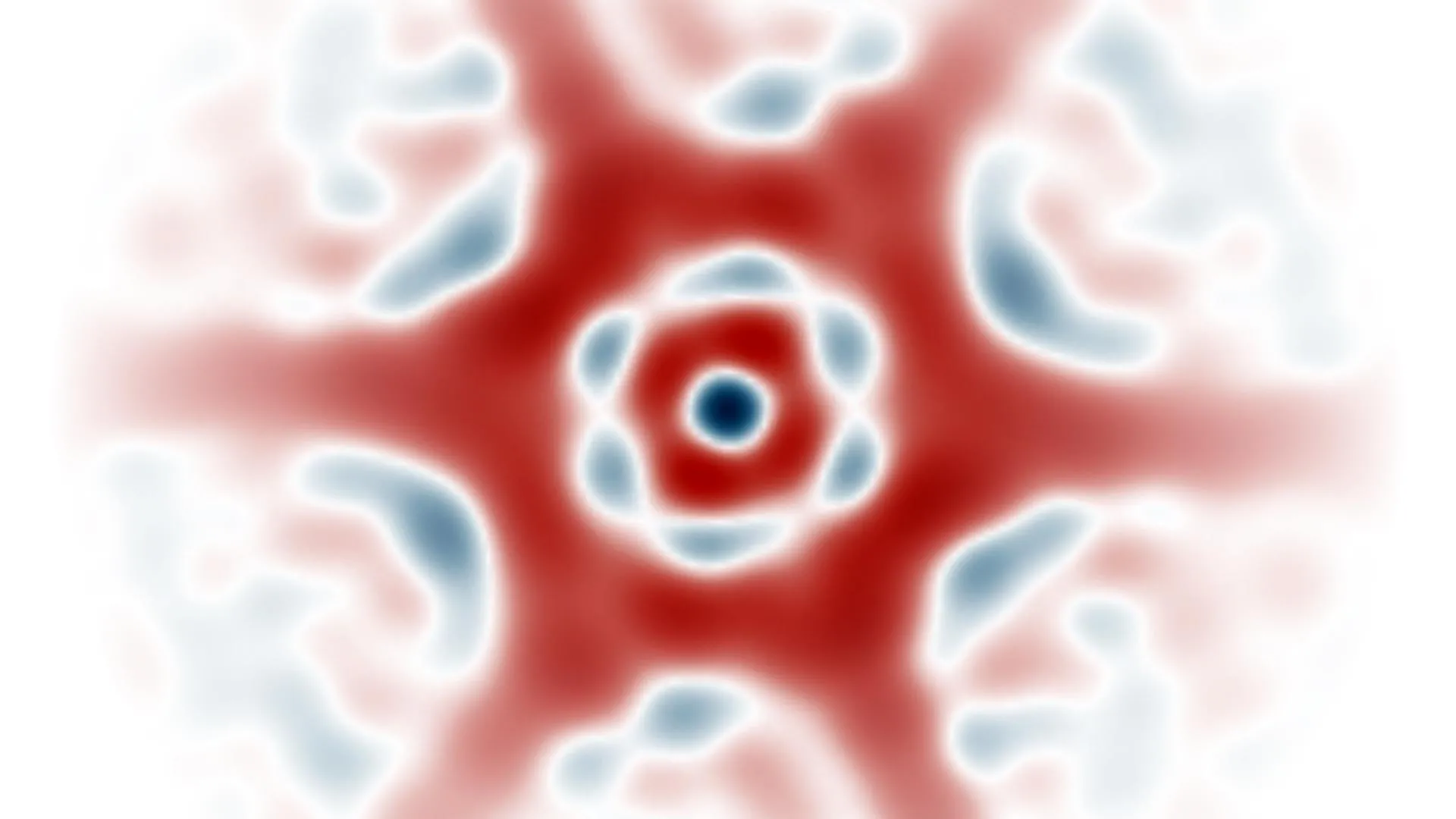
Researchers at the University of Oxford have achieved a groundbreaking demonstration of 'quadsqueezing,' a fourth-order quantum effect that had previously remained out of reach for experimental scientists. Using a single trapped ion and precisely controlled forces, the team created increasingly complex forms of quantum squeezing that could open new frontiers in quantum simulation, sensing, and computing. The work, published in Nature Physics, represents a significant advance in humanity's ability to harness and manipulate quantum mechanical phenomena for practical applications.
The experiment builds on the concept of quantum squeezing, a technique that redistributes quantum uncertainty to make certain measurements more precise while increasing uncertainty in complementary properties. Standard squeezing has already found practical applications in gravitational-wave detectors like LIGO, where squeezed light enhances the sensitivity needed to detect cosmic events. However, more complex forms of squeezing like trisqueezing and quadsqueezing had remained elusive due to their naturally weak effects and susceptibility to noise.
The Oxford team's breakthrough came through their innovative use of non-commuting forces acting simultaneously on the trapped ion. Each force individually produces predictable effects, but when applied together, they generate stronger and more complex quantum interactions due to non-commutativity—a fundamental quantum principle where the order of operations affects the outcome. Lead author Dr. Oana Băzăvan explained that while non-commuting interactions are often seen as problematic in laboratory settings, her team deliberately exploited this feature to amplify quantum effects.
The research builds on theoretical work from 2021 by Dr. Raghavendra Srinivas and Robert Tyler Sutherland, who proposed that carefully controlled combinations of simple forces could generate these higher-order quantum phenomena. The experimental validation of their theory demonstrates that previously inaccessible quantum behaviors can be made visible and controllable through clever engineering approaches. This represents a new paradigm for quantum control that could be applied to a wide range of quantum systems beyond trapped ions.
The implications of this work extend far beyond fundamental physics research. Quantum technologies rely on precise control of quantum states for applications ranging from ultra-sensitive sensors to quantum computers that could solve currently impossible computational problems. The ability to generate and control fourth-order quantum effects like quadsqueezing could lead to new types of quantum sensors with unprecedented sensitivity or enable new approaches to quantum information processing that take advantage of these complex quantum correlations.