Aalto Physicists Connect a Time Crystal to an External Device for the First Time
Magnons in superfluid helium-3 self-organized into a state that ticked for 108 cycles before a tiny mechanical membrane was used to read it out and tune its frequency — closing the gap between a theoretical curiosity and a real quantum component.

Physicists at Aalto University in Finland have for the first time linked a quantum time crystal to an external mechanical device, demonstrating that the strange self-organizing structure can be coupled, controlled and read out without immediately falling apart. The result, published this week in Nature Communications, is being hailed as a turning point for a phenomenon that until now has lived almost entirely inside isolated laboratory experiments and is widely regarded as one of the most counterintuitive states of matter ever observed.
A time crystal is a quantum many-body system whose constituents settle into a pattern that repeats periodically in time, even when no periodic driving is applied. The idea was proposed in 2012 by Frank Wilczek, the Nobel laureate at MIT, and was initially met with skepticism because it appeared to imply perpetual motion. Subsequent theoretical work showed that genuine time-translation-symmetry breaking is allowed in carefully prepared quantum systems, and the past decade has produced experimental signatures in nitrogen-vacancy diamonds, trapped ions and superconducting qubits. None of those demonstrations, however, were able to plug the time crystal into another device, because any meaningful coupling had so far destroyed the very order that defines the state.
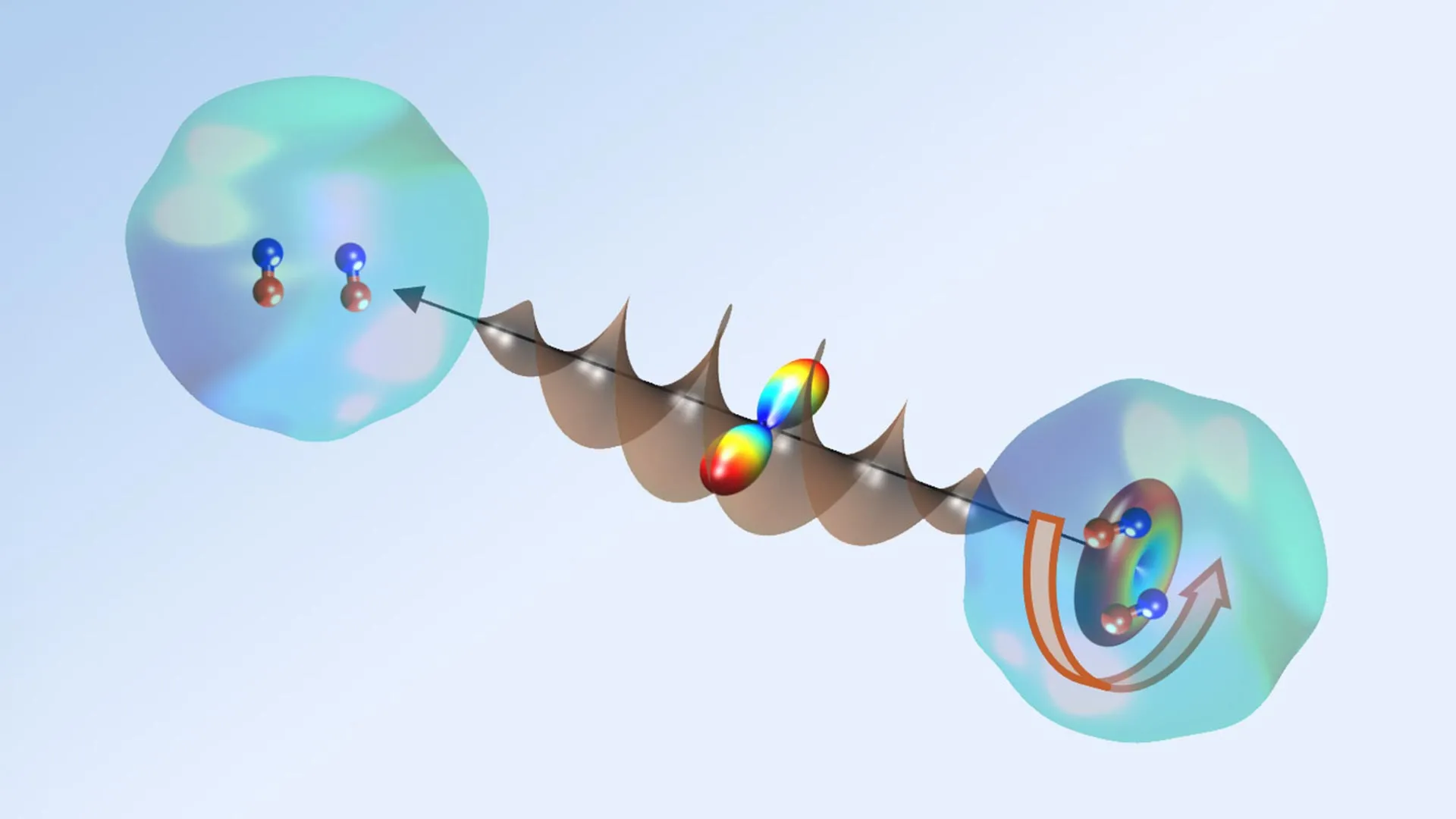
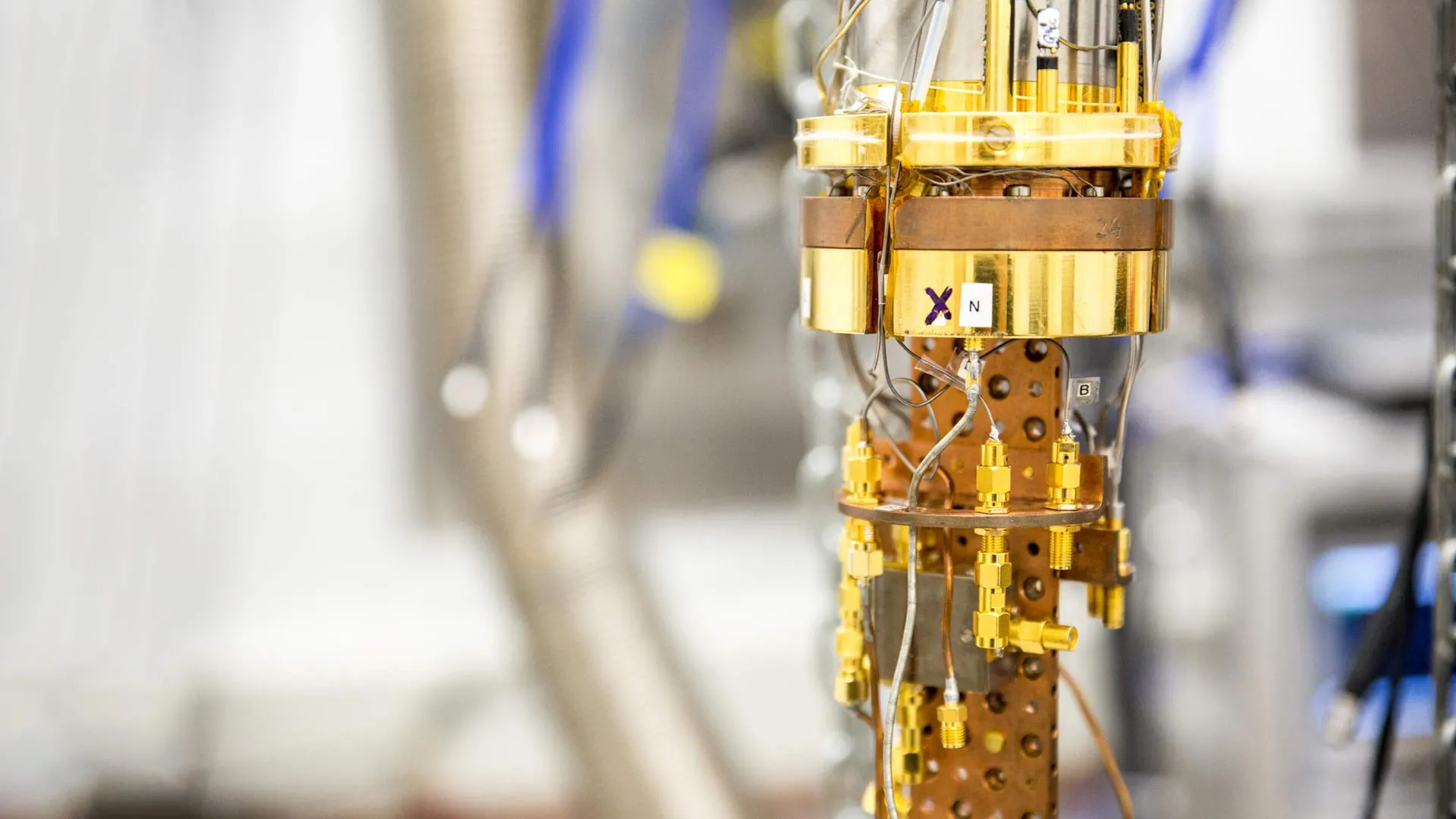
The Aalto team, led by Professor Jukka Pekola and Dr. Päivi Törmä, sidestepped that problem with a hybrid platform built around a sample of superfluid helium-3 cooled to 0.6 millikelvin in the group's ROTA cryostat. They injected magnons — collective spin excitations — into the superfluid using a brief radio-frequency pulse, then switched the drive off entirely. Once isolated, the magnons spontaneously locked into a coherent oscillation that persisted for as long as 108 cycles, or several minutes of laboratory time, before fading below the detection threshold. The breakthrough came when the researchers attached a tiny mechanical resonator, a vibrating membrane only a few microns across, to the same cryostat plate and showed that the membrane's oscillations both responded to and modulated the time crystal's pattern.
"We have always been told that a time crystal cannot be coupled to anything without ruining it," Pekola told reporters during a press briefing in Helsinki. "What this experiment shows is that with a careful enough choice of the coupling channel, you can actually use the time crystal as a building block in a larger quantum machine." Co-lead author Samuli Autti, now at Lancaster University, said the team had been able to tune the time crystal's frequency by simply changing the membrane's tension, demonstrating the kind of in-situ control that quantum engineers will need if the state is ever to be deployed in technology.
The practical interest is intense. Time crystals could in principle serve as ultra-stable quantum memory, frequency references and even error-correction primitives in next-generation quantum computers, where their persistent oscillations would offer a kind of native rhythm against which other qubit operations could be timed. Microsoft Research, IBM Quantum and Google's quantum AI team all have small efforts exploring time-crystal-assisted error correction, and several quoted Aalto's result as a proof of principle that the underlying state can be made to talk to the rest of a quantum stack.
Independent physicists called the result a milestone. Vedika Khemani of Stanford University, who proposed several of the original time-crystal protocols, said the experiment was "the first one that takes the phenomenon from a curiosity in an isolated sample to a controllable resource you could imagine designing into a chip." Andreas Gleichmann of the Max Planck Institute in Garching cautioned that scaling the helium-3 platform beyond a single time crystal would require fundamentally new cryogenic engineering, but said the Aalto demonstration "closes the gap between theory and a real device in the most important way you could ask for."