Finnish Physicists Measure an Energy Pulse Smaller Than a Zeptojoule, Setting a Record for Sensitivity
A superconducting detector built at Aalto University registered just 0.83 zeptojoules — about the work needed to lift a single red blood cell one nanometer — a milestone for quantum computing and the hunt for dark matter.

Researchers in Finland have measured a quantity of energy so small it strains comprehension: an electromagnetic pulse of just 0.83 zeptojoules, less than a trillionth of a billionth of a joule. The feat, achieved with an ultra-sensitive superconducting detector, sets a new record for calorimetry — the science of measuring heat and energy — and pushes instruments closer to the ultimate limits imposed by quantum mechanics.
A zeptojoule is an almost unimaginably tiny amount of energy. To put it in human terms, the researchers note that it is roughly the work required to lift a single red blood cell upward by one nanometer against the pull of Earth's gravity. Detecting an energy pulse below that threshold, and confirming the measurement, had never been accomplished by a calorimetric device until now.
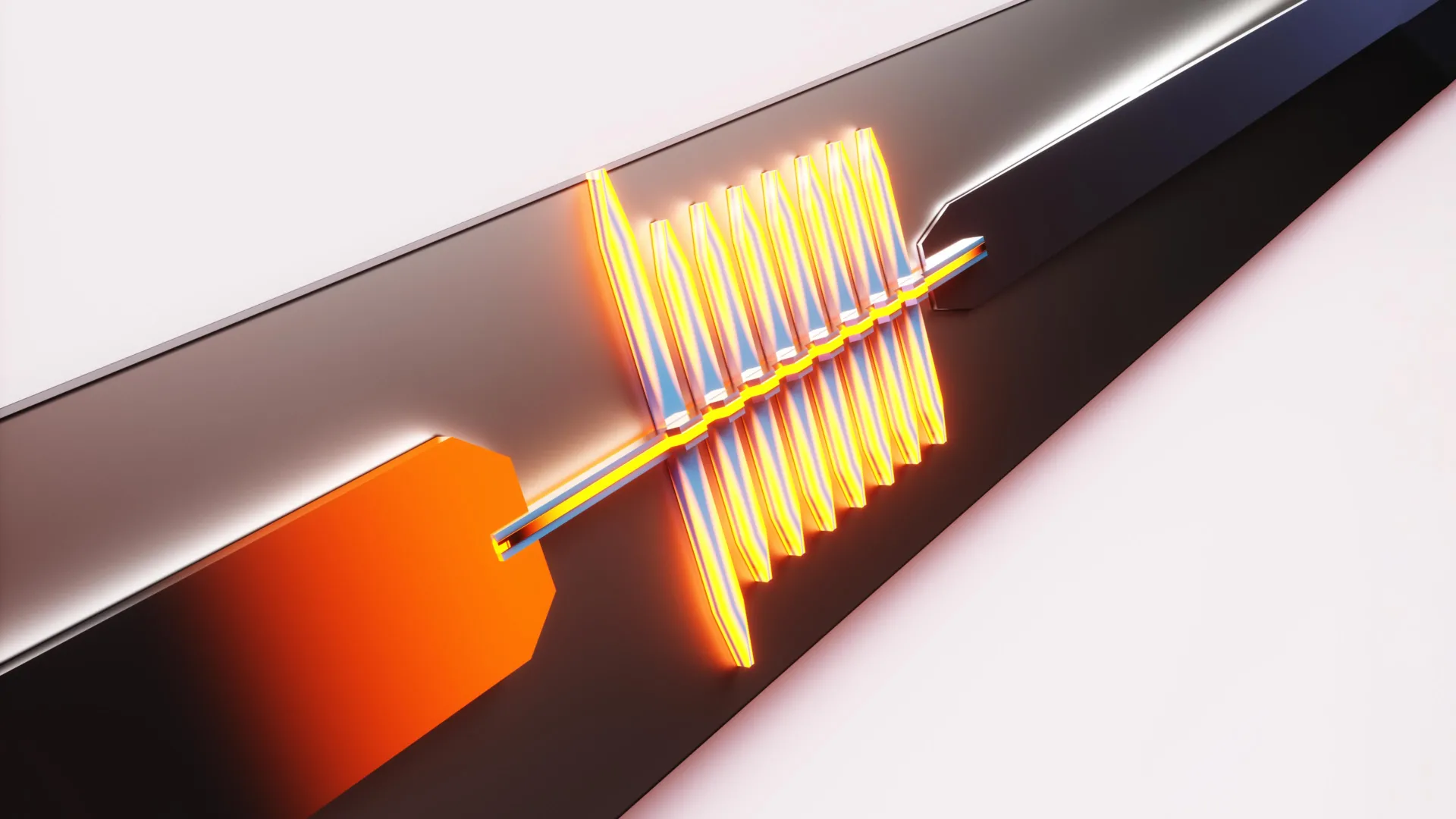
The work was led by Academy Professor Mikko Möttönen at Aalto University, in collaboration with the quantum-computing company IQM and the VTT Technical Research Centre of Finland. The team's findings were published in the journal Nature Electronics. At the heart of the achievement is a sensor built from two kinds of metal: superconductors, through which the test pulse could travel without resistance, and ordinary conductors that resist the current and convert its energy into a faint, measurable rise in temperature.
The detector relies on fragile superconducting materials that react to even the slightest change in temperature. The researchers fired a carefully calibrated microwave pulse into the device and, after filtering out background noise, were able to register the minuscule burst of energy it deposited. The precision required to isolate such a signal from the thermal hum of the surrounding environment is extraordinary, and it represents years of refinement in the design of so-called nanocalorimeters.
The payoff could be significant. Detectors this sensitive could sharpen the performance of quantum computers, where reading out the state of fragile quantum bits without disturbing them is one of the central engineering challenges. The same technology could enable reliable counting of individual photons — single particles of light — a capability prized in quantum communication and imaging. Perhaps most tantalizing, instruments operating at this scale could aid the search for dark matter, the invisible substance thought to make up most of the universe's mass, by registering the faint energy signatures that a passing dark-matter particle might leave behind. For now, the Finnish team has shown that the floor of what can be measured keeps dropping, one zeptojoule at a time.