Physicists Connect a "Time Crystal" to a Mechanical Device for the First Time
An Aalto University team coupled a time crystal made of magnons in superfluid helium-3 to a tiny mechanical oscillator, a step toward ultra-sensitive quantum sensors and better quantum memory.

Physicists have, for the first time, connected a so-called time crystal to an external mechanical device — a feat that lets researchers control one of the strangest states of matter ever created and could open the door to a new class of ultra-sensitive quantum sensors and more robust quantum-computer memory.
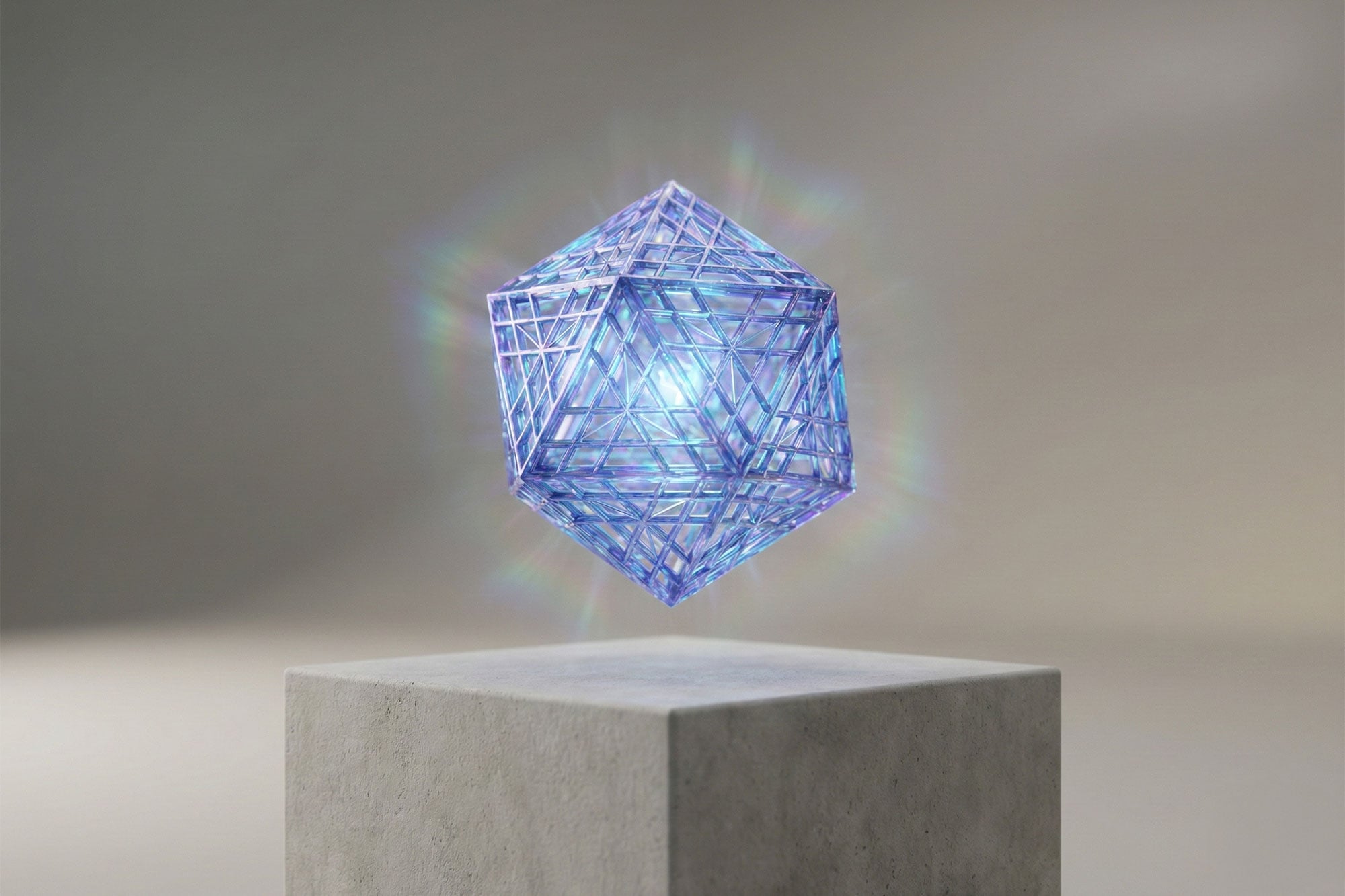
A time crystal is a quantum system that organizes itself into an endless, repeating pattern in time while sitting in its lowest energy state, defying the classical expectation that motion requires a continuous input of energy. The concept was proposed by Nobel laureate Frank Wilczek in 2012 and experimentally confirmed in 2016. Since then, time crystals have remained largely a laboratory curiosity, fascinating but isolated from the everyday machinery of physics experiments.
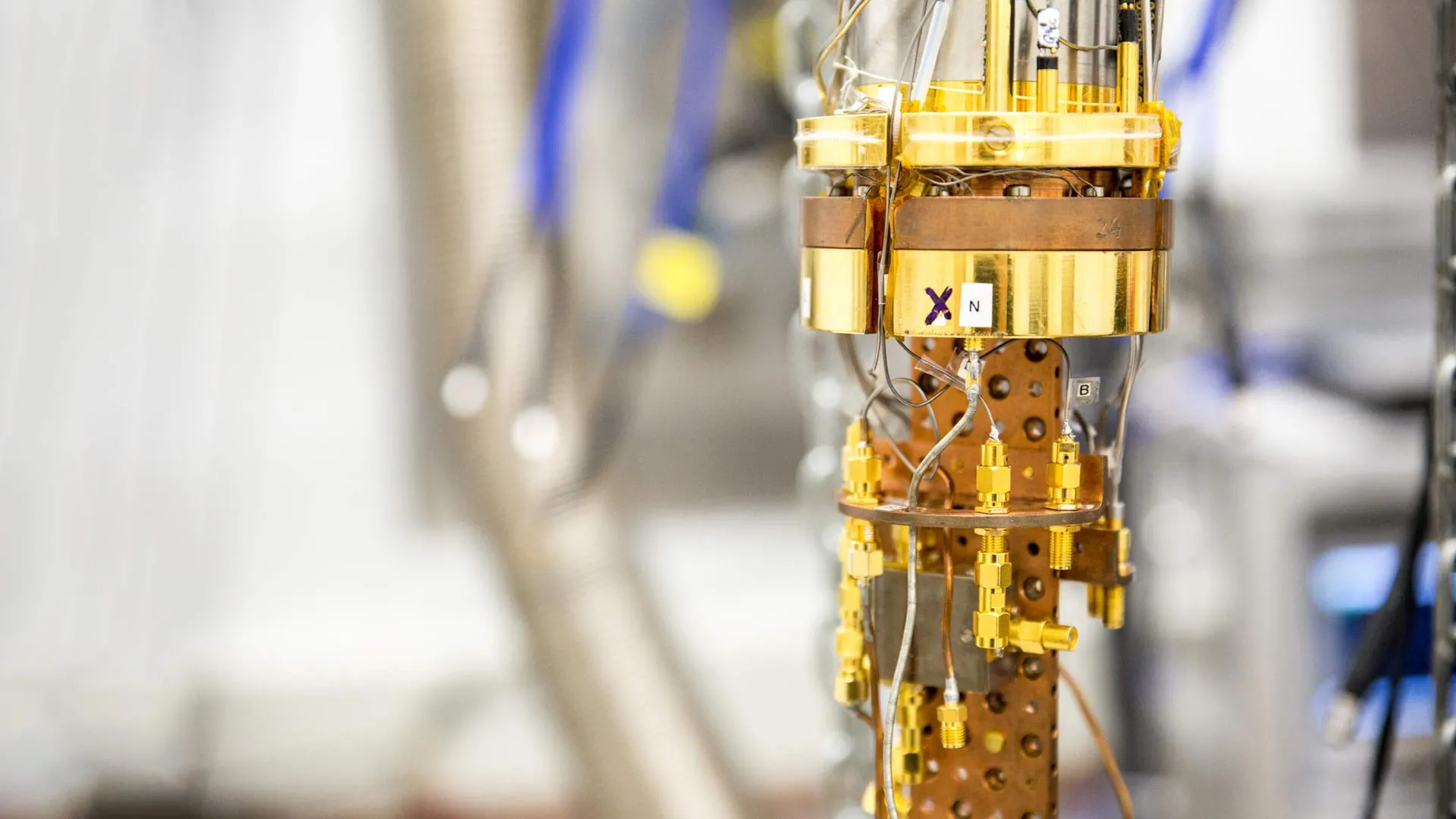
The new work, led by Academy Research Fellow Jere Mäkinen at Aalto University's Department of Applied Physics, changes that by turning a time crystal into an optomechanical system — one in which the quantum oscillations are coupled to a tiny mechanical oscillator that researchers can read out and manipulate. "Perpetual motion is possible in the quantum realm so long as it is not disturbed by external energy input," Mäkinen said in describing the result.
To build the time crystal, the team injected quasiparticles called magnons into a sample of superfluid helium-3 chilled to within a hair of absolute zero, using radio waves to set them in motion. When the input was switched off, the magnons spontaneously self-organized into a time crystal that persisted for as many as 108 cycles before fading — long enough for the researchers to let it interact with the nearby mechanical device and demonstrate genuine control over its behavior.
The advance matters because the same coupling that allowed the scientists to steer the time crystal could also make it exquisitely responsive to faint external signals, the basis for next-generation quantum sensors. The researchers also see potential applications in quantum memory, where stable, self-sustaining quantum states could help store information in future quantum computers.
Superfluid helium-3, cooled to within thousandths of a degree of absolute zero, has become one of the most fertile platforms for studying these exotic, far-from-equilibrium states, precisely because it is so well isolated from the noisy outside world. The challenge has always been the flip side of that isolation: a system shielded well enough to host a time crystal is also notoriously difficult to probe or control. By bridging the quantum world of the magnons and the comparatively tangible motion of a mechanical oscillator, the Aalto experiment offers a handle on a state of matter that had largely resisted manipulation. The findings were published in the journal Nature Communications, adding a practical dimension to a phenomenon that, only a decade ago, many physicists doubted could exist at all.