Physicists Pump a Quantum Experiment With Ordinary Sunlight, Generating Entangled Photon Pairs and Ghost Images Without a Laser
A Max Planck and University of Ottawa team violated Bell's inequality and reconstructed a hidden image using only sunlight focused on a nonlinear crystal — overturning a textbook assumption about coherence and quantum optics.
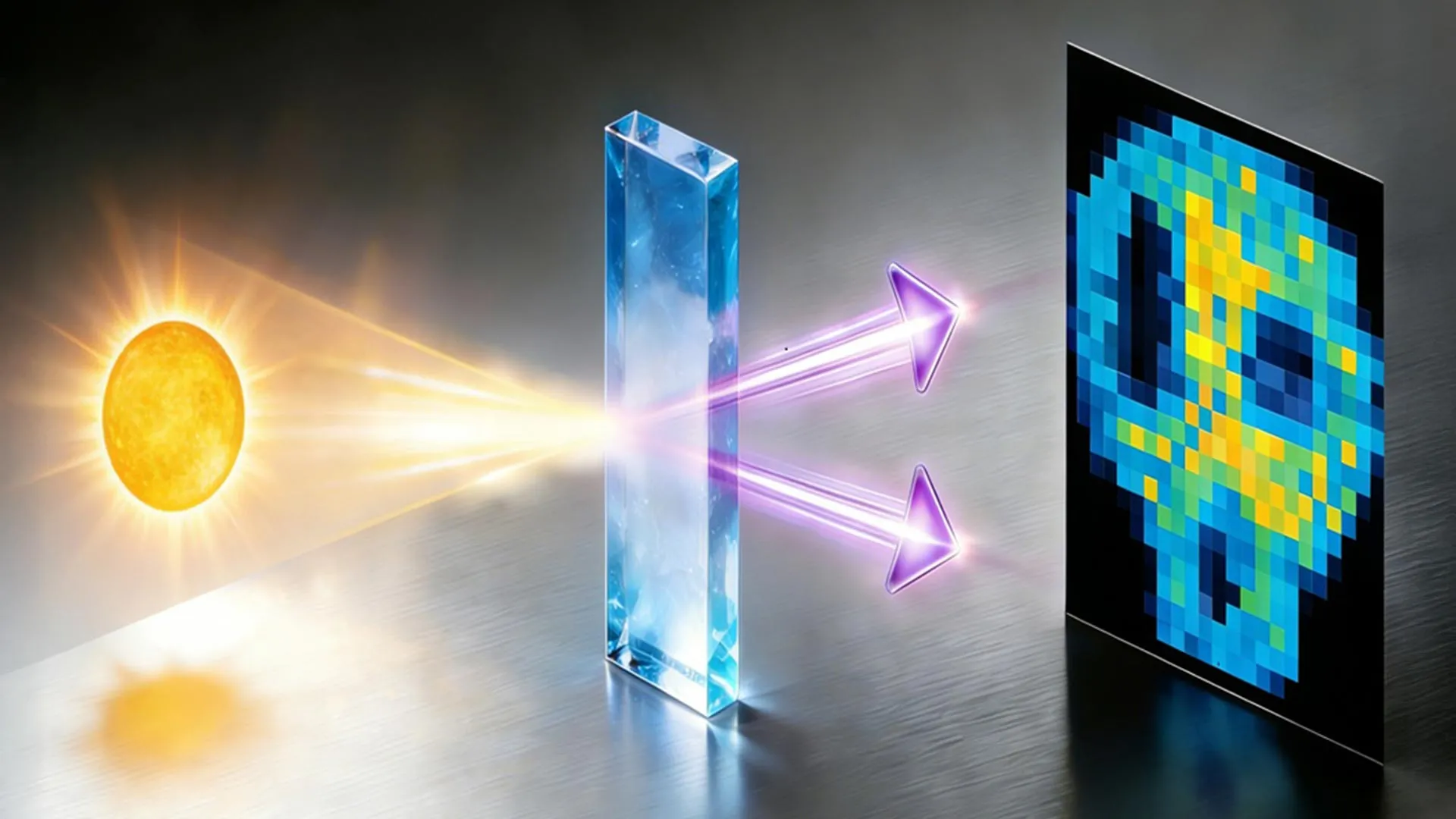
For nearly half a century, physicists treated the laser as the indispensable workhorse of quantum optics — the only practical source coherent enough to coax pairs of photons into the strange, instantaneously correlated state known as entanglement. A team led by the Max Planck Institute for the Science of Light in Germany, working with the University of Ottawa, has now done the same thing with ordinary sunlight, demonstrating that the messy, incoherent rays streaming off the surface of a 5,500-degree star can be funneled into a nonlinear crystal and emerge as entangled photon pairs strong enough to violate Bell's inequality and perform quantum ghost imaging. The results, posted to the arXiv preprint server last week and summarized by ScienceDaily on May 17, overturn a deeply held assumption about what kind of light is needed to do quantum.
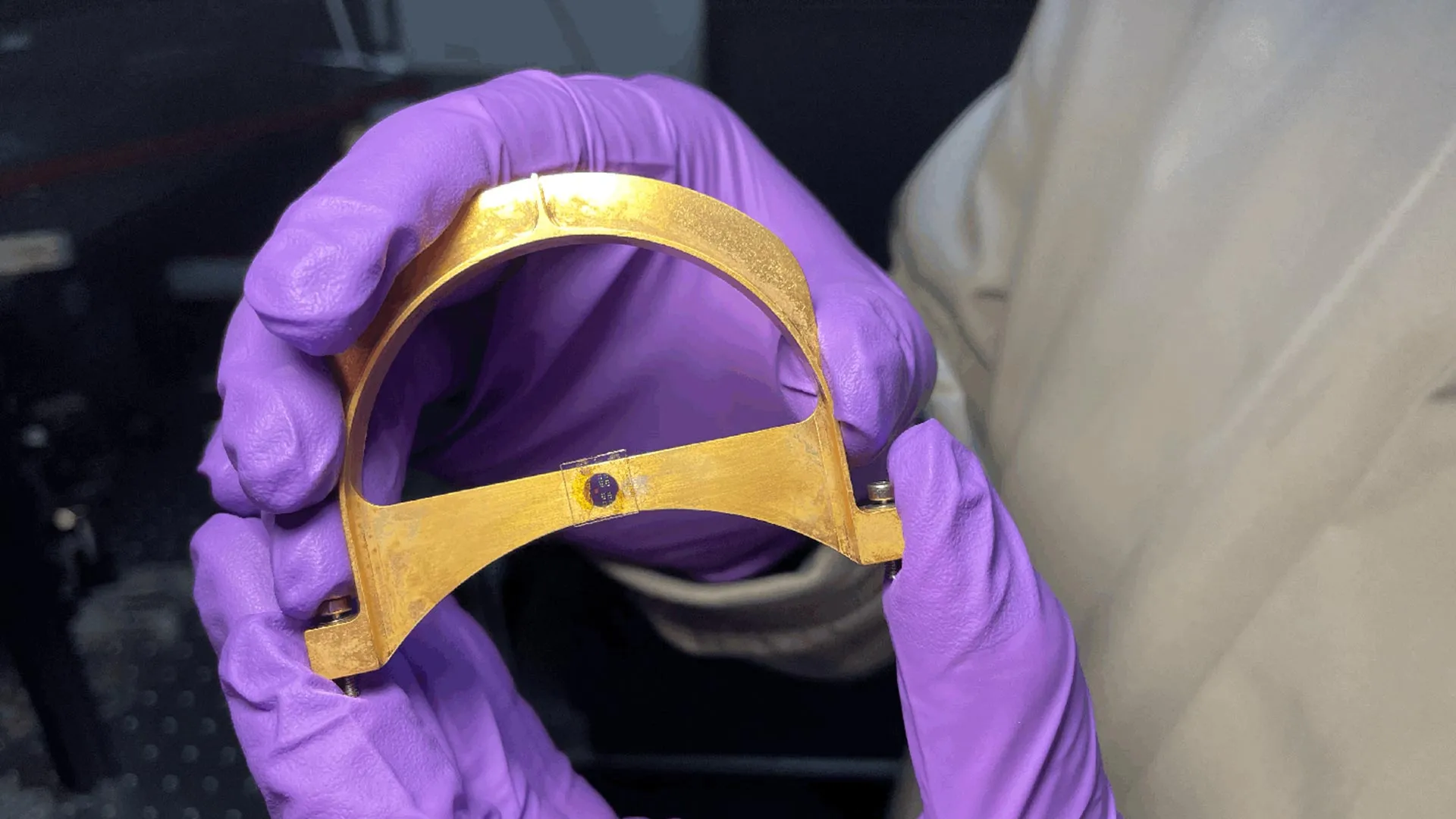
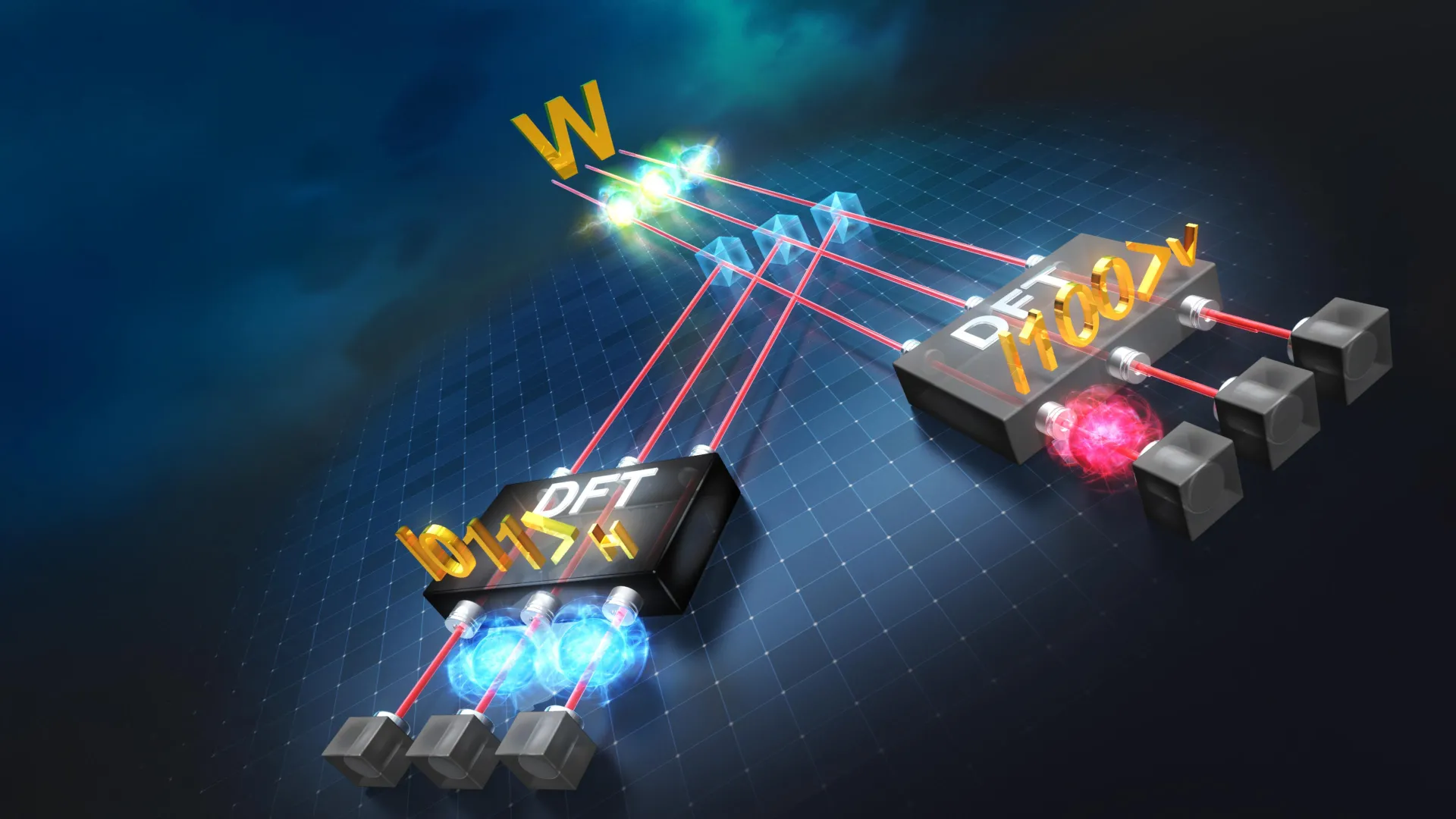
The experiment relies on a 60-year-old optical technique called spontaneous parametric down-conversion, in which a single high-energy photon is split inside a beta-barium-borate crystal into two lower-energy daughter photons that are entangled in their polarization. The standard recipe uses a tightly tuned laser as the pump, and textbooks have long treated coherence as a precondition. Lead author Stuti Joshi and colleagues showed instead that focusing concentrated sunlight onto the same crystal yields a stream of polarization-entangled pairs with a Bell-state fidelity of 0.939 plus or minus 0.027 and a concurrence — a common measure of entanglement quality — of 0.905, well above any classical threshold. The team measured a Bell parameter of 2.54, comfortably violating the classical maximum of 2.
The physics works because the entanglement created in down-conversion does not depend on the pump's coherence at all; it depends on energy and momentum conservation inside the crystal. Sunlight contains every wavelength, but only the slice that satisfies the phase-matching condition contributes, and that slice is enough to produce a usable rate of pairs. The researchers measured generation rates within an order of magnitude of comparable laser systems, and they went further: by performing a quantum ghost-imaging experiment in which one photon passes through a stencil and a single-pixel detector counts pairs at a remote camera, they reconstructed an image of the masked object using only sunlight as the source.
The practical implications are striking. By eliminating the laser, the system removes a costly, power-hungry, alignment-sensitive component from quantum experiments and replaces it with a free, ubiquitous resource. The authors point to applications in remote sensing, where carrying a laser is impractical, and in space-based quantum communication, where solar power is abundant but laser hardware is mass-constrained. "What we've shown is that the universe's most natural light source is already capable of producing the quantum correlations we thought required engineered coherence," co-author Ebrahim Karimi of Ottawa said in a statement.
Quantum information scientists not involved with the work cautioned that turning the demonstration into a deployable technology will require sun-tracking optics and clever filtering to manage the enormous background of unentangled photons. Still, several called the result a meaningful step. Caltech quantum optics professor Jeff Kimble, in comments to Physics World, said the experiment "forces us to retire some textbook intuitions about what coherence buys you." If sunlight can pump a quantum protocol, he added, then the next generation of quantum sensors and imaging devices may be far simpler — and far more rugged — than anything in today's laboratories.