Scientists Solve Mystery of 'Breathing' Ultrafast Lasers Using Unified Theory
International team develops mathematical framework explaining why some laser pulses rhythmically grow and shrink like they're breathing.
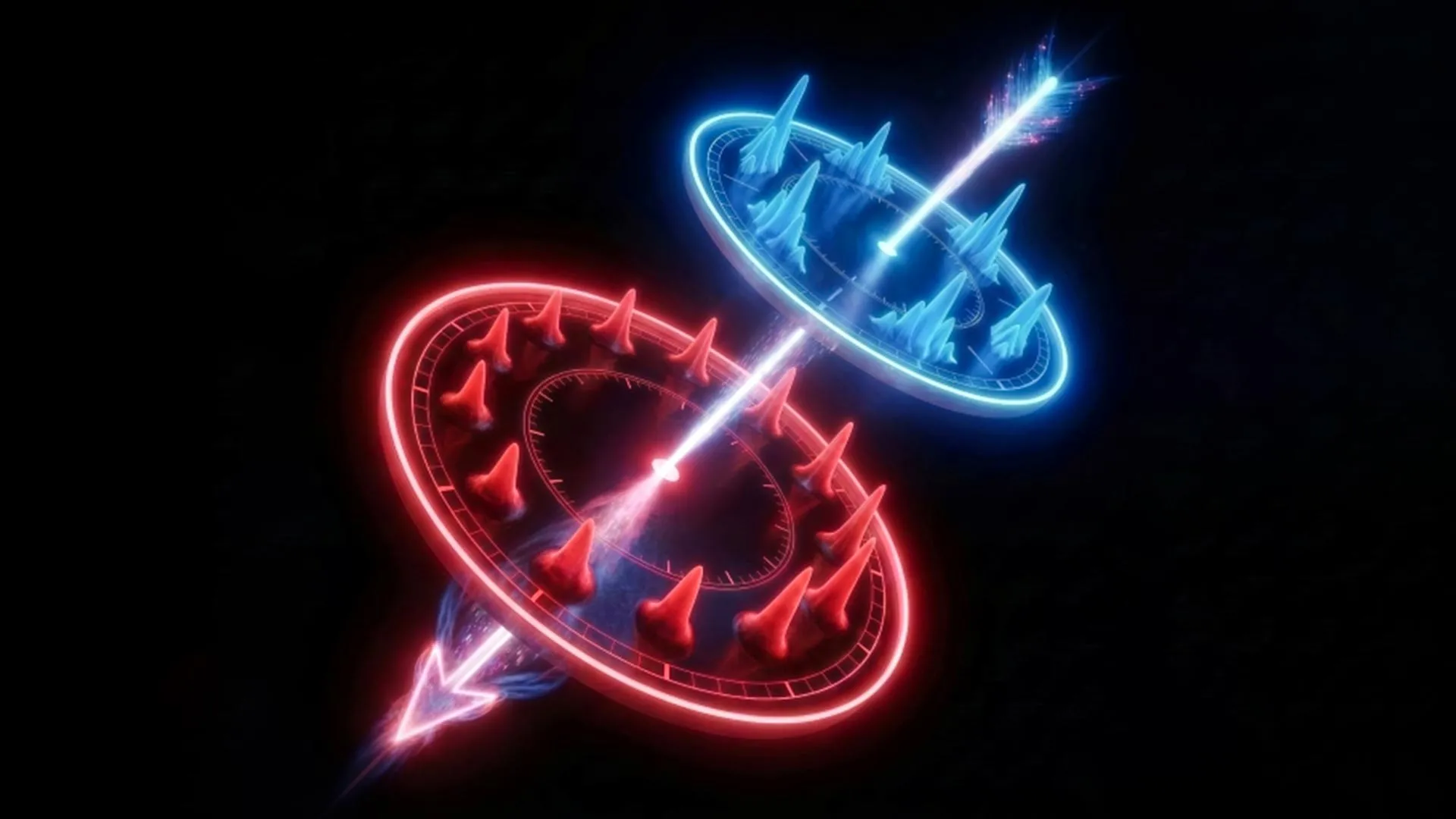
An international team of researchers has finally solved a puzzle that has frustrated laser physicists for years: how mysterious "breather" laser pulses work. These unusual ultrafast lasers produce light pulses that rhythmically grow and shrink instead of staying steady, creating an oscillation that resembles breathing. The breakthrough unites two very different types of laser dynamics under a single mathematical model for the first time.
Ultrafast lasers generate incredibly short bursts of light lasting only picoseconds or femtoseconds, and are widely used in eye surgery, biomedical imaging, advanced manufacturing, and precision materials processing. Inside these lasers, pulses of light travel repeatedly through a laser cavity, where under certain conditions they can form stable wave packets called solitons that maintain their shape as they move. Most solitons behave predictably, producing regular pulses like a heartbeat, but breather lasers constantly evolve in a non-equilibrium state.
Previous experiments revealed two distinct forms of breathing behavior in these systems. When lasers operate above the minimum power threshold needed to sustain pulse emission, solitons oscillate rapidly, completing breathing cycles after just a few cavity roundtrips. Below the threshold, the behavior becomes dramatically slower, requiring hundreds or even thousands of roundtrips to complete a single breathing cycle. Until now, researchers relied on two separate mathematical models to explain these different regimes.
The new study, which included Dr. Sonia Boscolo from Aston University's Institute of Photonic Technologies, was published in Physical Review Letters under the title "Unified model for breathing solitons in fiber lasers: Mechanisms across below- and above-threshold regimes." The researchers created a revised model combining rapid light evolution inside the laser cavity with slower changes in the laser's energy supply, demonstrating that both breathing forms arise from related underlying physics.
The unified framework accounts for both the fast dynamics of electromagnetic fields and the slower thermal and mechanical changes in the laser system. By showing that above- and below-threshold breathing solitons are not separate phenomena but manifestations of the same underlying physics, the research provides a deeper understanding that could help scientists improve laser stability and tailor ultrafast laser systems more effectively for specialized applications in medicine, manufacturing, and scientific research.