Physicists Finally Solve Mystery of 'Breathing' Ultrafast Lasers Using Unified Mathematical Framework
International research team develops breakthrough model explaining why some laser pulses rhythmically grow and shrink like they're breathing.
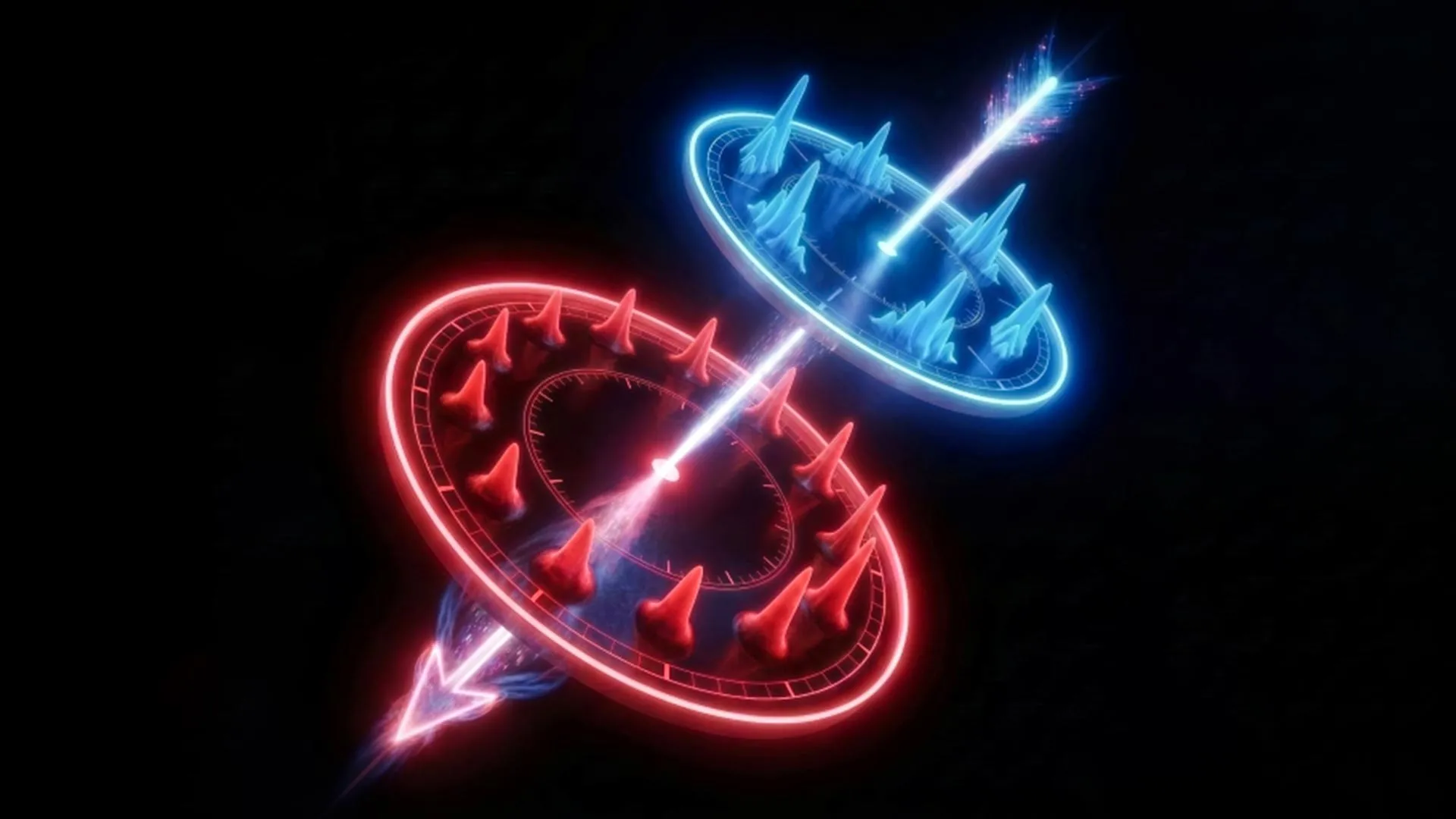
An international team of researchers, including scientists from Aston University, has finally cracked the code behind one of laser physics' most perplexing phenomena: ultrafast lasers that produce pulses which rhythmically grow and shrink in a pattern resembling breathing. The breakthrough unites two previously separate types of laser behavior under a single mathematical framework for the first time, potentially revolutionizing the design of ultrafast laser systems used in medical procedures, manufacturing, and scientific research.
Ultrafast lasers generate incredibly brief bursts of light lasting only picoseconds or femtoseconds, making them invaluable for applications ranging from eye surgery to precision materials processing. Under normal conditions, these lasers produce stable, regular pulses similar to a steady heartbeat. However, under certain circumstances, the pulses begin exhibiting "breathing" behavior, continuously evolving in intensity as they travel through the laser cavity rather than maintaining consistent output.
The mystery deepened when experiments revealed two distinctly different types of breathing behavior depending on operating conditions. When lasers operate above their minimum power threshold, soliton pulses oscillate rapidly, completing their breathing cycles in just a few cavity roundtrips. Below the threshold, the behavior becomes dramatically slower, with breathing cycles requiring hundreds or even thousands of roundtrips to complete. Until now, scientists required two separate mathematical models to explain these different regimes.
Dr. Sonia Boscolo from the Aston Institute of Photonic Technologies contributed to the groundbreaking study published in Physical Review Letters titled "Unified model for breathing solitons in fiber lasers: Mechanisms across below- and above-threshold regimes." The research team created a revised model that accounts for both the rapid evolution of light inside the laser cavity and the slower changes in the laser's energy supply system, demonstrating that both breathing behaviors arise from the same underlying physics.
The unified explanation reveals that the two forms of breathing are not separate phenomena but instead represent different manifestations of the same fundamental process occurring under different energy conditions. This deeper understanding could lead to more stable ultrafast laser designs and enable scientists to better control and predict laser behavior. The breakthrough has significant implications for advancing laser technology used in biomedical imaging, advanced manufacturing, and cutting-edge scientific research where precise control over ultrafast light pulses is essential for optimal performance.