Physicists Solve Mystery of 'Breathing' Ultrafast Lasers Using Unified Theory
New mathematical framework explains how laser pulses rhythmically grow and shrink, uniting two previously separate physical phenomena.
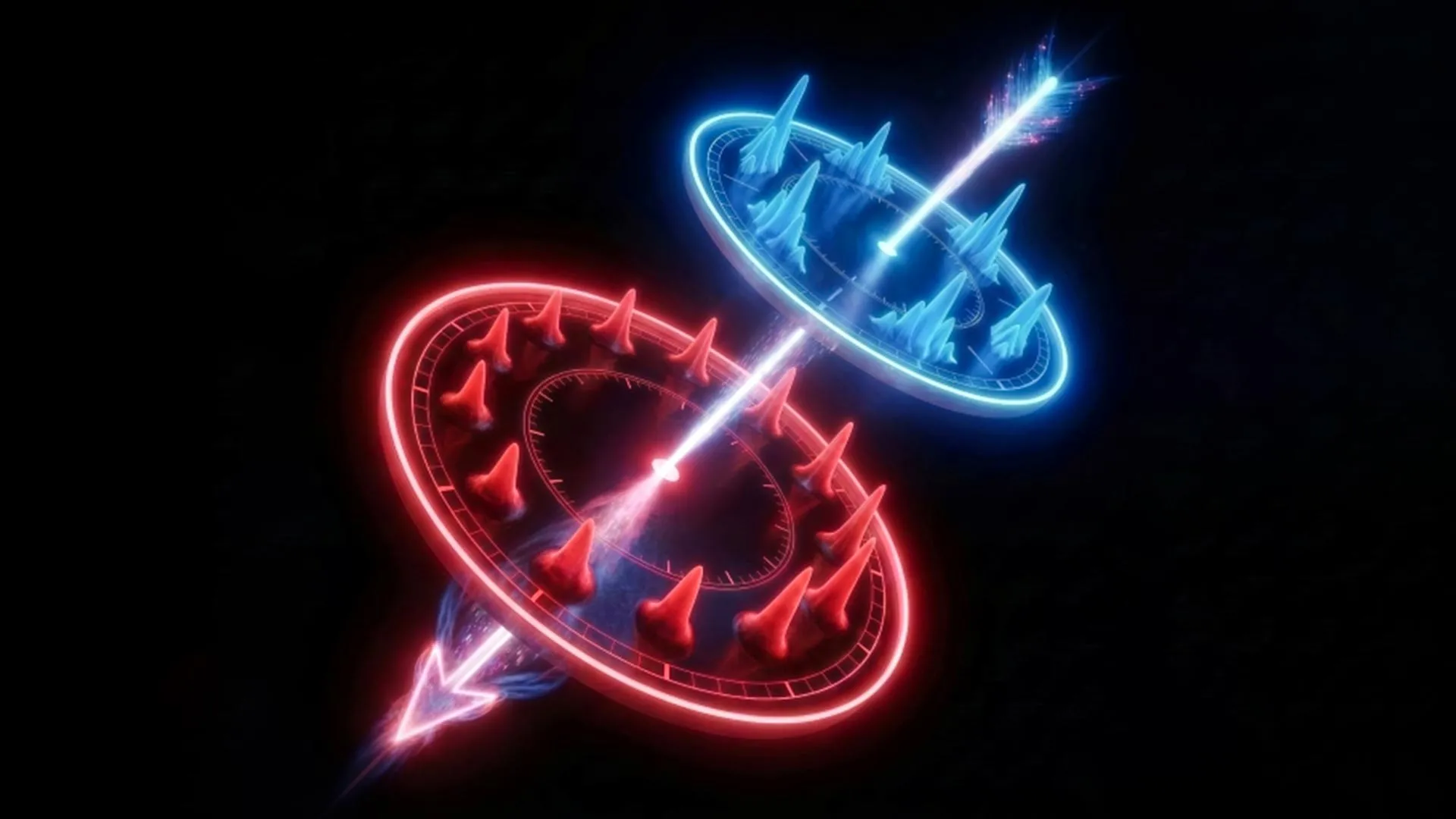
An international team of researchers has finally solved the longstanding puzzle of "breather" laser pulses, developing a unified mathematical framework that explains how these unusual ultrafast lasers produce light that rhythmically grows and shrinks like breathing. The breakthrough unites two very different types of laser dynamics under a single theoretical model for the first time.
Breather lasers represent a fascinating departure from typical ultrafast laser behavior, where stable wave packets called solitons usually maintain consistent shapes as they travel through laser cavities. Instead of producing regular pulses like a steady heartbeat, breather lasers create outputs that continually evolve, with pulses repeatedly growing and shrinking during successive trips through the laser cavity in a non-equilibrium state.
Previous research had identified two distinct forms of breathing behavior that seemed to require separate explanations. When lasers operate above the minimum power threshold needed for pulse emission, solitons oscillate rapidly with breathing cycles that repeat after only a few cavity roundtrips. Below the threshold, the behavior becomes dramatically slower, with solitons requiring hundreds or thousands of roundtrips to complete a single breathing cycle.
The new study, which included Dr. Sonia Boscolo from the Aston Institute of Photonic Technologies, demonstrates that both regimes can be described within one unified framework published in Physical Review Letters. The researchers created a revised model combining the rapid evolution of light inside laser cavities with slower changes in the laser's energy supply, showing that the two forms of breathing arise from related underlying physics rather than separate phenomena.
This deeper understanding of ultrafast laser dynamics could help scientists improve laser stability and design more effective systems for applications including eye surgery, biomedical imaging, advanced manufacturing, and precision materials processing. The work represents a significant advance in controlling and predicting the behavior of these technologically important devices.