Scientists Create 'Impossible' LED From Insulating Nanoparticles
Cambridge researchers use molecular antennas to power materials that normally can't conduct electricity, producing ultra pure near infrared light for medical applications.
Scientists at the University of Cambridge have achieved what was once considered impossible by creating LEDs from materials that cannot normally conduct electricity. Using specially designed "molecular antennas," the research team found a way to funnel electrical energy into insulating nanoparticles, producing ultra pure near infrared light with remarkable efficiency for potential use in medical imaging, communications technology, and advanced sensors.
The breakthrough centers on lanthanide doped nanoparticles (LnNPs), materials prized for producing exceptionally stable and highly pure light in the second near infrared region. This type of light can penetrate deep into biological tissue, making these particles extremely valuable for medical imaging and sensing applications. However, their status as electrical insulators had prevented scientists from incorporating them into electronic devices like LEDs, creating a significant technological barrier.
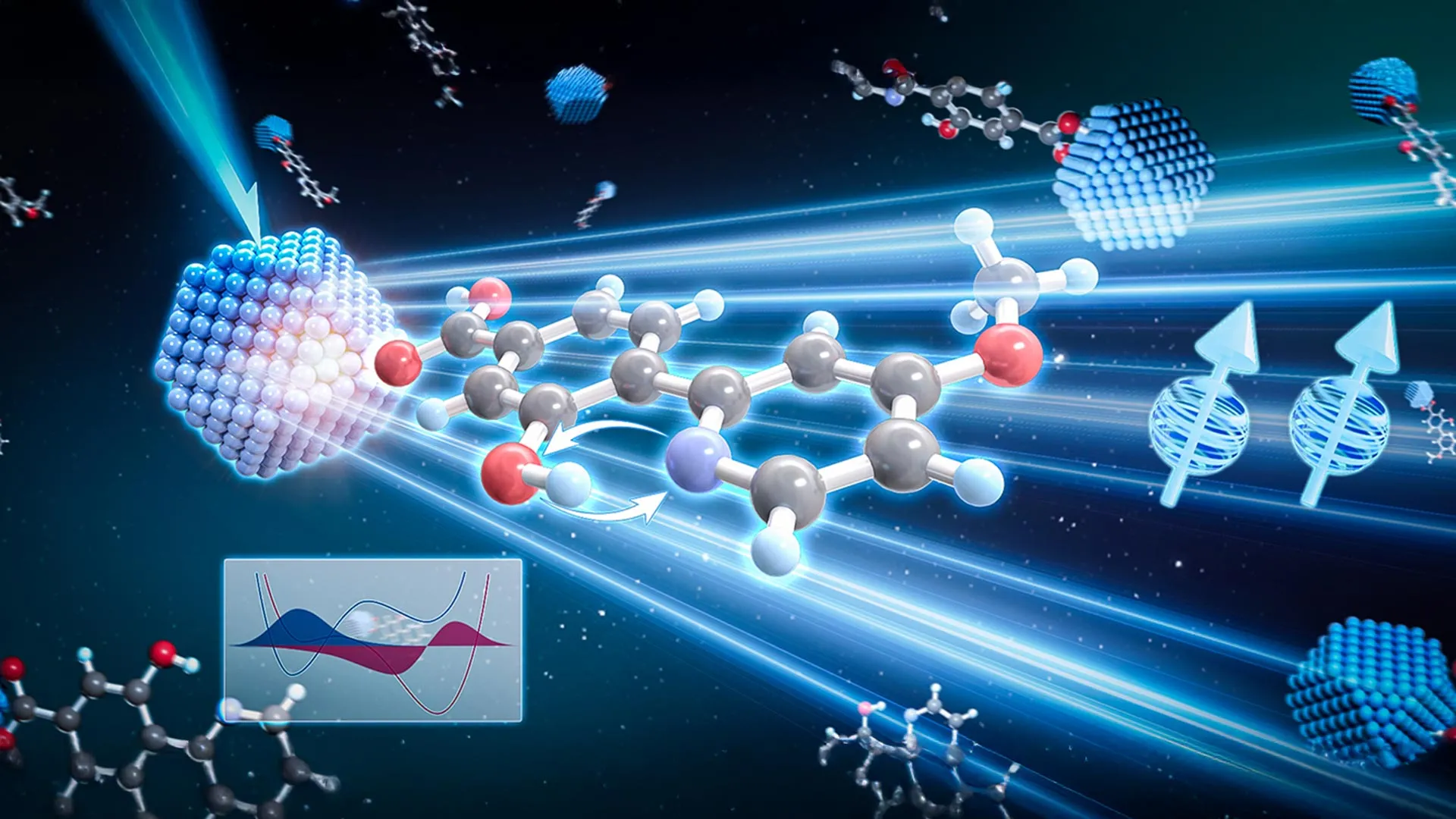
Researchers at Cambridge's Cavendish Laboratory overcame this obstacle by creating a hybrid system that combines organic molecules with the insulating nanoparticles. They attached an organic dye called 9-anthracenecarboxylic acid (9-ACA) to the surface of the nanoparticles, creating molecular structures that act like antennas capable of capturing electrical energy and transferring it to the otherwise unpowerable materials.
"These nanoparticles are fantastic light emitters, but we couldn't power them with electricity. It was a major barrier preventing their use in everyday technology," said Professor Akshay Rao, who led the research. "We've essentially found a back door to power them. The organic molecules act like antennas, catching charge carriers and then 'whispering' it to the nanoparticle through a special triplet energy transfer process, which is surprisingly efficient."
Inside the newly designed LEDs, electrical charges are directed into the 9-ACA molecules rather than the nanoparticles themselves. These molecules absorb the incoming energy and enter an excited "triplet state," which in many optical systems represents wasted energy. However, in this innovative design, the triplet energy transfers to lanthanide ions inside the nanoparticles with more than 98% efficiency. The resulting "LnLEDs" operate at relatively low voltage while producing bright, highly pure light that could revolutionize medical imaging and other applications requiring precise optical characteristics. The findings were published in Nature.