Scientists Create 'Impossible' LED Using Molecular Antennas to Power Insulating Materials
Cambridge researchers achieve breakthrough by electrically powering materials that cannot conduct electricity, opening door to ultra-pure medical imaging devices.

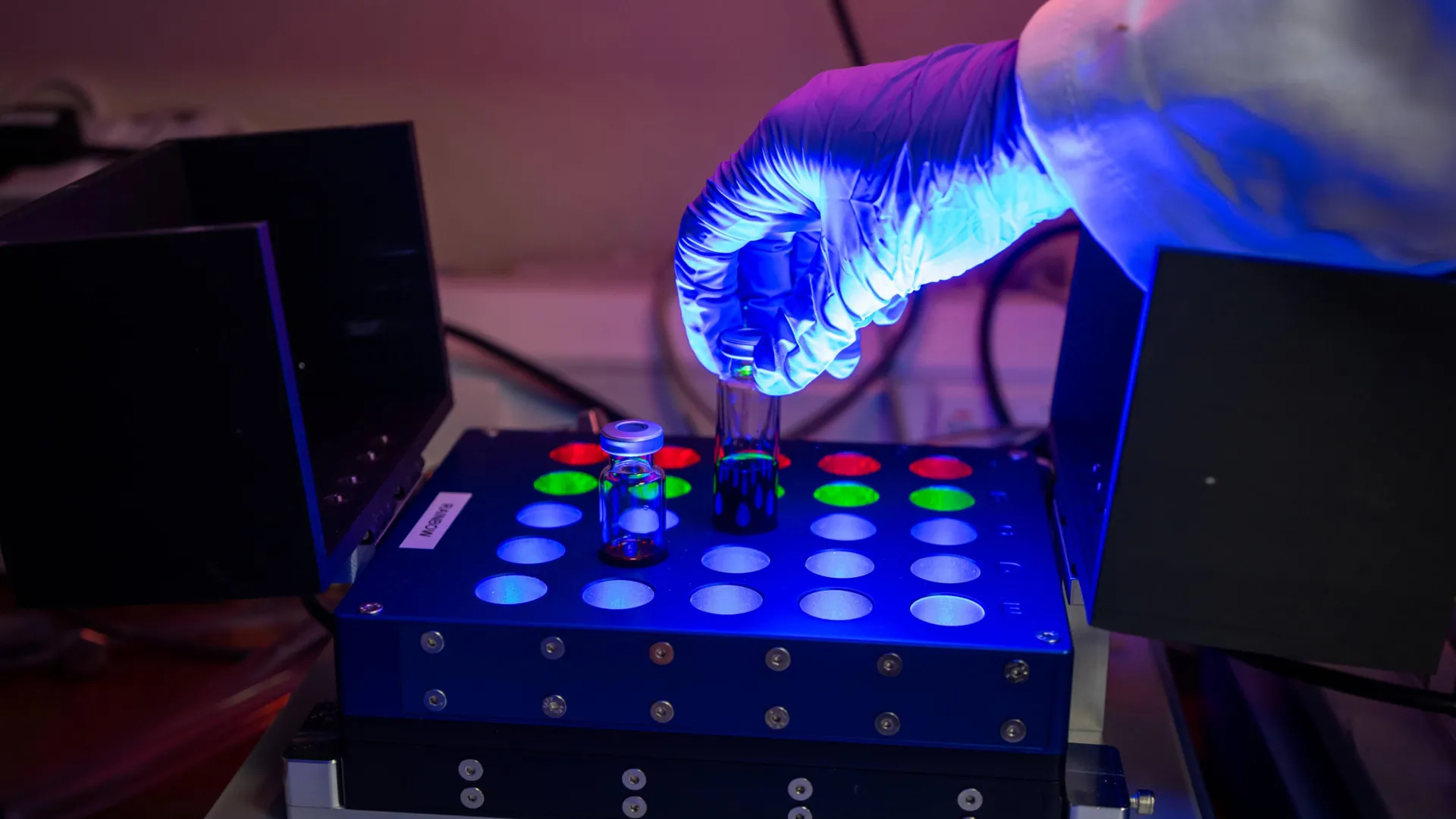
Scientists at the University of Cambridge have achieved what was once considered impossible by developing a method to electrically power insulating nanoparticles, creating an entirely new type of LED with potential applications in medical imaging and communications technology. The breakthrough relies on tiny organic "molecular antennas" that funnel electrical energy into materials that normally cannot conduct electricity, producing ultra-pure near infrared light with remarkable efficiency.
The research centers on lanthanide doped nanoparticles, materials known for producing exceptionally stable and highly pure light in the second near infrared region, which can penetrate deep into biological tissue. Despite their optical advantages, these nanoparticles are electrical insulators, meaning they cannot carry electric current—a limitation that has prevented their use in electronic devices like LEDs until now.
Researchers overcame this fundamental obstacle by attaching specially selected organic molecules to the nanoparticles, creating a hybrid system capable of transferring electrical energy into the insulating material. Professor Akshay Rao, who led the research at the Cavendish Laboratory, explained that the organic molecules act like antennas, capturing charge carriers and transferring energy to the nanoparticles through a highly efficient triplet energy transfer process.
The resulting devices, called "LnLEDs," operate at relatively low voltage while achieving more than 98% energy transfer efficiency from the organic molecules to the lanthanide ions. Inside these LEDs, electrical charges are directed into organic dye molecules that enter an excited "triplet state," which then transfers energy to the insulating nanoparticles with extraordinary efficiency, causing them to emit bright, highly pure light.
The technology could revolutionize medical imaging, communications, and sensor applications by providing ultra-pure light sources that were previously impossible to create with electrical power. The breakthrough demonstrates how combining organic and inorganic materials can overcome fundamental physical limitations, potentially opening new avenues for optoelectronic device development.