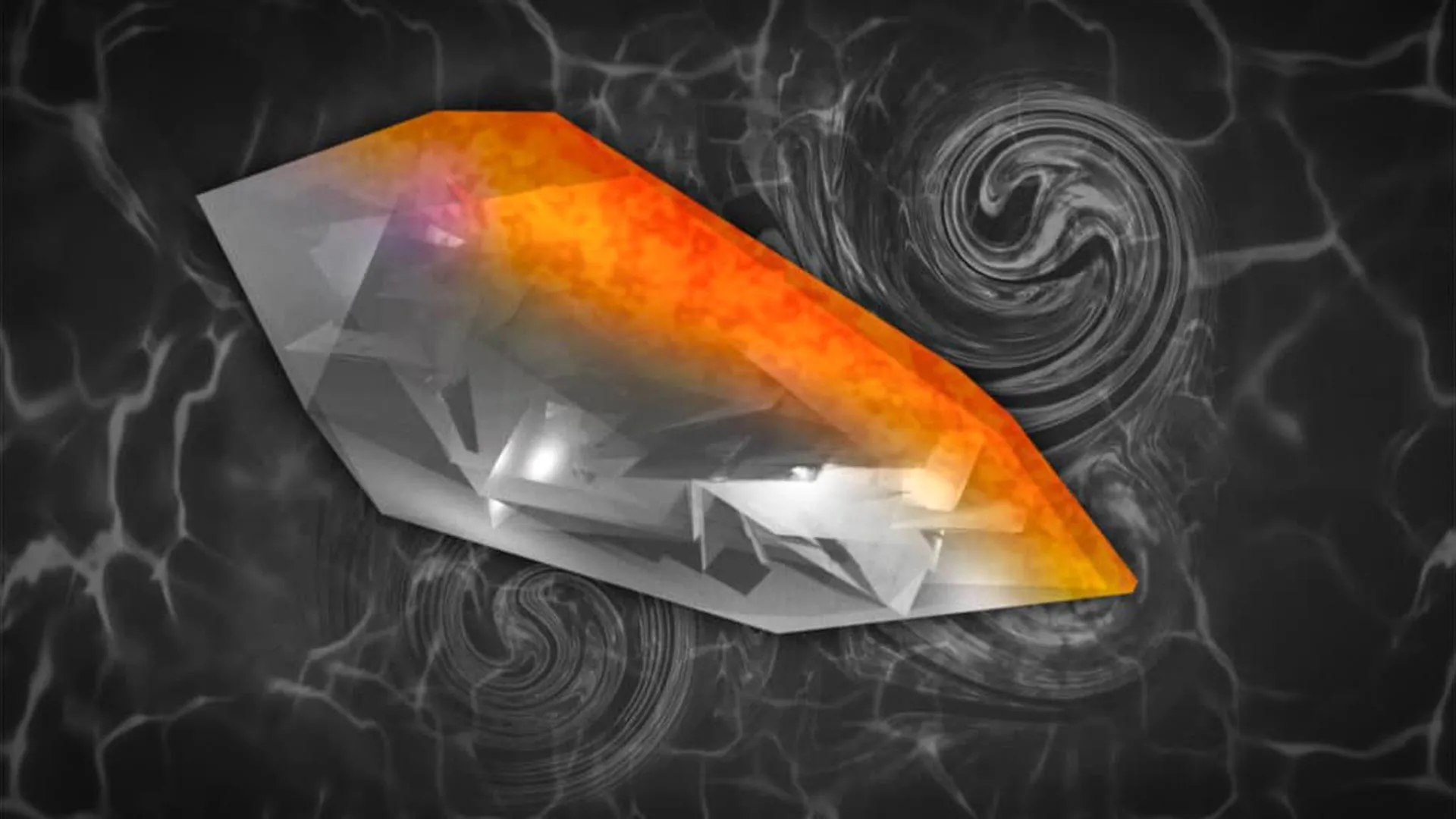
UC Santa Barbara Physicists Engineer Frustrated Quantum States That Could Form the Backbone of Future Quantum Computers
By combining two different types of magnetic frustration in a single crystal, Stephen Wilson's lab at UC Santa Barbara has created a material system that may allow scientists to dial up exotic quantum states on demand.
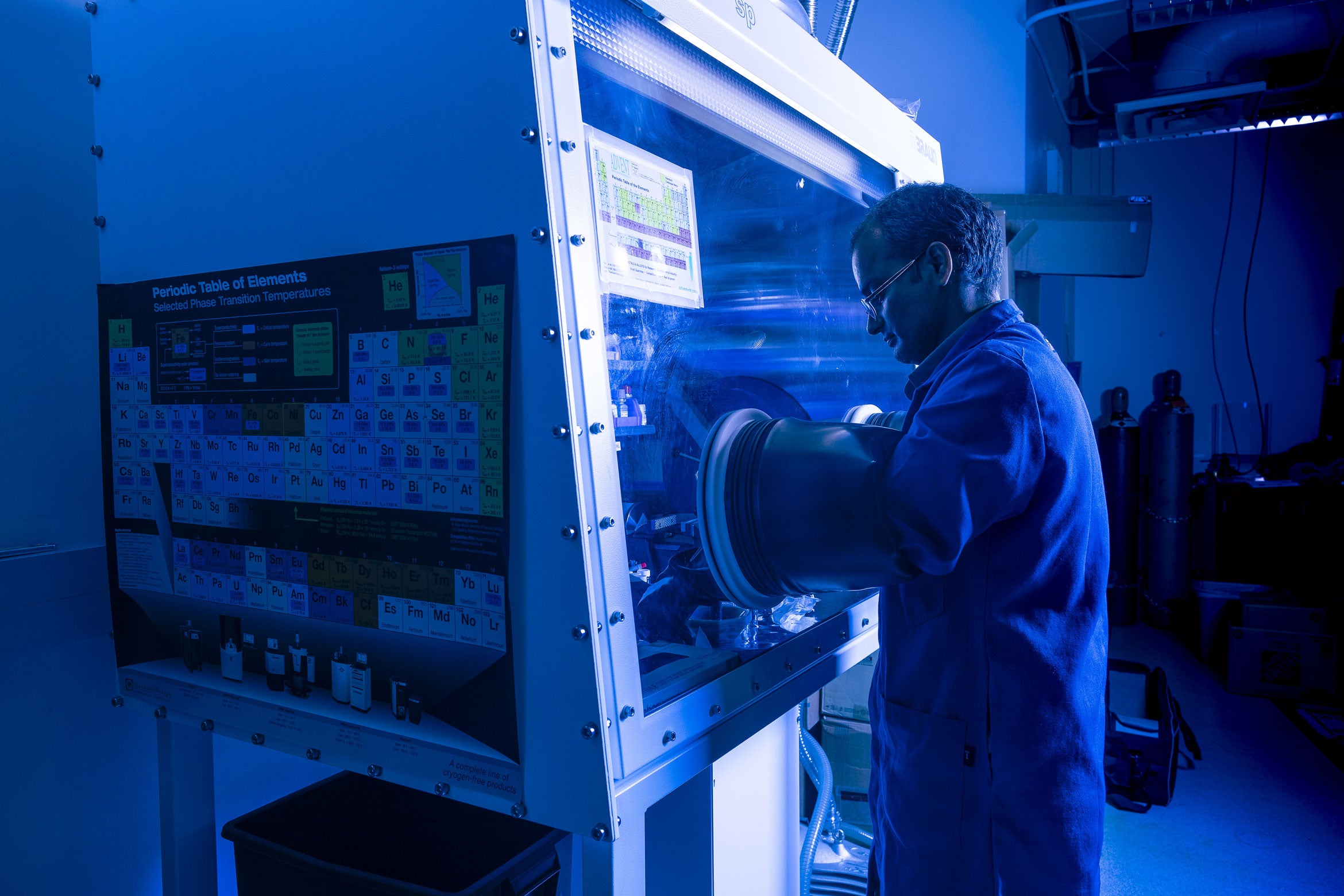
Physicists generally try to avoid frustration. In the quantum world, however, frustration — the inability of a material's magnetic moments to settle into a single ordered arrangement — is a coveted property that gives rise to some of the most exotic and potentially useful states in condensed matter physics. Now, researchers at the University of California Santa Barbara have found a way to deliberately engineer and control these frustrated quantum states by combining two distinct types of magnetic frustration in a single material, a result published in Nature Materials that could accelerate the development of quantum computing and quantum sensing technologies.
The work was led by materials professor Stephen Wilson, whose lab at UCSB has spent years developing materials that host unusual quantum states with properties relevant to next-generation devices. The study — titled "Interleaved bond frustration in a triangular lattice antiferromagnet" — centers on a class of materials built from triangular networks of lanthanide elements, rare-earth metals located at the bottom of the periodic table. In these structures, magnetic moments on neighboring atoms sit at the corners of triangles, which means they geometrically cannot all point in opposite directions simultaneously. The result is a state of perpetual quantum indecision — geometric frustration — in which the magnetic moments fluctuate and remain disordered even at very low temperatures, never locking into conventional ordered patterns.
Wilson's team discovered that these lanthanide materials can simultaneously host a second, entirely different form of frustration: bond frustration, in which electrons shared between neighboring ions form fluctuating pairs called dimers, whose arrangement is also thwarted by the geometry of the triangular lattice. The coexistence of both geometric and bond frustration in a single system creates a highly volatile quantum environment in which multiple competing phases of matter are nearly equally favorable energetically. This near-degeneracy, Wilson argues, makes the material extraordinarily sensitive to external perturbations such as applied mechanical strain or magnetic fields — perturbations that could be used to steer the system into exotic quantum states on demand, much like a precision dial controlling phase transitions.
"This is fundamental science aimed at addressing a basic question," Wilson said. "It's meant to probe what physics may be possible for future devices." Among the most tantalizing possibilities is whether the proximity of two frustrated sublattices in the same material can nucleate entirely new types of intertwined order — quantum phases in which magnetic and electronic behaviors are deeply entangled in ways that neither subsystem alone could produce. Such intertwined phases are theoretically predicted to host the kind of long-range spin entanglement that quantum information scientists need to build stable quantum memory and error-corrected quantum processors, but finding them in experimentally accessible real materials has proved stubbornly elusive.
The UCSB result joins a wave of recent breakthroughs in frustrated quantum materials that have reinvigorated the field after decades of largely theoretical progress. Researchers worldwide are racing to find experimental platforms where exotic quantum phases — including quantum spin liquids, topological superconductors, and magnetically protected quantum states — can be reliably produced and externally controlled. Wilson's triangular lanthanide system is notable because it offers two independent and reinforcing sources of frustration in a single compound, a combination that may yield a far richer phase diagram than either frustration type could access on its own. His group plans next to apply systematic strain and magnetic field sweeps to the material, mapping out the full landscape of accessible quantum phases and testing whether intertwined order can be reliably nucleated — a step that would represent a significant advance toward materials that function as practical quantum components.