A Cambridge Lab Accident Just Changed Drug Development: LED Light Can Now Modify Complex Molecules Without Toxic Chemicals
When a PhD student forgot to add a catalyst to his reaction, it worked better without it — leading to an 'anti-Friedel-Crafts' reaction published in Nature Synthesis that lets chemists fine-tune drug molecules at any stage of development using nothing more than an LED lamp.
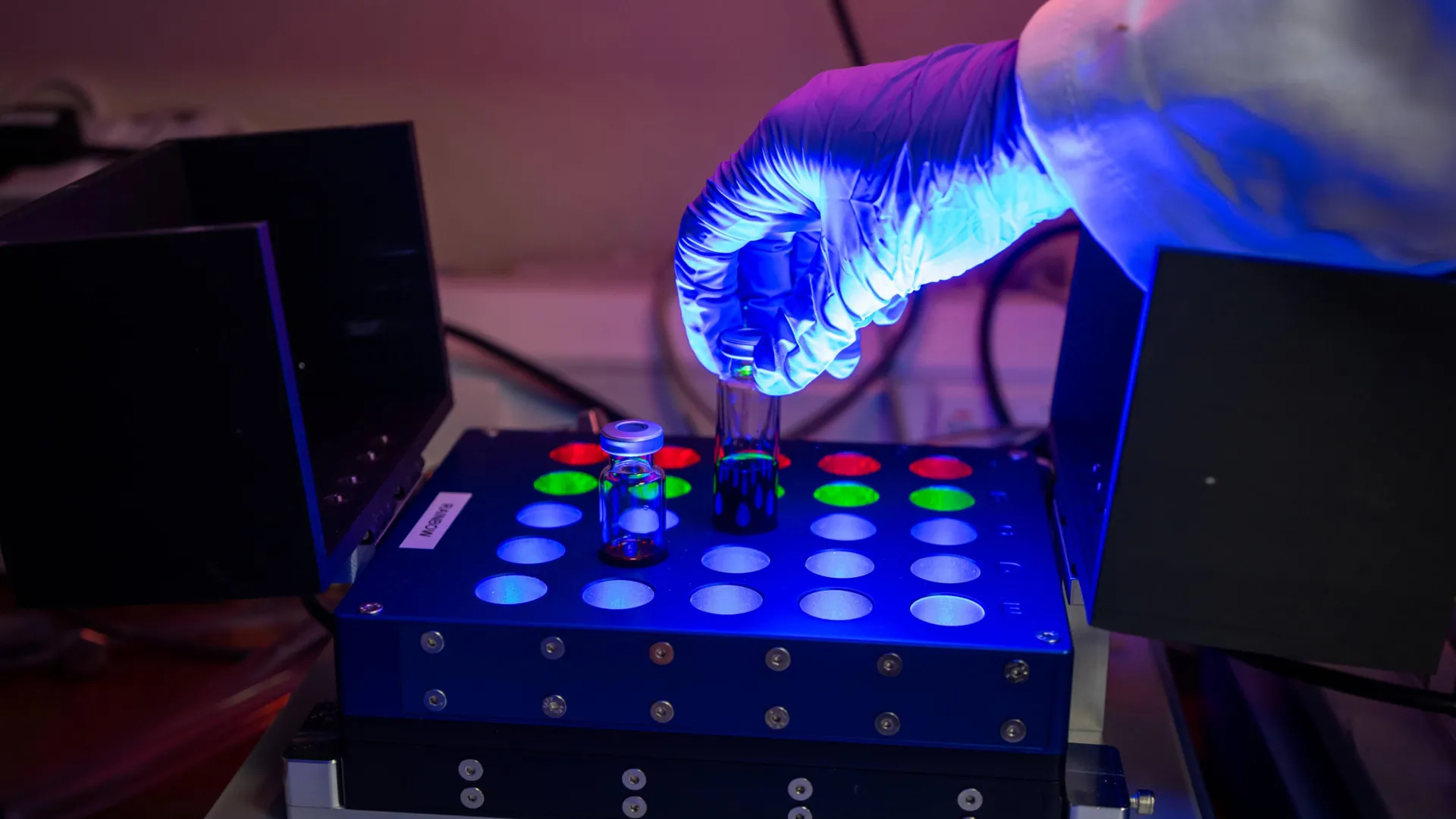
A University of Cambridge chemist who forgot to add a key ingredient to his reaction flask stumbled onto something unexpected: the reaction worked better without it. What looked like a failed experiment turned into a breakthrough published in the journal Nature Synthesis — a new chemical technique that uses nothing more than an ordinary LED lamp to modify complex drug molecules in ways that were previously possible only with toxic heavy-metal catalysts and harsh conditions.
The researcher, a doctoral student named Rupert Vahey, was testing a photocatalyst as part of a broader project to find cleaner methods for pharmaceutical synthesis. When he ran a control experiment without the catalyst to establish a baseline, the reaction proceeded — and produced better results than when the catalyst was present. He brought his puzzled observation to the research group led by Professor Matthew Gaunt, a specialist in organic chemistry and medicinal synthesis. After weeks of investigation, the team determined they had discovered an entirely novel reaction type that the field had not previously described.
The technique, which they call an "anti-Friedel-Crafts" reaction, works by exposing drug molecules to LED light at ambient temperature, triggering a self-sustaining chain process that forges new carbon-to-carbon bonds without requiring toxic reagents. Most methods for modifying drug molecules during development require either high temperatures, expensive transition metal catalysts like palladium or rhodium, or harsh acids and solvents that can damage sensitive parts of the molecule. The Cambridge approach sidesteps all of those requirements, making it cheaper, cleaner, and far easier to scale.
Perhaps more important than the efficiency gains is the timing advantage the new method offers. In traditional drug development, chemists must lock in a molecule's core structure early and then make modifications — adding or removing chemical groups to improve potency, selectivity, or safety — using whatever reactions are available at that stage. Many of those reactions disturb parts of the molecule that were not the intended target, producing unwanted side effects or requiring lengthy cleanup steps. The anti-Friedel-Crafts reaction is highly selective, meaning it alters one designated region of a molecule while leaving sensitive functional groups elsewhere untouched. That selectivity is particularly valuable in late-stage optimization, the phase of drug development where molecules are already undergoing clinical testing and researchers need to fine-tune performance without starting over.
The pharmaceutical industry loses billions of dollars annually to molecules that fail in late-stage clinical trials because their properties cannot be sufficiently refined. A technique that gives chemists a safe, selective, low-cost tool to modify those molecules at the final stages of development could meaningfully shorten the time from laboratory discovery to approved drug. Cambridge researchers have already demonstrated the technique on a range of complex scaffolds found in existing medicines, and several pharmaceutical companies have reportedly expressed interest in licensing the process. Vahey, whose forgotten catalyst triggered the whole chain of discovery, is now listed as lead author on the paper.