Physicists Found a Woven Fabric Inside a Crystal, Then Unpicked a Patch of It With a Green Laser
In a potassium-tantalate-niobate crystal, electric dipoles turned out to be interlacing over and under each other in three dimensions — a structure nobody had ever seen form spontaneously in a solid.

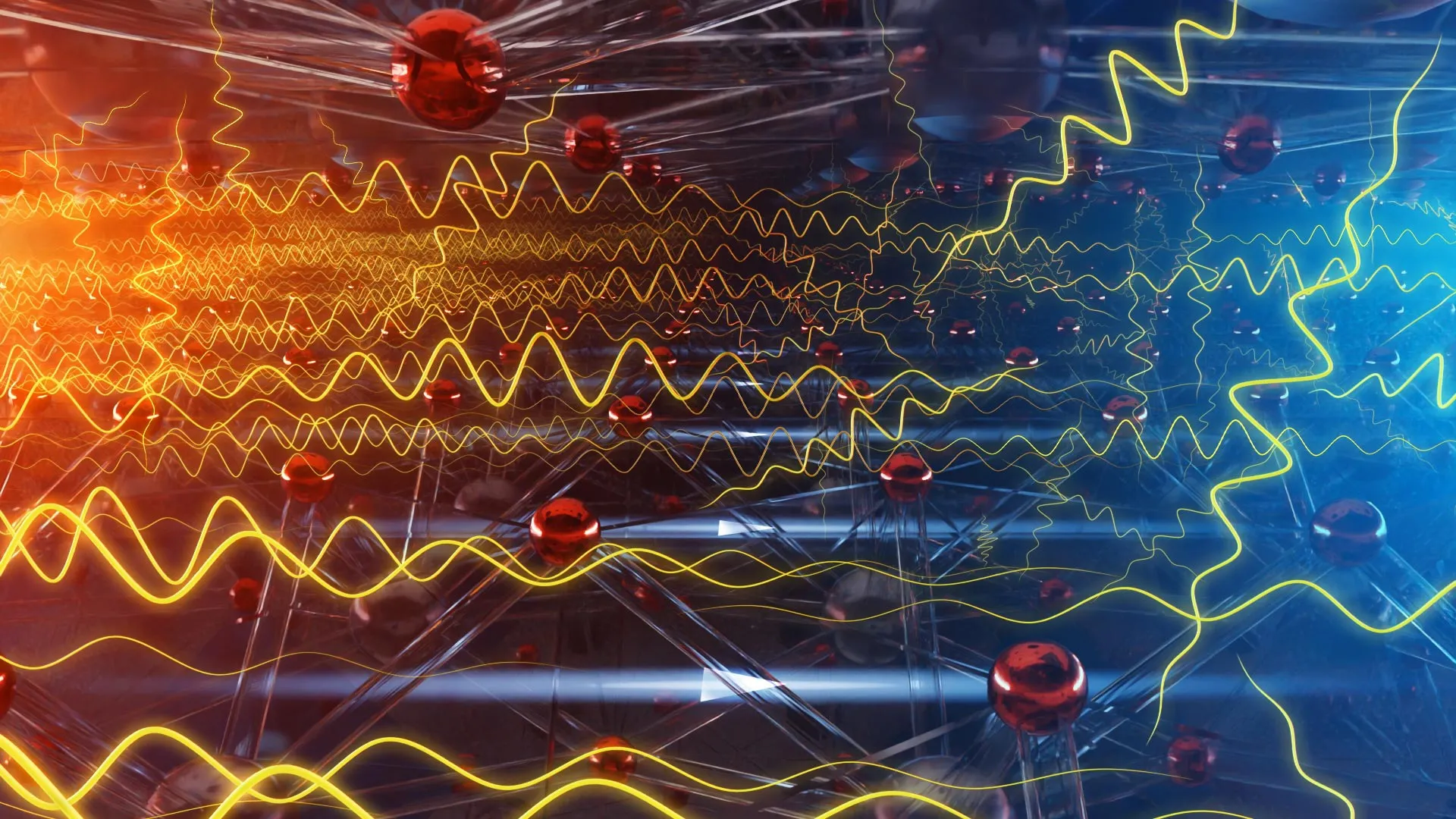
Inside a ferroelectric crystal, the electric dipoles — tiny separations of positive and negative charge locked into the atomic lattice — are supposed to line up. Whole regions called domains point the same way, which is precisely what makes ferroelectrics useful in memory chips, sensors and optical devices. An international team has now found a crystal where the dipoles do something else entirely: they weave.
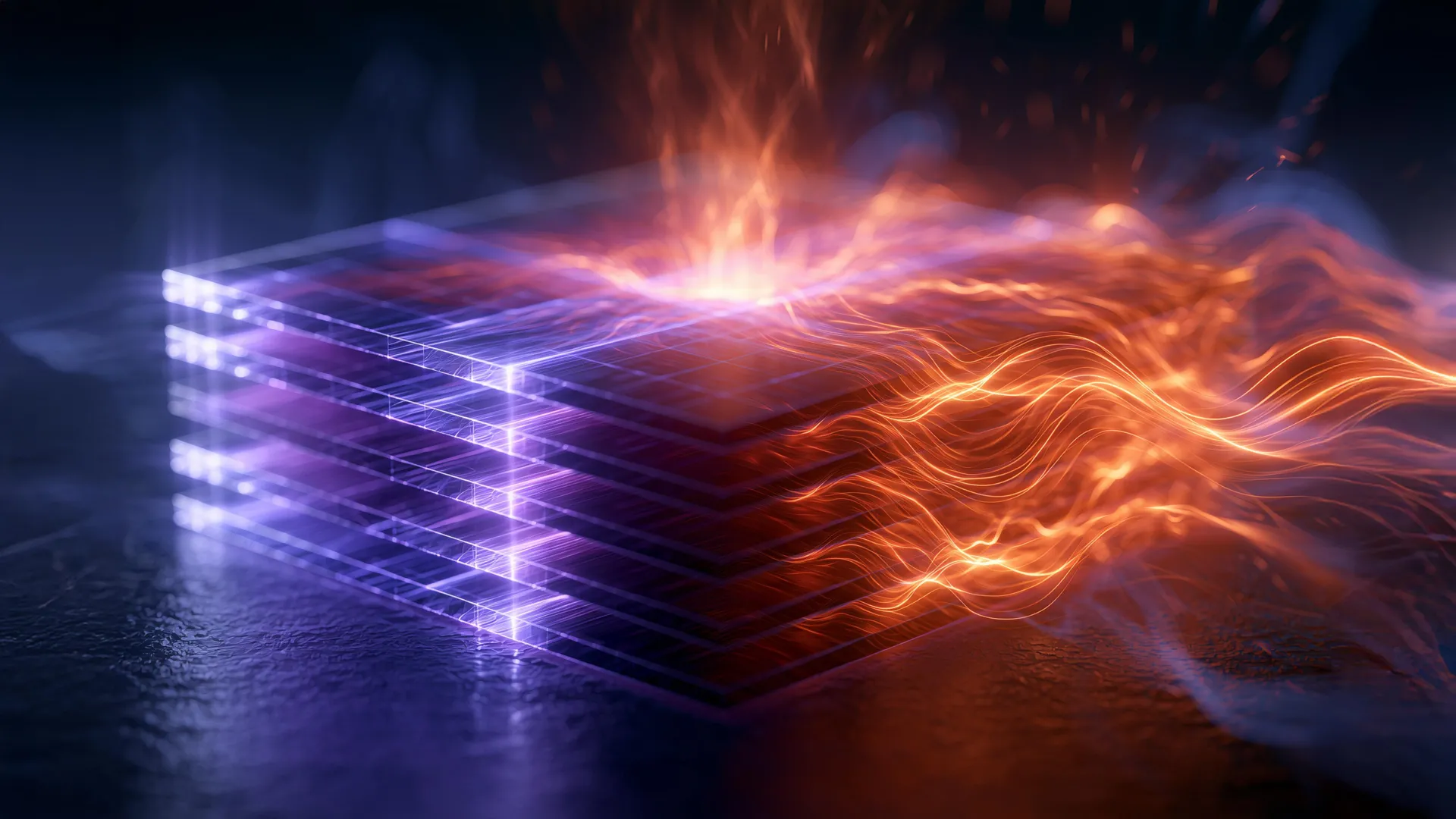
Reporting in Light: Science & Applications, the researchers describe a three-dimensional woven fabric of interlaced nano-dipole ensembles that forms on its own inside the material. The dipoles pass over and under one another in an interlocking network with the topology of textile. Nothing like it had been documented in a solid crystal before.
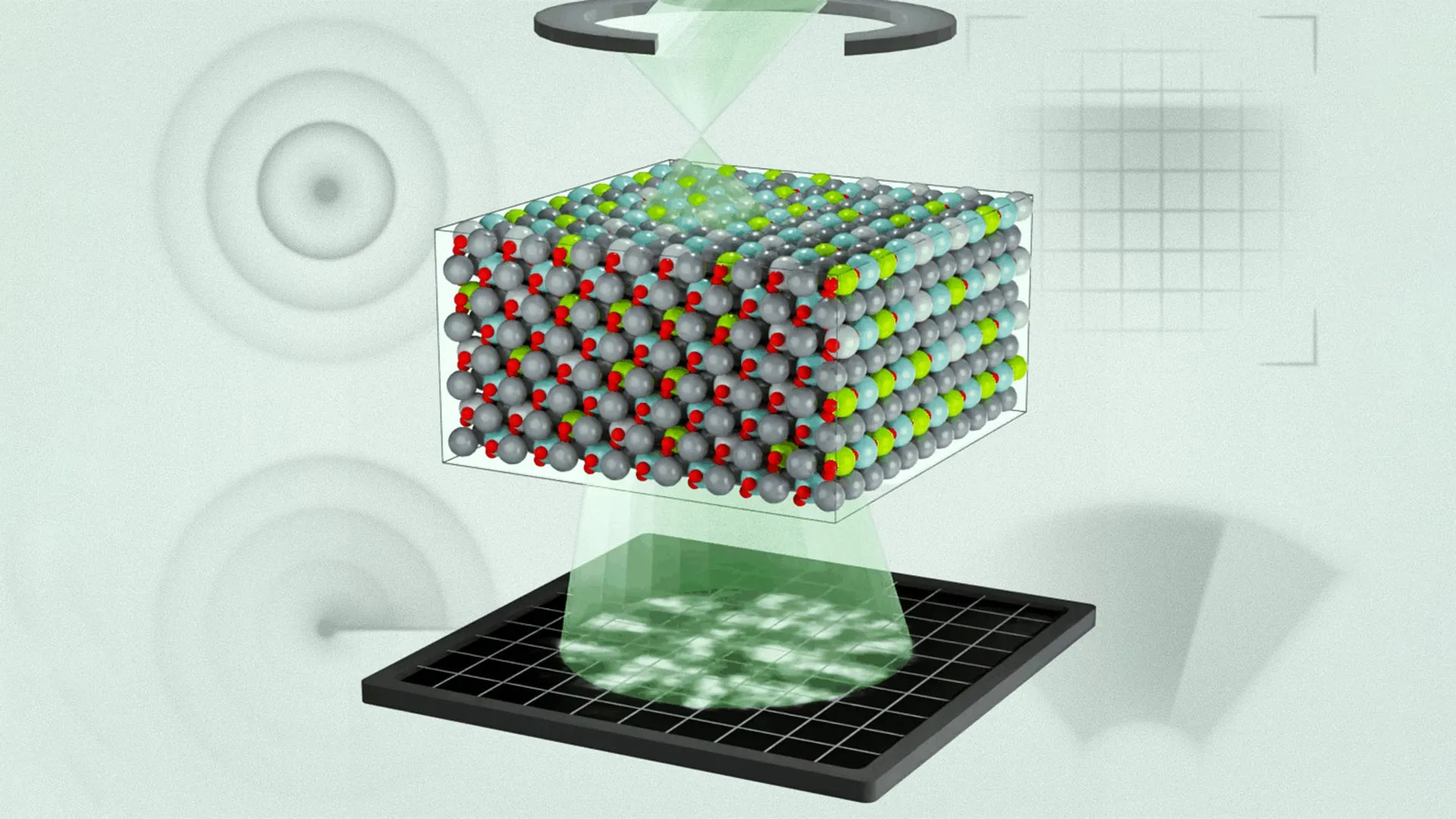
The material is KTN:Li, a potassium tantalate niobate crystal doped with lithium and grown so that its chemical composition varies periodically through the bulk, producing internal striation gratings. Those built-in compositional stripes appear to be what frustrates the dipoles into weaving rather than aligning — the crystal is, in effect, pre-loaded with a pattern the dipoles have to negotiate.
The collaboration spans four institutions: Professor Eugenio Del Re at Sapienza University of Rome, Professor Feifei Xin at Nankai University, Professor Aharon J. Agranat at the Institute of Applied Physics of the Hebrew University of Jerusalem, and colleagues at the University of Groningen.
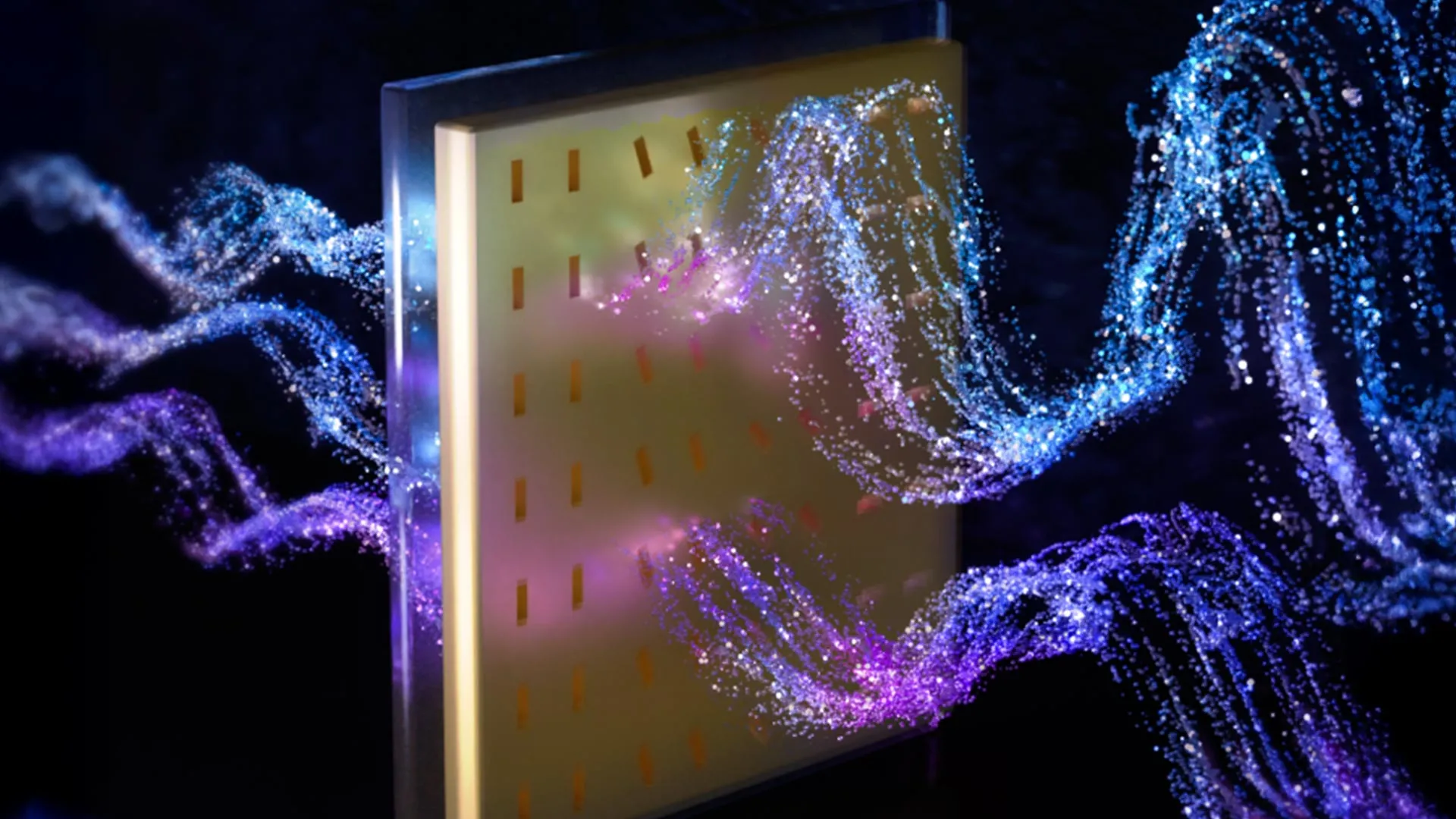
The demonstration that turned an oddity into a potential technology was local and reversible. Using focused green laser light, the team untangled the woven pattern in one small region while leaving the surrounding crystal untouched. Heating the crystal and cooling it again caused the fabric to reform — but in a different arrangement than before. That combination, a structure that can be locally erased with light and globally reset with temperature, is close to a specification for a rewritable optical medium.
Why it matters beyond one crystal is the topology. Woven structures are held together by how their strands interlock, not by what the strands are made of, which is why the authors argue the same organization should be able to appear anywhere the right frustration exists. They suggest "similar topological structures may emerge in many other systems, from liquid crystals and superconductors to quantum materials."
That claim is the interesting part of the paper. Ferroelectric domains have been imaged for the better part of a century, and physicists have generally described them with a vocabulary of stripes, vortices and skyrmions. If interlacing is a stable configuration matter can spontaneously adopt, then it has presumably been forming in materials people have already studied, hidden by imaging methods that were not looking for it. The team's finding raises the possibility that a common organizational pattern in condensed matter has been overlooked because nobody had a reason to check for a weave.