LSU Cut Hundreds of Slits Into a Gold Film and Built a Quantum Material That Works Without a Refrigerator
Nearly every quantum material discovered so far needs cooling to near absolute zero. This one sorts photons by their quantum statistics at room temperature.

The reason quantum materials keep failing to become quantum technologies is almost always temperature. Nearly every one discovered so far works only within a few degrees of absolute zero, because at ordinary temperatures the atoms in a solid vibrate hard enough to wreck the delicate quantum effects researchers are trying to exploit. Suppressing that motion means large cryogenic refrigeration systems, which is why quantum materials perform beautifully in controlled laboratories and remain impractical almost everywhere else.
Physicists at Louisiana State University have now built the first room-temperature quantum material capable of identifying and transporting distinct quantum states of light. The work, reported in Nature, was led by Omar S. Magaña-Loaiza, an associate professor of physics, whose Quantum Photonics Group handled every stage of the project — theory, material design, nanofabrication and experimental testing.
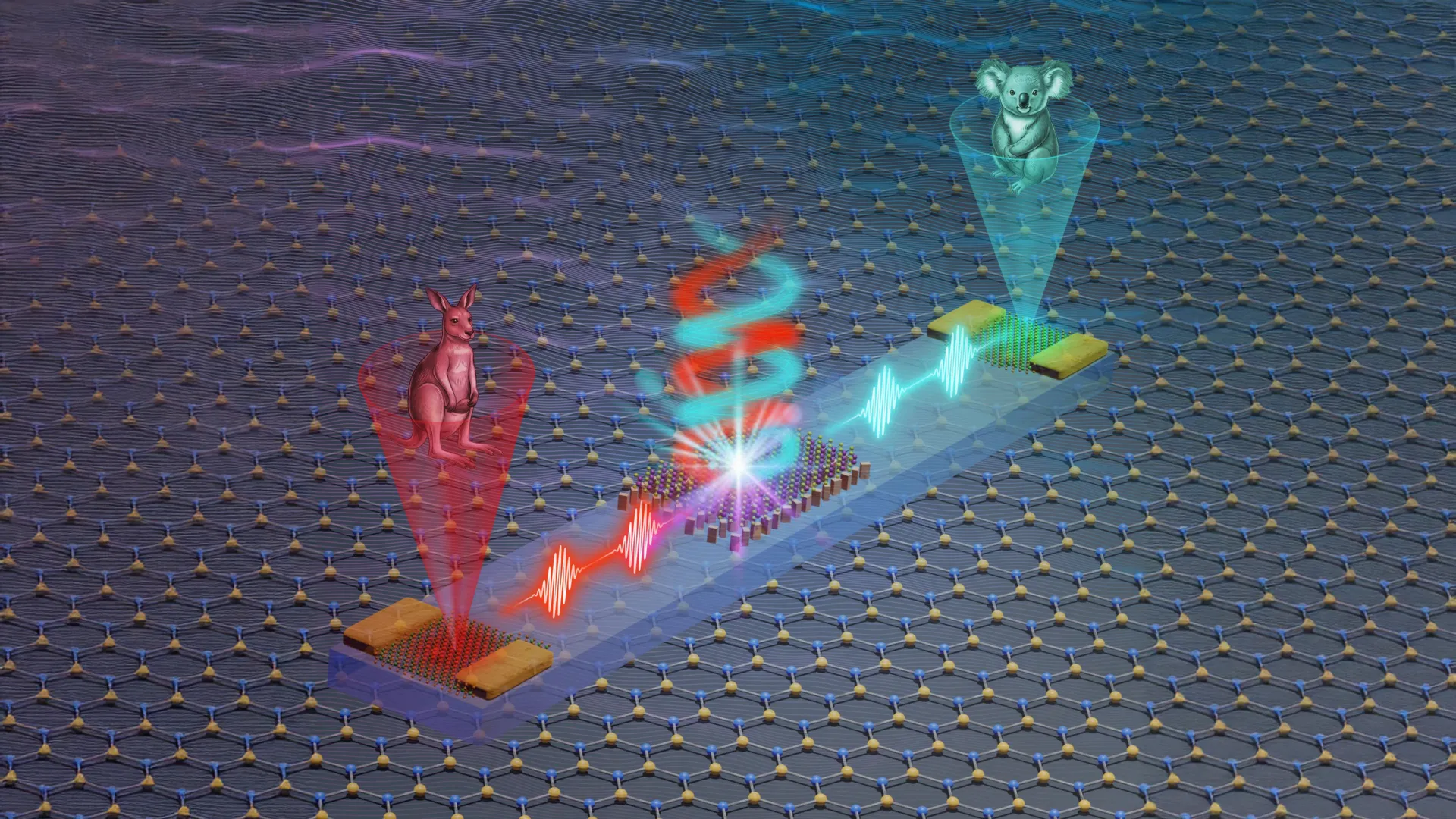
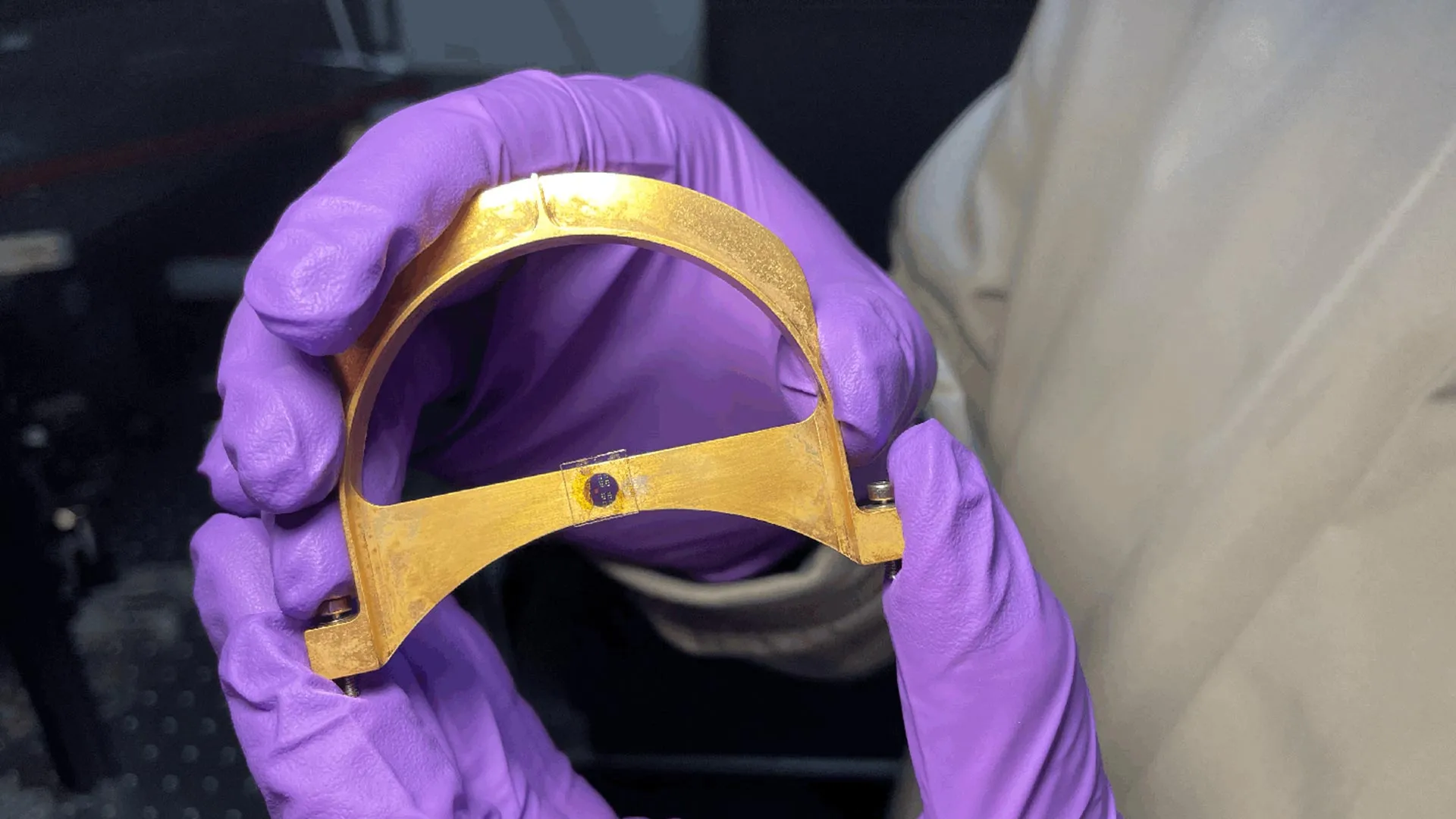
The team's approach was to stop looking. Rather than searching nature for a substance with the properties they needed, they engineered one. They laid a thin film of gold onto a glass chip and used focused ion beams to cut hundreds of extremely small slits into the metal. Each slit behaves like an artificial atom — a meta-atom. Collectively, those meta-atoms form a crystal with no natural counterpart, in a structure thinner than a human hair.
When light arrives at the chip, it travels across the gold surface and interacts with the engineered slits. By tuning the size, shape and spacing of those structures, the researchers gained direct control over how the material responds to incoming light, producing a form of manipulation that had never been achieved at room temperature.
What the crystal actually does is the part that matters. Sunlight, laser light and fluorescent light are all made of photons, but the photons in each fluctuate and interact differently, and those differences govern how the light behaves quantum mechanically. Telling them apart has generally required elaborate equipment, detectors chilled to extremely low temperatures, and millions of individual measurements.
The metacrystal does the sorting itself. Instead of reacting to familiar properties such as color or intensity, it detects subtle quantum distinctions in the light arriving at it and routes different quantum states along separate paths through the structure.
"By engineering the distribution of meta-atoms in the plasmonic metacrystal, we can systematically dictate which quantum statistics are allowed to pass through the structure," said Riley B. Dawkins, who recently completed his Ph.D. on the project and is joining the National Institute of Standards and Technology as an NRC Postdoctoral Research Associate. "So, our crystal essentially acts as a statistical filter on quantum states."
For Chenglong You, a former postdoctoral researcher on the team who is now a professor at the University of Electronic Science and Technology of China, the payoff came when the unusual design behaved exactly as the theory said it would.
"One of the most exciting parts of this project was realizing that we could build a material that does something nature doesn't provide on its own," You said. "Seeing it work exactly as we predicted was incredibly rewarding."
The researchers argue the more significant result is not the single material but the design strategy behind it, which they say could be used to generate an entire family of engineered quantum materials. Candidate applications include quantum computers, secure communication systems, sensitive detectors and new energy technologies — all of which have been held back less by physics than by the refrigerators.