A Danish Lab Heated a Short Stretch of Optical Fiber and Nearly Doubled the Reach of the World's Quietest White Laser
The trick replaces a spliced chain of different fiber types with one fiber that compresses its own pulses. The output now spans 0.86 to 2.90 micrometers without getting noisy.

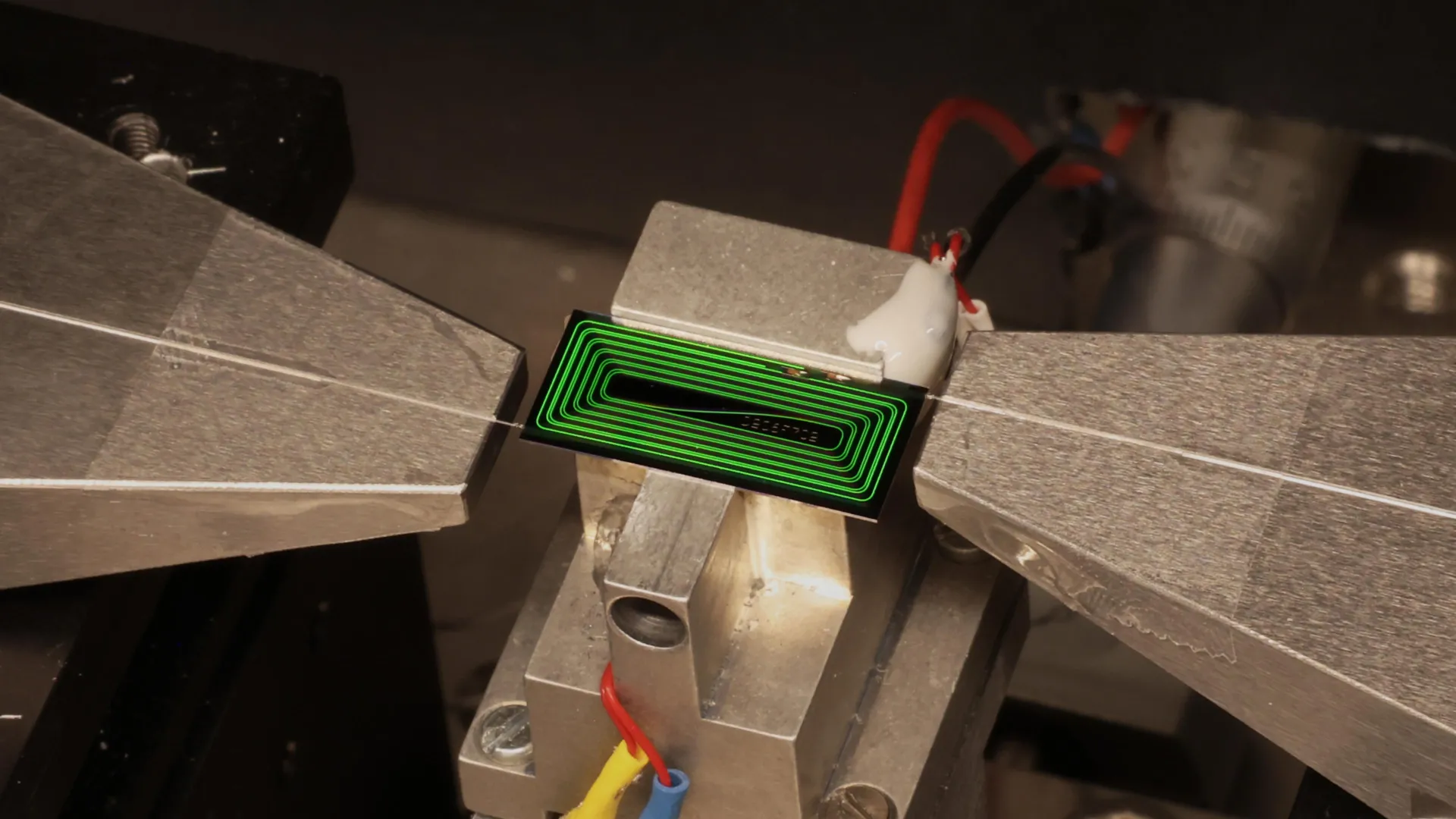
Researchers at the Technical University of Denmark have nearly doubled the wavelength range of a low-noise supercontinuum laser — a "white" laser that emits across a continuous band rather than a single color — by heating a short section of the optical fiber it runs through.
The new system spans 0.86 to 2.90 micrometers, pushing deep into the infrared while keeping the noise floor low enough that weak signals stay readable. That combination is the hard part. Supercontinuum sources have been able to cover wide bands for years, but the standard way of generating them relies on a process that amplifies random fluctuations along with the light, producing a beam that is spectrally broad and pulse-to-pulse unstable. Low-noise supercontinuum keeps the stability but has historically paid for it in reach.
The conventional fix is to splice together different fiber types, each engineered for a different job — one to broaden, another to compress, another to shift the wavelength. Every splice adds loss, alignment sensitivity and cost, and the resulting instrument is a chain of components that has to be kept in agreement. The DTU approach, which the team calls thermal dispersion engineering, collapses that chain: heating a short segment of a single fiber changes its dispersion properties along that segment, which compresses the light pulses inside the fiber itself, exactly where the broadening happens.
"We essentially let the fiber do the work for us. By carefully shaping its properties, we can boost performance" in a controlled way, said Andrea Arduin, a postdoc at DTU Electro and first author of the paper, published in Optica.
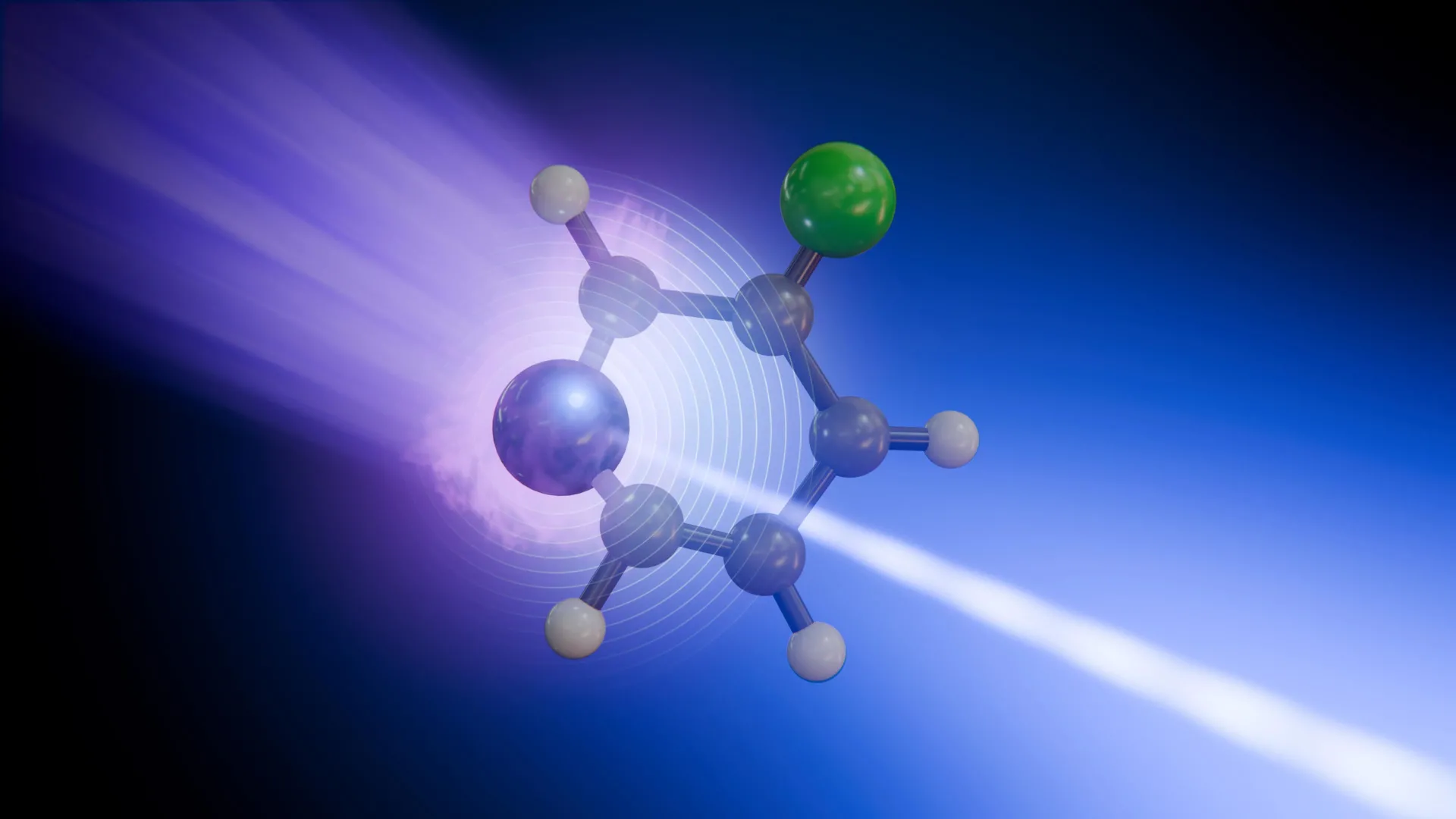
The wavelength range is not arbitrary. The region beyond about two micrometers is where most molecules of practical interest — methane, carbon dioxide, water vapor, a long list of industrial gases and biological compounds — have their strongest and most distinctive absorption features. This is the band spectroscopists call the molecular fingerprint region, and reaching it with a bright, stable, broadband source is the difference between detecting a trace gas in seconds and averaging for minutes to pull it out of the noise. The same properties matter for optical coherence tomography, the technique used to image the retina and other tissue layer by layer, where noise sets how deep and how fast a scan can go.
The broader claim the group is making is architectural. Rather than building increasingly elaborate optical systems out of specialized parts, they argue that optical functions can be designed directly into the fiber that carries the light — and that the same thermal approach should transfer to other wavelength bands and other fiber designs.