Cambridge Engineers Build Laser Chip That Hits 360 Gbps Wireless — Using Half the Energy of Wi-Fi
A 25-laser array using structured infrared beams achieved the highest recorded speed for a chip-scale optical wireless transmitter, pointing toward a light-based alternative to crowded radio spectrum.

Engineers at the University of Cambridge have built a matchbook-sized chip that uses 25 miniature infrared lasers to transmit wireless data at 362.7 gigabits per second — roughly 4,500 times faster than a typical Wi-Fi 6 connection — while consuming about half the energy of comparable radio-frequency wireless systems. The research, published in Advanced Photonics Nexus by SPIE in early April 2026, represents the highest reported speed for a chip-scale optical wireless transmitter paired with a free-space receiver, and it points toward a future in which hospital corridors, aircraft cabins, and data centers communicate via beams of structured light rather than congested radio waves.
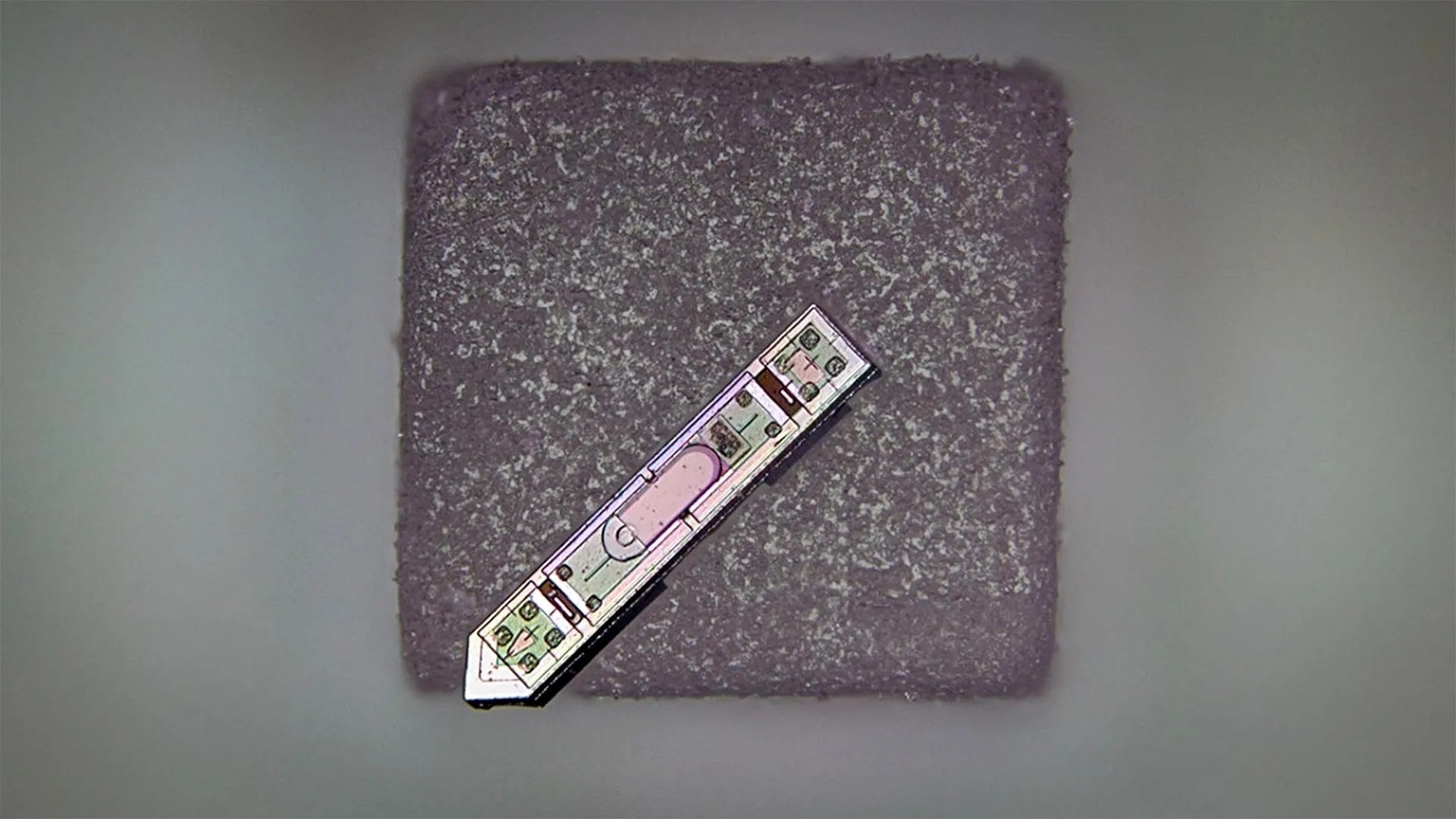
The system centers on a custom-designed 5×5 array of vertical-cavity surface-emitting lasers (VCSELs) — tiny semiconductor lasers that emit infrared light perpendicular to their surface. In testing, 21 of the 25 lasers were active simultaneously. Each individual laser achieved data rates of between 13 and 19 gigabits per second, and when combined, the array produced a total throughput of 362.7 Gbps across a two-meter free-space channel. Lead researcher Hossein Safi and colleagues, including Sina Babadi, published the results after validating the system's performance under multiple modulation conditions.
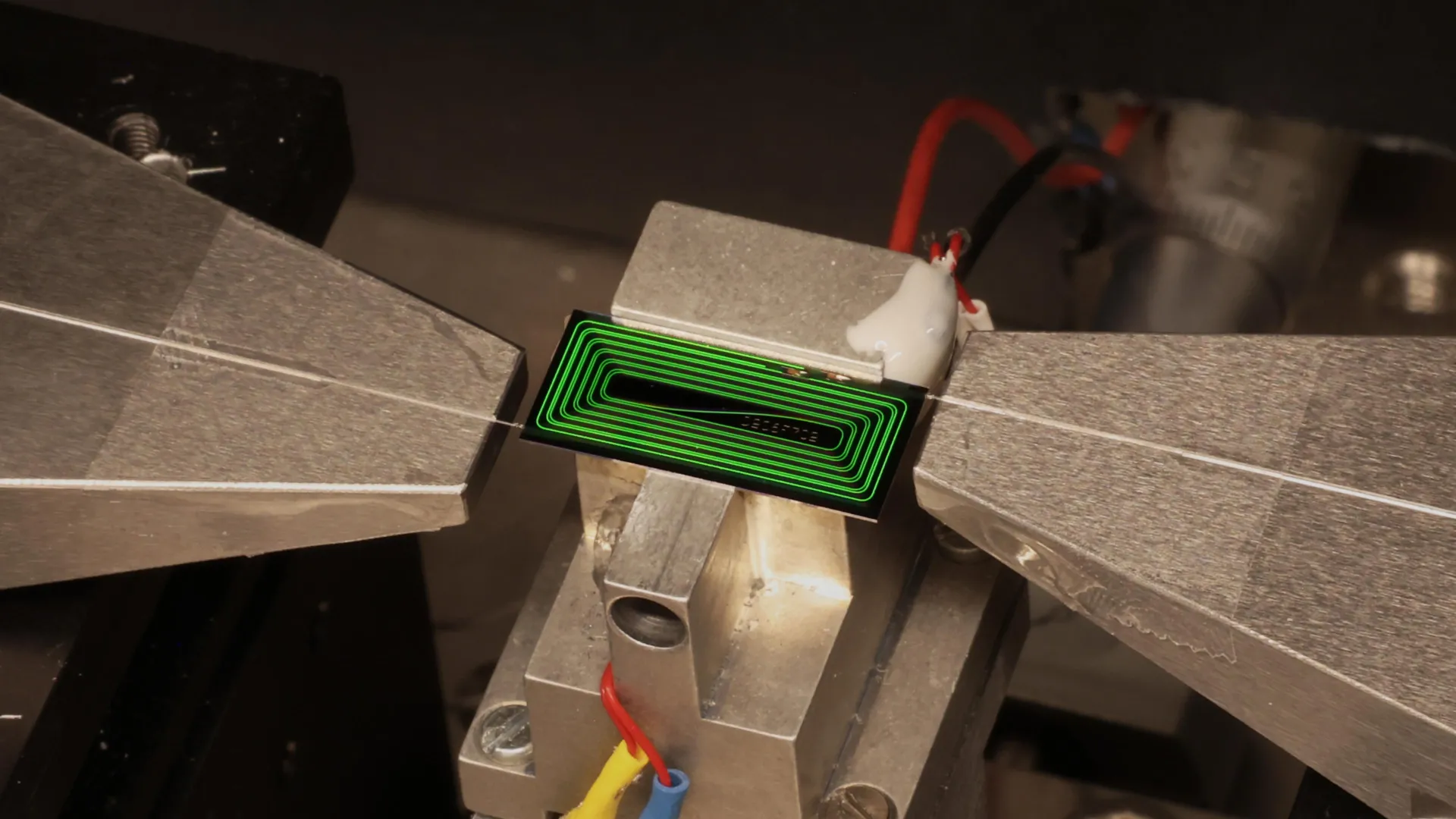
The central engineering challenge the team solved was interference: when 21 lasers fire simultaneously in close proximity, their beams can overlap and scramble each other's signals. To prevent this, the researchers designed a multi-lens optical system that precisely shapes each beam. A microlens array first collimates and straightens the light from each laser. Additional lenses then reorganize the beams into a structured grid of square illumination areas at the receiving surface, achieving more than 90 percent intensity uniformity across the receiver plane. This architecture allows each beam to carry an independent data stream to a distinct user or device without crosstalk.
The energy consumption figure is perhaps as significant as the raw speed. The system consumed approximately 1.4 nanojoules per bit — about half the energy of leading Wi-Fi technologies benchmarked under similar conditions. As data centers and wireless networks face pressure to reduce their carbon footprints, the combination of record speed and low power consumption makes optical wireless a credible alternative to radio-frequency systems for short-range, high-density applications. The team noted that performance was currently limited by the bandwidth of commercially available photodetectors at the receiver end, and that with more advanced receivers, the same chip could potentially exceed 500 Gbps.
Optical wireless communication — sometimes called Li-Fi — has been proposed as a complement to Wi-Fi and 5G for more than a decade, but previous systems struggled with range, alignment sensitivity, and the difficulty of supporting multiple simultaneous users. The Cambridge architecture addresses each of these obstacles. The structured-light grid approach is inherently multi-user, since different spatial zones can serve different devices. The use of VCSELs, rather than the LED sources common in earlier Li-Fi prototypes, provides the high modulation bandwidth needed for multi-gigabit speeds. And the compact chip-scale format — integrating the laser array, driver electronics, and beam-shaping optics on a single platform — makes the technology practical for real-world deployment.
Potential near-term applications include operating theaters and intensive care units, where radio-frequency interference from Wi-Fi can affect sensitive monitoring equipment; passenger aircraft cabins, where spectrum is scarce and bandwidth demands are rising; and data center intra-rack connections, where replacing copper cables with optical wireless links could dramatically reduce heat generation. The Cambridge team stressed that optical wireless is not intended to replace Wi-Fi or cellular networks, but to supplement them — handling the highest-bandwidth traffic in dense, controlled indoor environments while freeing radio spectrum for mobile and outdoor use.