Scientists Capture Electrons Forming Bizarre Patchy Patterns in Quantum Materials
Researchers use advanced microscopy to directly visualize how electronic order evolves during phase transitions, revealing unexpected patches and gradual breakdown of quantum states.
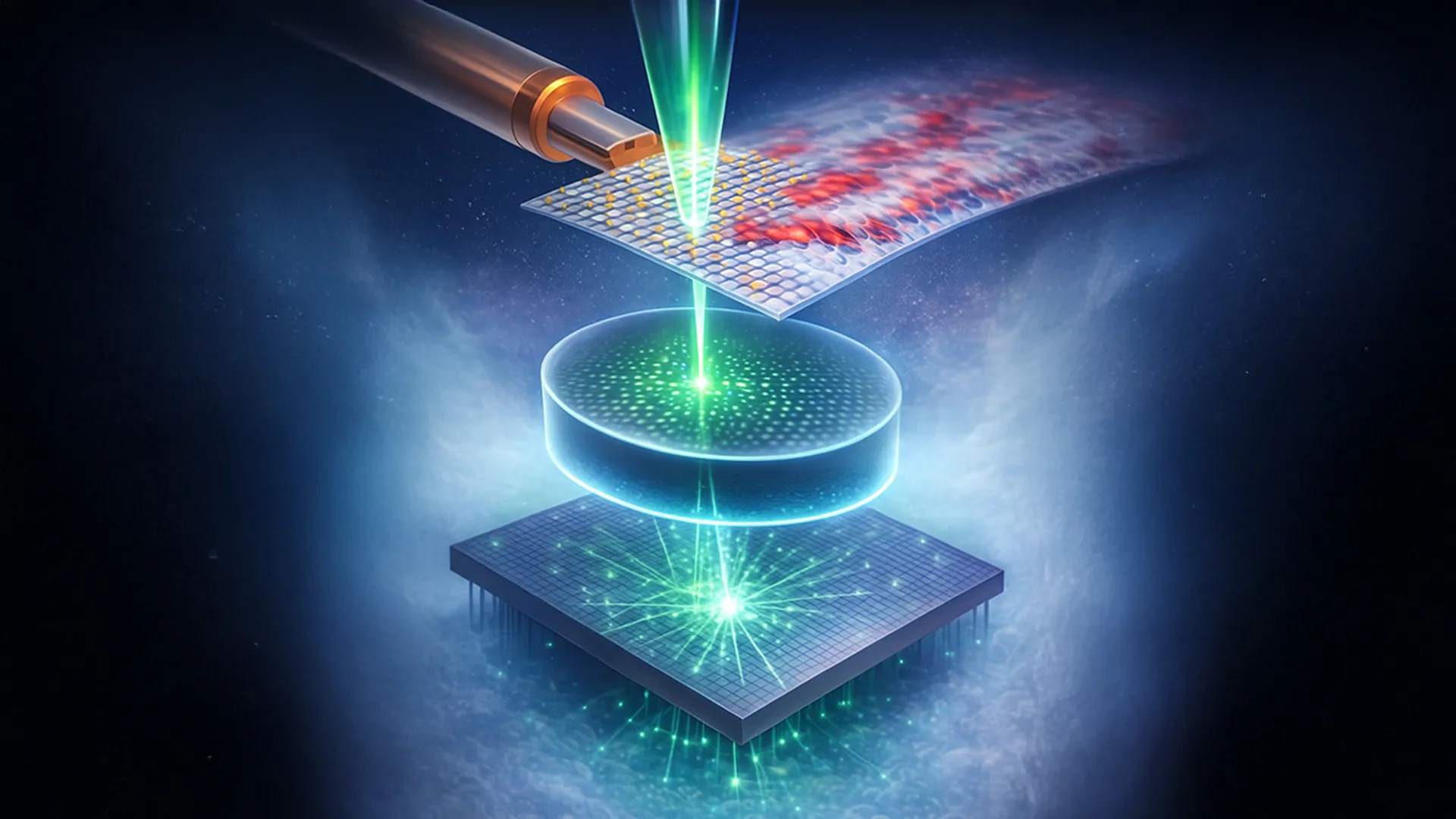
Researchers at KAIST have achieved the first direct visualization of how charge density waves—organized patterns of electrons—form and break apart during quantum phase transitions. Using cutting-edge four-dimensional scanning transmission electron microscopy at liquid-helium temperatures, the team discovered that electronic order doesn't form uniformly but instead creates complex patchy patterns influenced by tiny structural distortions. The findings, published in collaboration with Stanford University, reveal fundamental insights about how quantum materials transition between different electronic states.
The study focused on charge density waves (CDWs), quantum phenomena where electrons spontaneously organize into repeating patterns at low temperatures. While CDWs have been studied for decades, scientists had struggled to directly observe how their strength and spatial coherence change during phase transitions. Professor Yongsoo Yang's team solved this challenge by developing nanoscale imaging techniques that could track electronic order with resolution smaller than one hundred-thousandth the width of a human hair.
The microscopy revealed that electronic order forms unevenly, resembling scattered ice patches on a freezing lake rather than uniform coverage. Some areas showed clear, well-defined patterns while nearby regions had none at all. Most surprisingly, the researchers discovered that even minute amounts of strain—far too small to detect with conventional optical methods—were sufficient to significantly weaken the charge density wave amplitude. This demonstrates that subtle lattice distortions play a crucial role in shaping quantum electronic patterns.
Another unexpected finding was the persistence of small pockets of electronic order even above the transition temperature where long-range order typically vanishes. These isolated regions suggest that the transition from ordered to disordered states is not a simple, uniform process but rather involves a gradual loss of spatial coherence. The team achieved the first direct measurement of correlations in charge density wave amplitude, providing quantitative insights into how electronic order fades across different length scales.
These discoveries have important implications for understanding quantum materials and developing new technologies. Many quantum devices rely on precise control of electronic phases, and this research provides fundamental insights into how those phases form and break down. The advanced imaging techniques developed for this study could also be applied to other quantum materials, potentially revealing similar hidden complexities in how electrons organize themselves at the quantum scale.