Graphene Defies Fundamental Physics Law in Quantum Breakthrough
Electrons in graphene flow like a frictionless liquid, violating the Wiedemann-Franz law by more than 200 times and revealing exotic quantum behavior.

Physicists at the Indian Institute of Science in Bengaluru and the National Institute for Materials Science in Japan have made a measurement that violates one of the most robustly tested laws in condensed matter physics — and the discrepancy is not a minor deviation but a factor of 200. The finding, published in Nature Physics, demonstrates that electrons in a specially prepared graphene system conduct heat and electricity in ways that cannot be explained by any existing quantum theory of electron behavior in solids.
The law in question is the Wiedemann-Franz law, a nineteenth-century empirical relationship that connects a material's electrical conductivity to its thermal conductivity through a universal constant — the Lorenz number. The law holds because both electrical and thermal currents in normal metals are carried by the same electrons, which means the ratio between the two conductivities depends only on temperature and fundamental constants. Decades of precision measurements across hundreds of materials have confirmed the law to better than a few percent under normal conditions.
The Indian-Japanese team, led by Arindam Ghosh and Aniket Majumdar at IISc and collaborators at NIMS, found that in graphene devices engineered to host a "Dirac fluid" — a state in which electrons and their positive-charge counterparts, holes, collide with each other far more frequently than they scatter off defects or phonons — the Wiedemann-Franz law fails by a factor of approximately 200. The thermal conductivity is 200 times larger than the standard law would predict given the measured electrical conductivity.
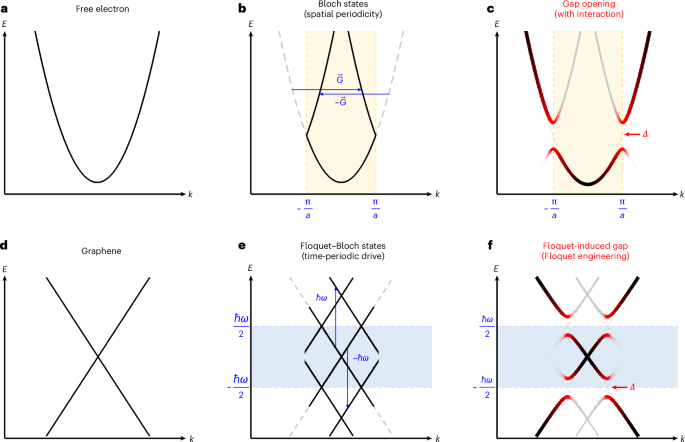
The Dirac fluid state is a consequence of graphene's unusual band structure. Near a specific energy called the Dirac point, electrons in graphene behave as if they have no effective mass, following physics described by the relativistic Dirac equation rather than the non-relativistic Schrödinger equation that governs ordinary metals. When the researchers cooled their graphene devices to near absolute zero and tuned the electron density to the Dirac point using an electrostatic gate, the electron-electron collision rate vastly exceeded the electron-defect scattering rate — the precondition for the hydrodynamic, or fluid-like, electron transport regime.
In this hydrodynamic regime, electrons don't flow individually but collectively, like a viscous liquid. The team used a specialized local thermometry technique — scanning thermal gradient microscopy developed at NIMS — to map the temperature distribution across the graphene device while passing current, allowing them to separate the thermal and electrical transport channels with unprecedented precision.
"The standard Fermi liquid picture of electrons in metals completely breaks down here," Majumdar said in a statement from IISc. "These electrons are flowing like a correlated fluid, and the heat they carry is almost entirely disconnected from the charge they carry. That is fundamentally new physics."
The result is significant beyond graphene because it provides direct experimental confirmation that strongly interacting quantum systems — predicted by theory but rarely measured cleanly — can exhibit transport properties radically different from weakly interacting metals. The Dirac fluid in graphene is viewed as an experimental analog to exotic states of matter predicted to exist in neutron stars and the early universe, where matter is hot and dense enough that particle interactions dominate over individual particle motion.
The finding also has potential practical consequences for heat management in graphene-based electronics, since the extreme decoupling of thermal and electrical transport means standard assumptions about joule heating in graphene devices may be incorrect.