Astronomers Capture Sharpest Image Ever of Cosmic Web's Hidden Structure
Scientists revealed a 3-million-light-year filament connecting galaxies from 12 billion years ago, offering new insights into how galaxies form and evolve.
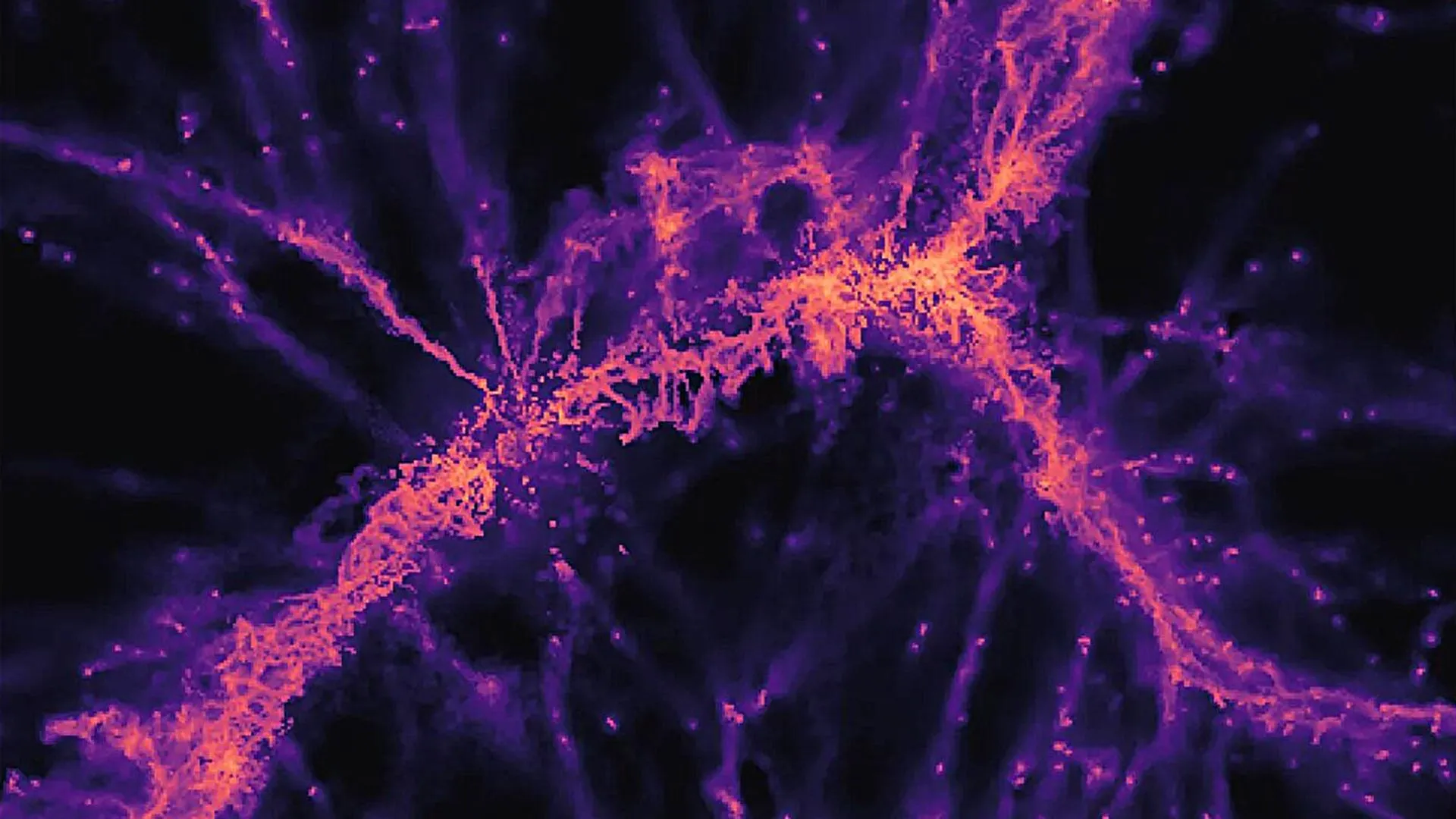
Astronomers have achieved a remarkable breakthrough by capturing the sharpest image ever recorded of a filament in the cosmic web, the enormous hidden structure that connects galaxies across the Universe. The glowing strand stretches 3 million light-years and links two actively forming galaxies from nearly 12 billion years ago, when the Universe was only about 2 billion years old. This unprecedented direct observation of intergalactic gas provides crucial new insights into how galaxies are fueled and formed over cosmic time.
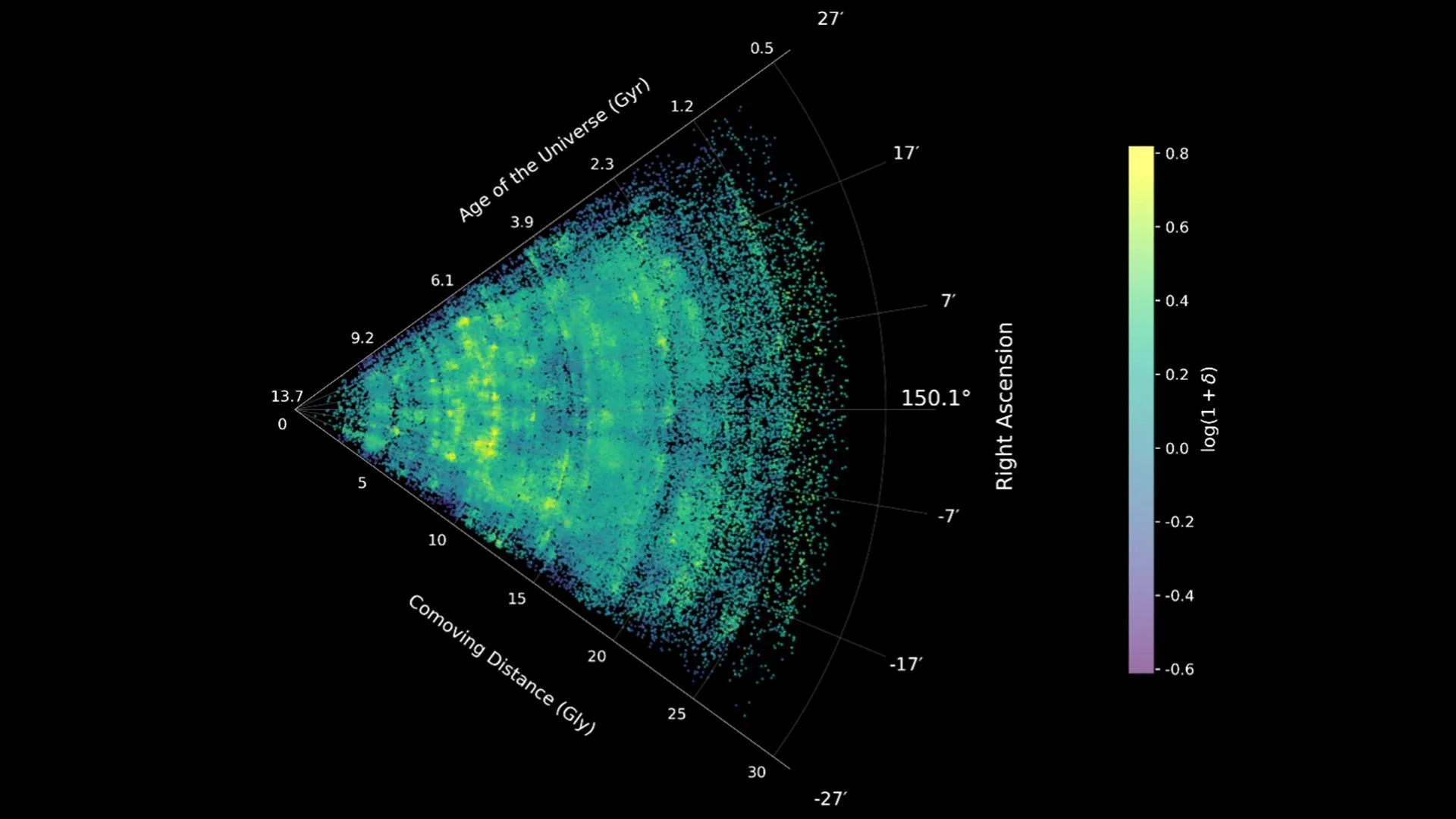
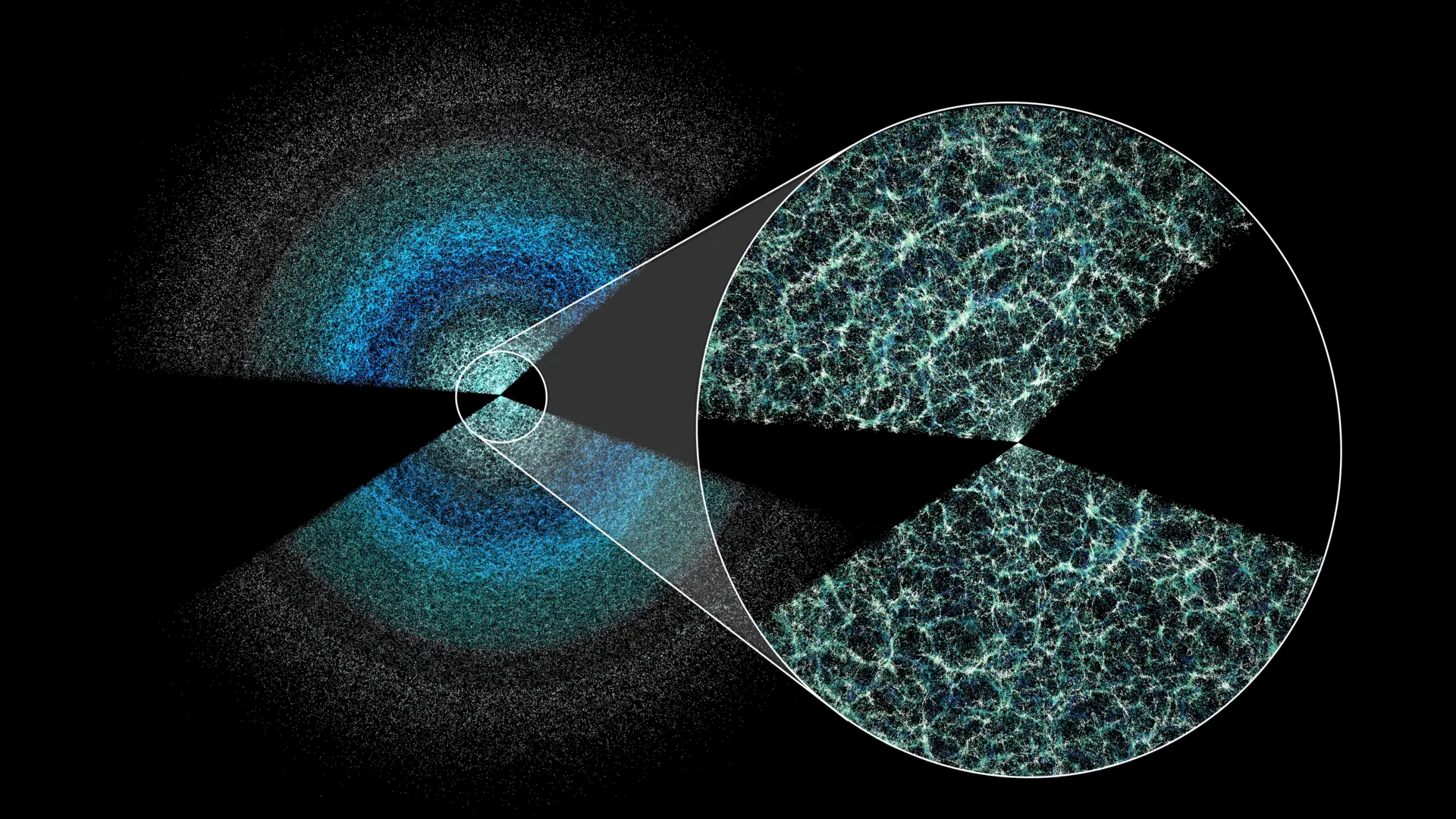
The cosmic web represents one of the largest structures in existence, formed by dark matter that makes up roughly 85% of all matter in the Universe. Although invisible, dark matter is believed to shape a gigantic web-like framework of long filaments that act as intergalactic highways, channeling gas into galaxies and fueling the birth of new stars. Scientists have long theorized about this structure, but detecting the faint gas within these filaments has proven extremely difficult.
The breakthrough observations were conducted by researchers from the University of Milano-Bicocca and the Max Planck Institute for Astrophysics using MUSE (Multi-Unit Spectroscopic Explorer), a powerful instrument mounted on the European Southern Observatory's Very Large Telescope in Chile. The project required one of the most ambitious MUSE observing campaigns ever conducted, with researchers gathering data over hundreds of hours to detect the faint filament clearly enough for detailed analysis.
"By capturing the faint light emitted by this filament, which traveled for just under 12 billion years to reach Earth, we were able to precisely characterize its shape," explains lead author Davide Tornotti, a PhD student at the University of Milano-Bicocca. "For the first time, we could trace the boundary between the gas residing in galaxies and the material contained within the cosmic web through direct measurements."
The discovery offers a new way to study the physical properties of gas inside intergalactic filaments and could revolutionize our understanding of galaxy formation and evolution. The research, published in Nature Astronomy, demonstrates that even the Universe's most elusive structures can be observed directly with sufficiently advanced technology and patient observation campaigns. This work opens new possibilities for mapping the cosmic web's full extent and understanding how it has shaped the distribution of matter throughout cosmic history.