Astronomers Weigh the Most Distant 'Sleeping' Black Hole Ever Found — 6 Billion Suns
Using the James Webb Space Telescope and a cosmic magnifying glass, scientists measured a dormant giant in a galaxy 10 billion light-years away, smashing the previous distance record fifteenfold.
Astronomers have measured the mass of the most distant dormant supermassive black hole ever detected, a slumbering giant weighing roughly 6 billion times the mass of the Sun in a galaxy more than 10 billion light-years away. The result, published in the journal Science, shatters the previous record for a dormant black hole by a factor of about 15 and offers a rare window into how the universe's largest black holes grew alongside their host galaxies.
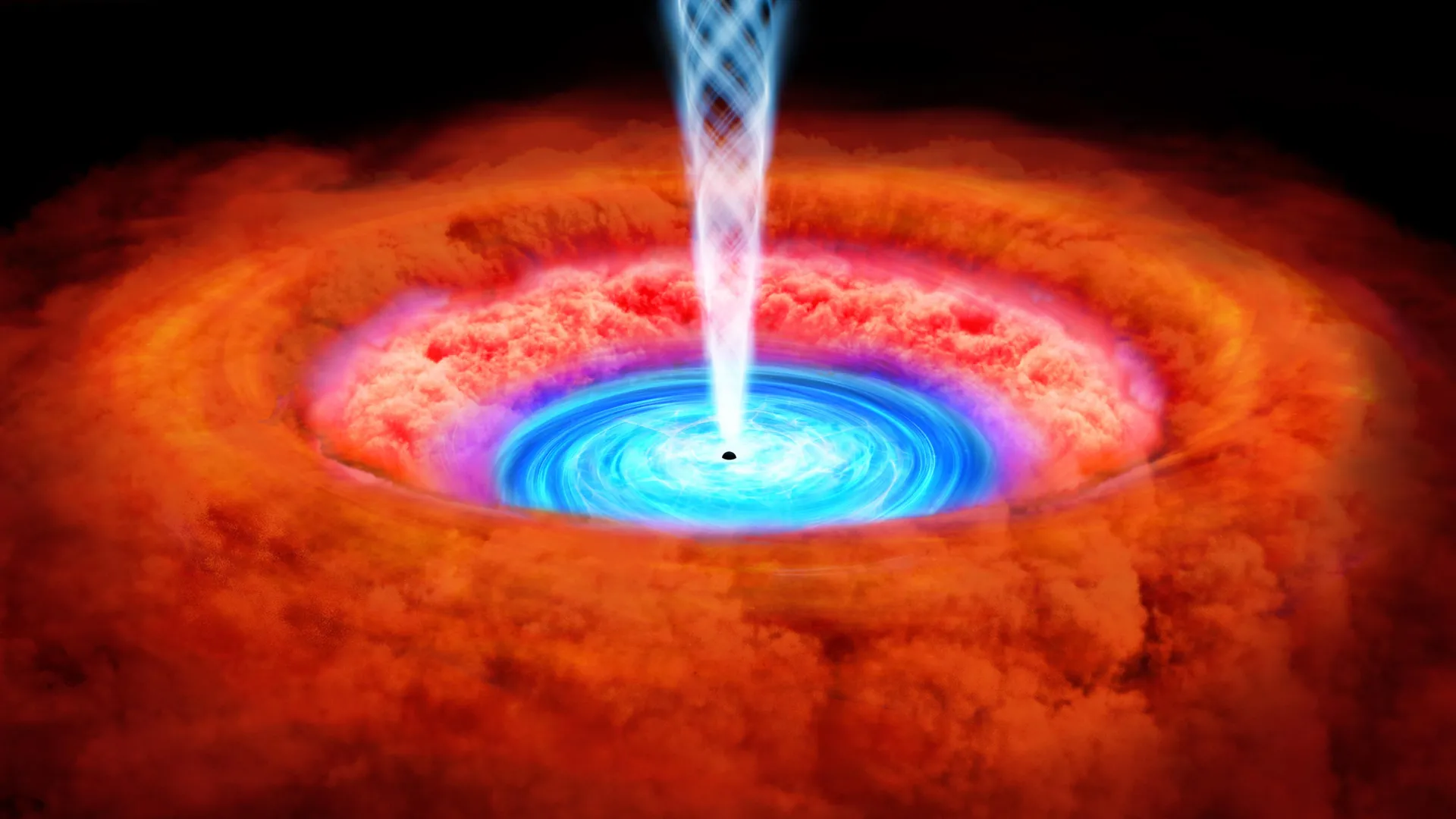
The black hole sits at the heart of a galaxy known as MRG-M0138, seen as it was when the universe was only about 3 billion years old. Unlike the brilliant quasars that blaze across the cosmos as gas spirals into them, this black hole is "dormant" — no significant material is falling in, so it emits essentially no light of its own. That invisibility makes such objects extraordinarily difficult to find and weigh at vast distances.
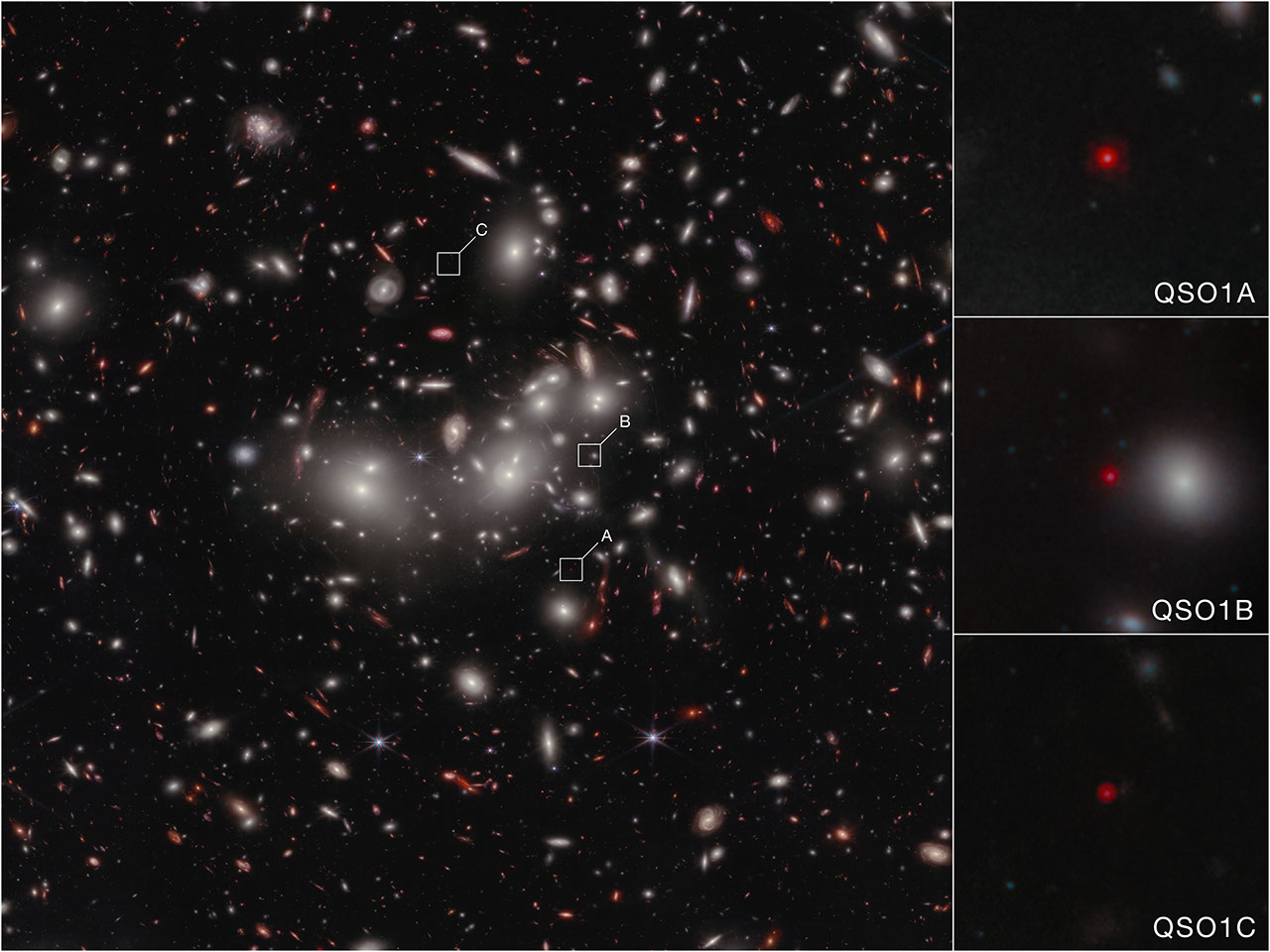
To pull it off, the team turned to NASA's James Webb Space Telescope and a trick of nature: gravitational lensing. A massive cluster of galaxies sitting between Earth and MRG-M0138 bends and magnifies the distant galaxy's light by roughly 30 times, acting as a natural telescope. With that boost, the researchers used Webb's infrared spectrograph to track the motions of stars near the galaxy's center and infer the mass of the unseen object steering them — a technique known as stellar dynamics, applied here at cosmological distances for the first time.
"By demonstrating the feasibility of such a technique for galaxies in the early universe, we can now undertake a more complete census" of black hole development, the researchers said. The work was led by Dr. Andrew Newman of Carnegie Science in Pasadena, with senior author Professor Richard Ellis of University College London and an international team of collaborators.
The finding matters because dormant black holes may represent the hidden majority. Surveys that hunt for actively feeding black holes naturally favor the brightest, most extreme objects, potentially skewing scientists' picture of how these behemoths formed. Detecting and weighing a quiet giant so far back in cosmic time suggests that astronomers can now begin to count the sleepers too — and in doing so, build a fuller account of how supermassive black holes and galaxies evolved together in the early universe.