Finnish Physicists Measure an Energy Pulse Smaller Than a Zeptojoule, a Record for Quantum Sensing
A superconducting calorimeter at Aalto University detected just 0.83 zeptojoules — a sensitivity that could sharpen quantum computers and even help hunt for dark matter.

Researchers in Finland have measured an amount of energy smaller than one zeptojoule — less than a trillionth of a billionth of a joule — setting a new benchmark for ultra-sensitive detection that could ripple through quantum computing and the search for dark matter. The team confirmed it had registered an electromagnetic pulse of just 0.83 zeptojoules, the first calorimetric measurement ever to reach that level of precision.
The work was led by Academy Professor Mikko Möttönen at Aalto University, in collaboration with the quantum-computing company IQM and the Technical Research Centre of Finland (VTT). The results were published May 20 in the journal Nature Electronics.
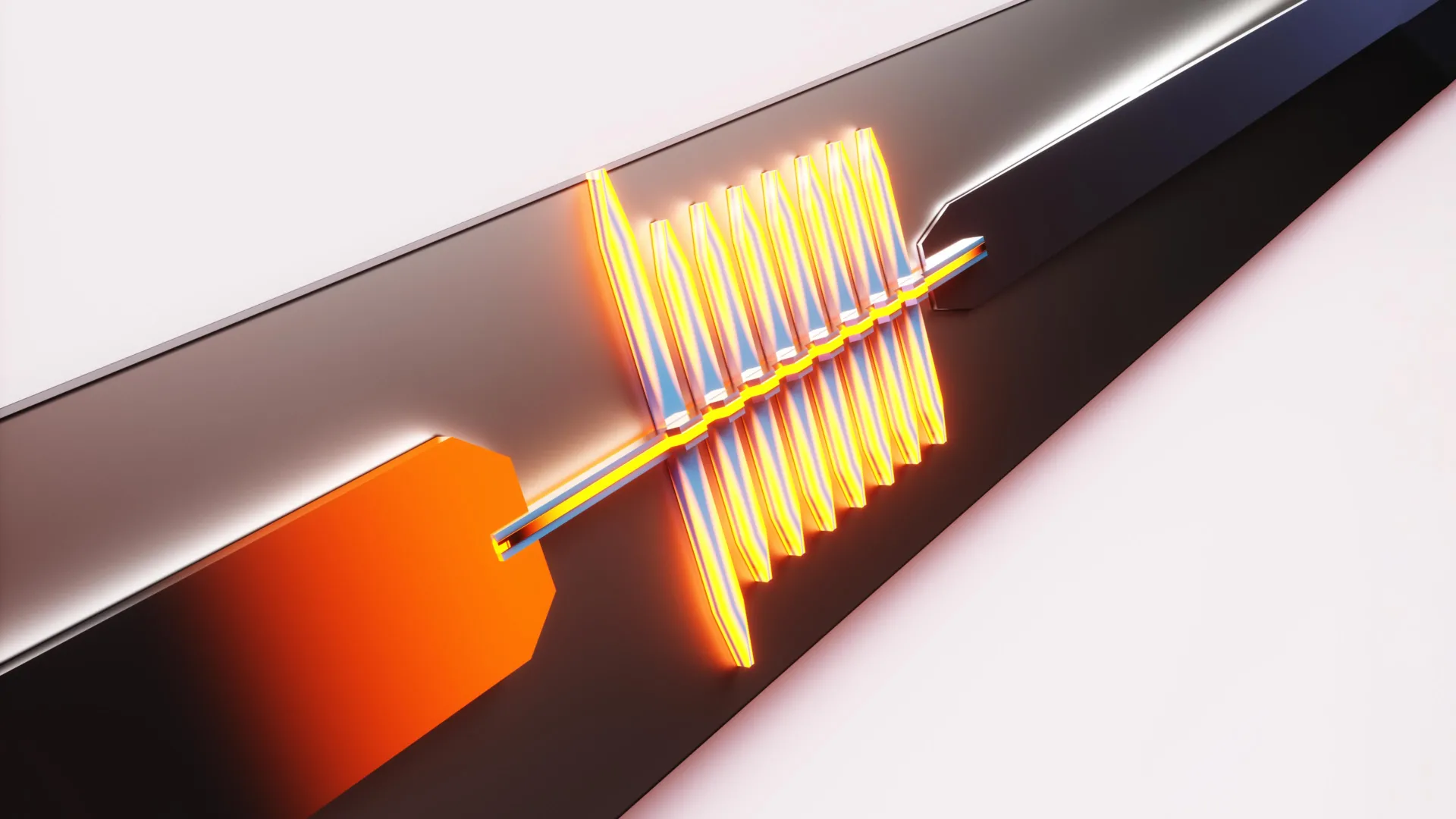
At the heart of the achievement is a calorimeter that pairs superconducting materials with ordinary metallic ones. When a faint microwave pulse enters the device, the superconductor's extreme sensitivity to temperature allows the system to register changes that would be invisible to conventional detectors. "That combination makes superconductivity so fragile that it weakens instantly if temperature rises even slightly," Möttönen explained — and it is precisely that fragility the researchers exploit to sense vanishingly small amounts of energy.
The potential applications are wide-ranging. A detector this sensitive could count individual photons, a long-sought capability in optics and quantum information. It could read out the state of qubits operating at temperatures near absolute zero, a critical step for building reliable quantum processors. And it could help physicists hunt for elusive dark matter particles such as axions, whose interactions with ordinary matter are so feeble that detecting them has defeated generations of experiments.
The measurement was carried out using OtaNano, Finland's national research infrastructure for nano-, micro- and quantum technologies. The facility gives researchers access to the fabrication and cooling tools needed to build and test devices that operate in the extreme cold where superconductors reveal their most delicate behavior.
For all its precision, the device points toward something larger than a single record. As quantum computers scale up, engineers need ways to read their fragile internal states without disturbing them, and astronomers chasing dark matter need sensors capable of catching the faintest possible signals. A calorimeter that can feel less than a zeptojoule is a tool built for exactly those frontiers.