AI Could Speed the Hunt for New Physics Tenfold — but Scientists Found a Catch
Transfer learning slashes the cost of cosmological simulations, yet a Princeton team warns the same shortcut can trick AI into missing real discoveries.

Artificial intelligence promises to accelerate the search for physics beyond the reigning model of the cosmos, but a new study warns that the very technique making that search cheaper can also lead scientists astray — a cautionary tale about trusting machines to spot what they have never seen before.
The research, published on June 11 in the Journal of Cosmology and Astroparticle Physics, was led by Veena Krishnaraj, a Princeton University undergraduate, alongside Adrian Bayer of the Flatiron Institute and Princeton and co-authors Christian Kragh Jespersen and Peter Melchior. The team examined "transfer learning," in which an AI model trained on one problem is repurposed for a related one, as a way to hunt for signatures of new physics beyond the standard Lambda Cold Dark Matter (ΛCDM) model that describes the universe's composition and evolution.
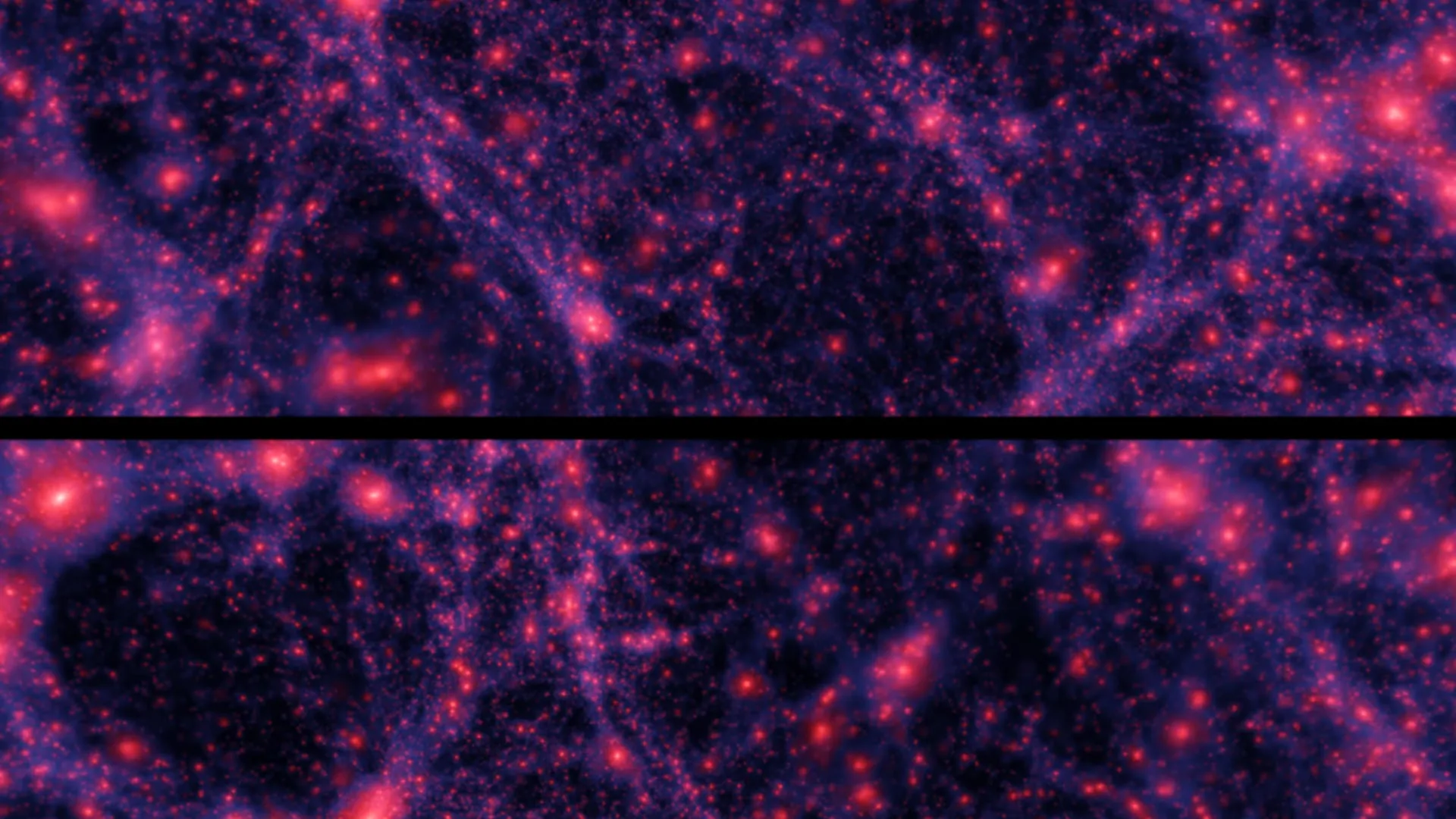
The upside is dramatic. Because running the enormous simulations needed to model the universe is extraordinarily expensive, reusing a pretrained network can cut the required computing by more than a factor of ten. That efficiency could be transformative for upcoming cosmological surveys that will generate floods of data about the large-scale structure of the cosmos.
But the researchers uncovered a subtle trap they call "negative transfer." Because a pretrained network has already learned to recognize the familiar patterns of standard cosmology, it can become overly reliant on them — and misread genuinely new physics as something it already knows. In one telling example, when the team studied the effects of massive neutrinos, the network confused the fingerprint of neutrino mass with an existing ΛCDM parameter known as sigma-8, effectively hiding the very signal scientists were trying to find.
"The negative transfer is not random. It is driven by underlying physical degeneracies in the model," Krishnaraj explained, noting that different physical processes can leave behind strikingly similar observable signatures. That insight matters because it means the failure is predictable — and therefore something researchers can guard against by designing their AI tools more carefully. The next step, the team says, is to move from simulations to real astronomical observations, applying the lessons learned to the flood of data expected from the next generation of sky surveys, where the difference between a machine's shortcut and a true discovery could determine whether new physics is found or overlooked.