
Physics
Dust-Veiled Star Cluster at the Milky Way's Heart Is 13.4 Billion Years Old
Astronomers dated VVV CL001 using Hubble images and say that if it formed in place, it could be the oldest globular cluster in the galaxy's bulge.
Topic
18 stories from Planck Standard. Latest: November 3, 2026.
Astronomers dated VVV CL001 using Hubble images and say that if it formed in place, it could be the oldest globular cluster in the galaxy's bulge.

Gaia ages for stars across the galaxy show the disk flattened fast until about 10.8 billion years ago, then slowly, favoring one of two rival models of how it formed.

By separating three overlapping sources of X-rays, astronomers isolated Sagittarius A East for the first time and mapped its iron, sulfur, argon and calcium.

VT J1906+0849 is the brightest transient in the entire VLA Sky Survey. Its brightness temperature is up to 10 billion kelvin, gas near it moves at thousands of kilometers per second, and it flared again in late 2025. Nothing in the catalog of known galactic sources fits.

DR20 includes half a million black hole spectra, 1.5 million Milky Way stars and the survey's first optical spectroscopy from the Southern Hemisphere — all of it free to anyone who wants it.

A University of Washington team found that a galaxy's own lumpy disk can carve the same gaps and kinks astronomers have been reading as fingerprints of dark matter.

A Flatiron Institute simulation of the galaxy’s entire history finds that about 91% of stellar-mass black holes drift alone, and roughly 3% were kicked out of the galaxy altogether.

Five years of observations with Chile's ALMA telescope revealed a cone of hot gas carved around Sagittarius A*, the long-sought outflow from our galaxy's central supermassive black hole.
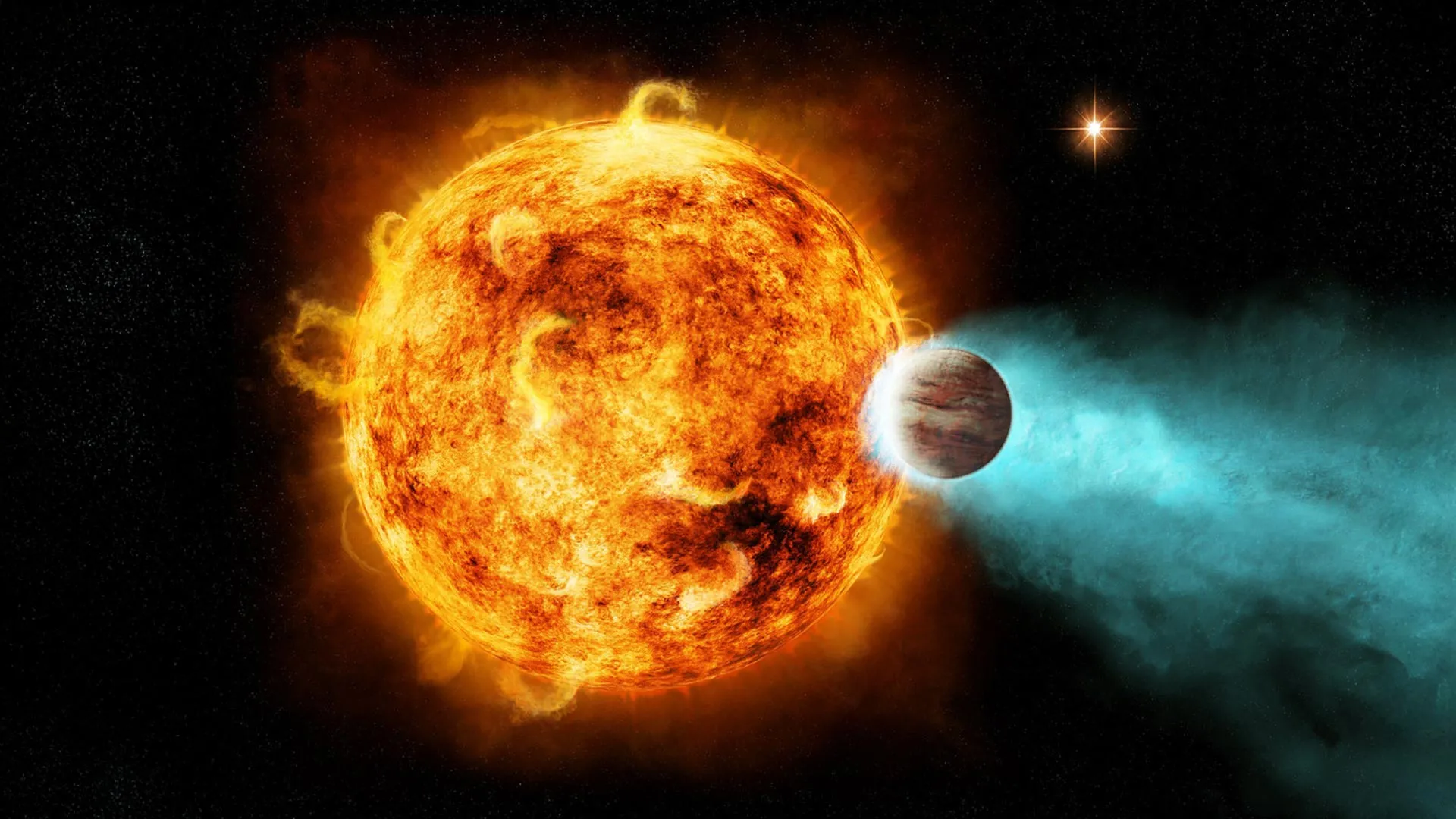
The mission will explore largely uncharted regions of the Milky Way, potentially revealing more alien worlds than all previous missions combined.
University of Calgary astrophysicist Jo-Anne Brown and the international GMIMS consortium say the discovery, made with the Dominion Radio Astrophysical Observatory in British Columbia and published in The Astrophysical Journal, defies every existing dynamo model of galactic magnetism.
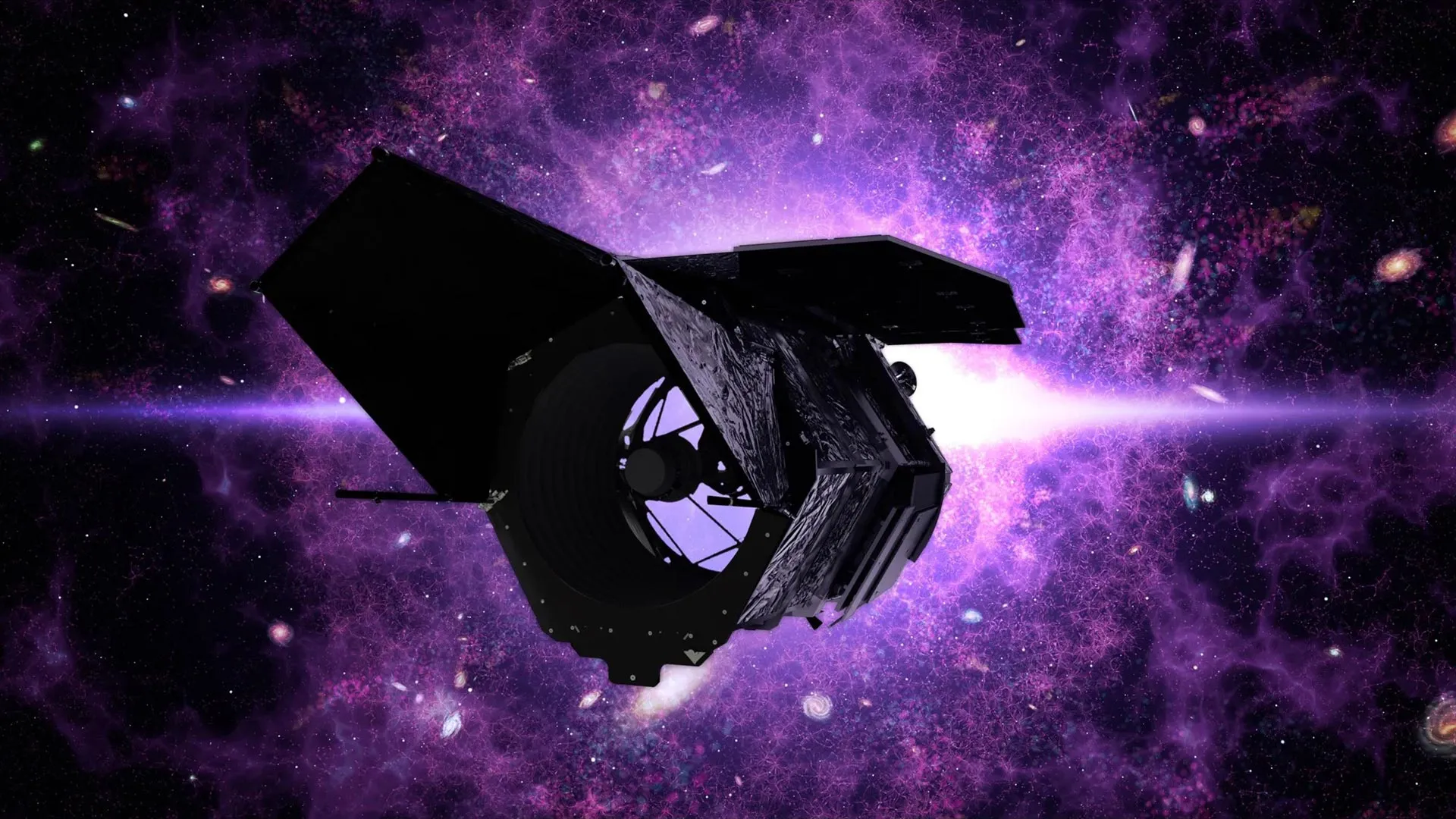
A new Astronomy & Astrophysics study finds that the soon-to-launch Nancy Grace Roman Space Telescope will be sensitive enough to weigh isolated neutron stars through gravitational microlensing, finally cataloguing the city-sized stellar corpses that have eluded detection for nearly a century.

New theory suggests dark matter consists of multiple components that interact differently depending on their cosmic environment.

Researchers suggest a bold new theory to explain why gamma ray signals appear in the Milky Way but not in smaller galaxies, potentially requiring multiple dark matter components.

New theory explains mysterious gamma-ray signals from Milky Way center while accounting for absence of similar signals in dwarf galaxies.

New theory explains why Milky Way shows gamma ray excess while dwarf galaxies remain silent, suggesting complex dark matter interactions.

Scientists propose that dark matter's complexity could explain why gamma ray signals appear in some cosmic locations but not others, challenging single-particle theories.

Researchers suggest multiple dark matter components could explain why gamma-ray signals appear in the Milky Way but not in dwarf galaxies.
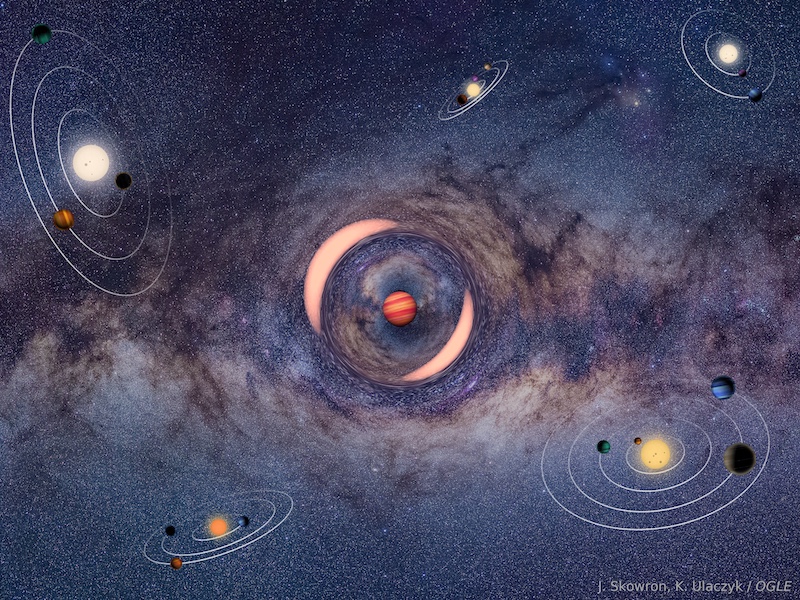
By combining ground-based telescopes with ESA's Gaia spacecraft, an international team led by Peking University's Subo Dong directly measured a free-floating planet's mass 9,800 light-years away — a scientific first.