Astronomers Weigh a Rogue Planet for the First Time — And It's the Size of Saturn
By combining ground-based telescopes with ESA's Gaia spacecraft, an international team led by Peking University's Subo Dong directly measured a free-floating planet's mass 9,800 light-years away — a scientific first.
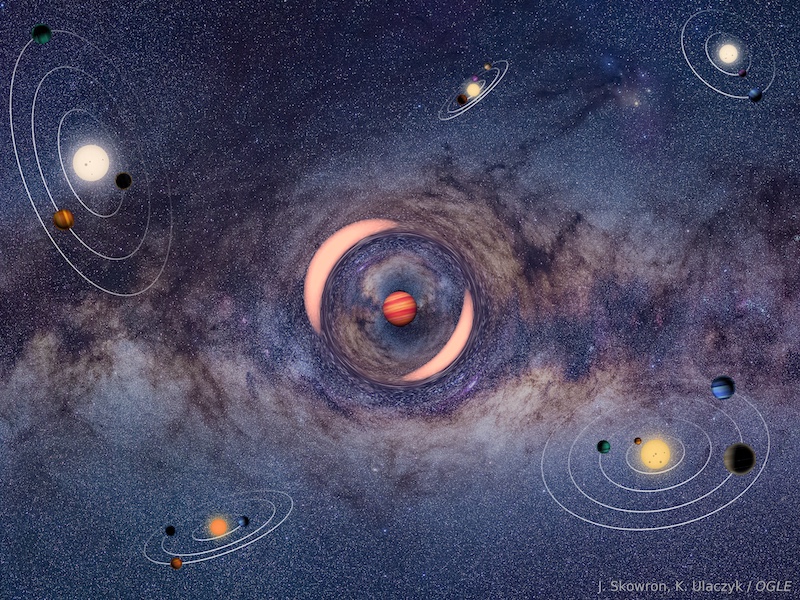
Astronomers have for the first time directly measured the mass of a rogue planet — a free-floating world drifting through interstellar space without a star to orbit — opening a new chapter in the study of these elusive objects and raising profound questions about how many such planetary wanderers may be scattered across the Milky Way. The discovery, published January 1, 2026 in the journal Science, was led by Subo Dong of Peking University and involved an international team that combined ground-based telescope networks with data from the European Space Agency's Gaia spacecraft to achieve what had previously been considered beyond reach.
The rogue planet sits approximately 9,800 light-years from Earth in the direction of the Milky Way's dense central bulge and has a mass comparable to Saturn — roughly 95 times the mass of Earth. Its presence was detected through gravitational microlensing, a technique in which the gravity of a foreground object temporarily magnifies and brightens the light from a more distant background star. Microlensing had been used before to statistically estimate the population of rogue planets lurking in the galaxy, but the technique had never previously yielded a direct, confirmed mass measurement for any individual free-floating world. All prior detections had produced estimates with uncertainties so large they could not distinguish a Saturn-mass planet from a much heavier brown dwarf.
The breakthrough came from pairing ground-based observations with simultaneous measurements from the Gaia space telescope, which is continuously mapping the positions of more than a billion stars with extraordinary precision. During the microlensing event, Gaia detected a tiny but measurable parallax shift in the apparent position of the background star — a shift that, when compared with ground-based timing data, allowed the team to solve for the mass of the lensing object without ambiguity. "For the first time, we have a direct measurement of a rogue planet candidate's mass and not just a rough statistical estimate," Dong said in a statement accompanying publication. It is also the first rogue planet detected using both ground-based and space-based observatories in simultaneous operation — a new detection methodology that could be applied to hundreds of future events.
The mass — comparable to Saturn — is significant because it places the object firmly in the category of planets rather than brown dwarfs, which are failed stars that form in isolation from collapsing gas clouds. Detailed modeling of the microlensing light curve strongly suggests the object originally formed within a protoplanetary disk around a star before being dynamically ejected into interstellar space through gravitational interactions with larger planetary siblings. The ejection mechanism, which likely involves close gravitational encounters between planets during early solar system formation, is thought to be surprisingly common. Some theoretical models predict that our galaxy contains more rogue planets than there are stars — potentially trillions of worlds adrift in the dark.
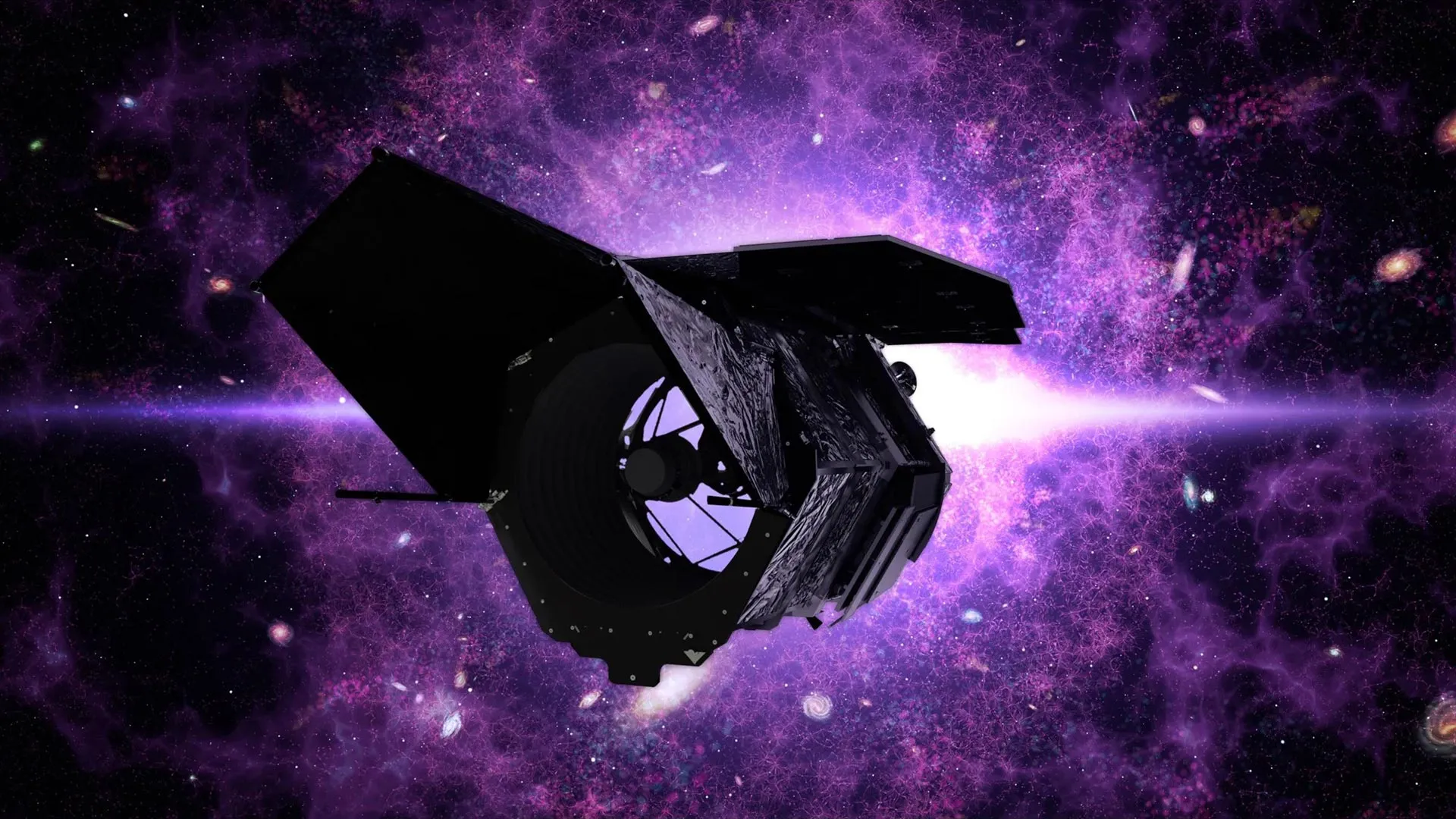
The finding has direct implications for NASA's Nancy Grace Roman Space Telescope, which launched in 2025 and is designed to detect hundreds to thousands of microlensing events over its mission lifetime. Roman's wide-field infrared camera, combined with planned coordination with the Gaia mission, creates exactly the kind of Earth-space synergy that enabled this discovery, suggesting that a systematic census of free-floating planets — their masses, abundances, and formation histories — may finally be within reach. As Dong and his colleagues write in Science, this measurement demonstrates that the combination of space and ground observations "opens a new window to characterize individual rogue planets" and transforms the field from statistical population studies to the direct characterization of individual worlds.