Fermilab's New Quantum Sensors Could Spot Dark Matter That's Too Faint to See — Here's How They Work
Scientists at Fermilab and Caltech have tested superconducting microwire detectors at CERN that outperform previous designs in detecting individual charged particles — a potential leap forward for ultra-light dark matter experiments.
BATAVIA, Ill. — Scientists at Fermi National Accelerator Laboratory have published results showing that a new class of superconducting detectors, tested at CERN's particle accelerator complex in Switzerland, achieves improvements in detection efficiency and timing precision that could meaningfully advance the search for one of physics' greatest mysteries: dark matter.
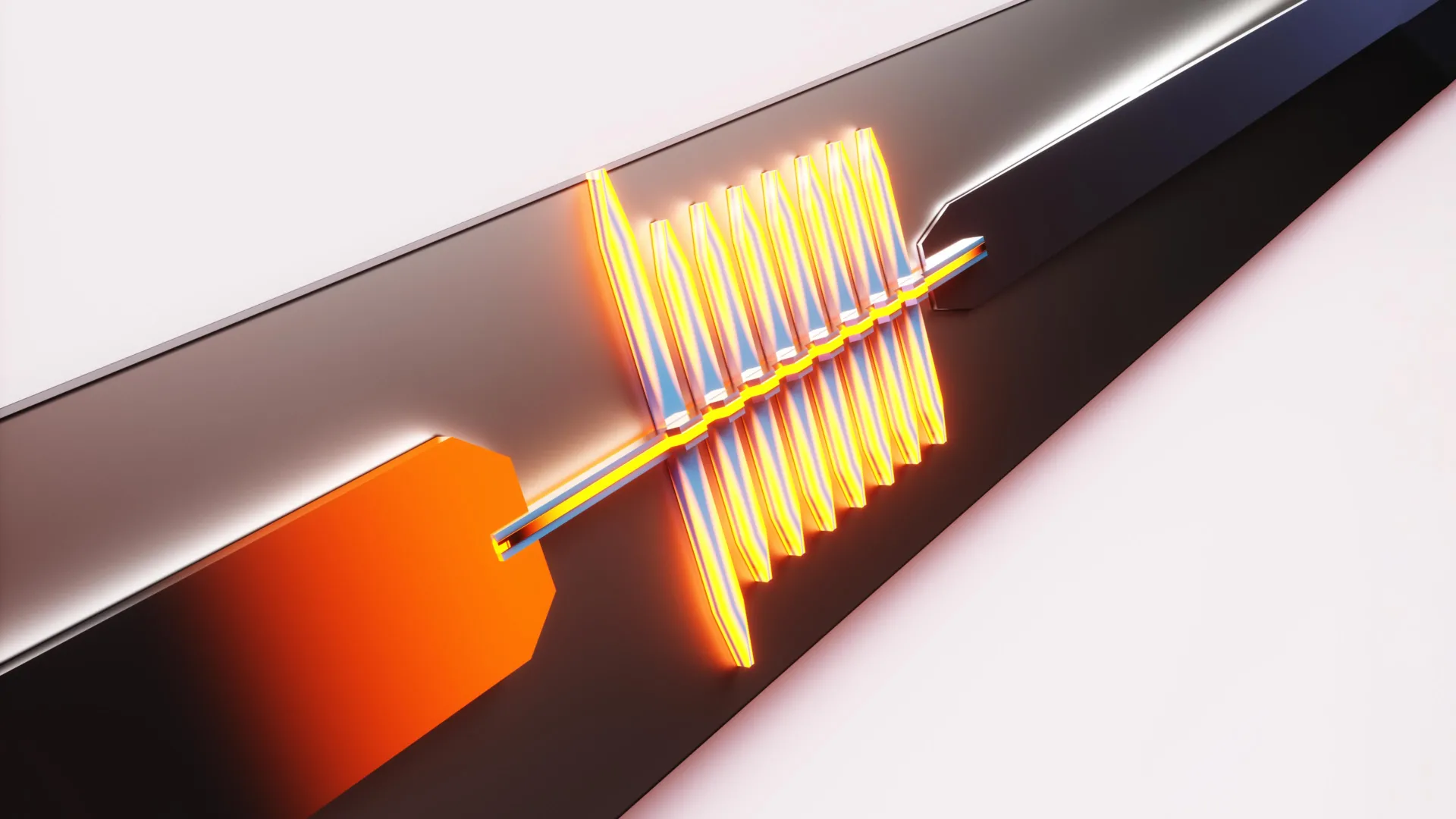
The sensors are called Superconducting Microwire Single-Photon Detectors, or SMSPDs — devices smaller than a human hair, cooled to temperatures near absolute zero, and sensitive enough to detect the arrival of a single particle with extraordinary timing precision. Unlike previous superconducting detectors built with nanowire architectures, SMSPDs use wider microwires that allow for larger active detection areas — a critical advantage when you're trying to catch a particle that almost never interacts with ordinary matter.
Dark matter is believed to make up roughly 27 percent of the universe's total mass-energy content, yet it has never been directly detected in a laboratory. Its existence is inferred from the gravitational behavior of galaxies, galaxy clusters, and the large-scale structure of the cosmos. But actually capturing a dark matter particle requires detectors of almost inconceivable sensitivity — the ability to notice a whisper of energy deposition against a sea of background noise.
The Fermilab-led team, which also included researchers from Caltech, NASA's Jet Propulsion Laboratory, and the University of Geneva, fabricated SMSPDs using a thicker film of tungsten silicide than previous designs. That seemingly small modification produced measurable improvements in two critical metrics: the efficiency with which the detector captures individual particles, and the timing precision with which it records their arrival.
Lead scientist Cristián Peña of Fermilab said the results were 'significant because it shows improvement from our initial measurements using SMSPDs for charged particle detection.' Collaborator Si Xie, jointly appointed to Fermilab and Caltech, added: 'We are continuing to make strides in developing these sensors with greater precision.' The team also achieved the first-ever measurement of muon detection efficiency using SMSPDs — muons being the heavy, penetrating particles produced in cosmic rays and particle collisions that serve as standard test particles in high-energy physics experiments.
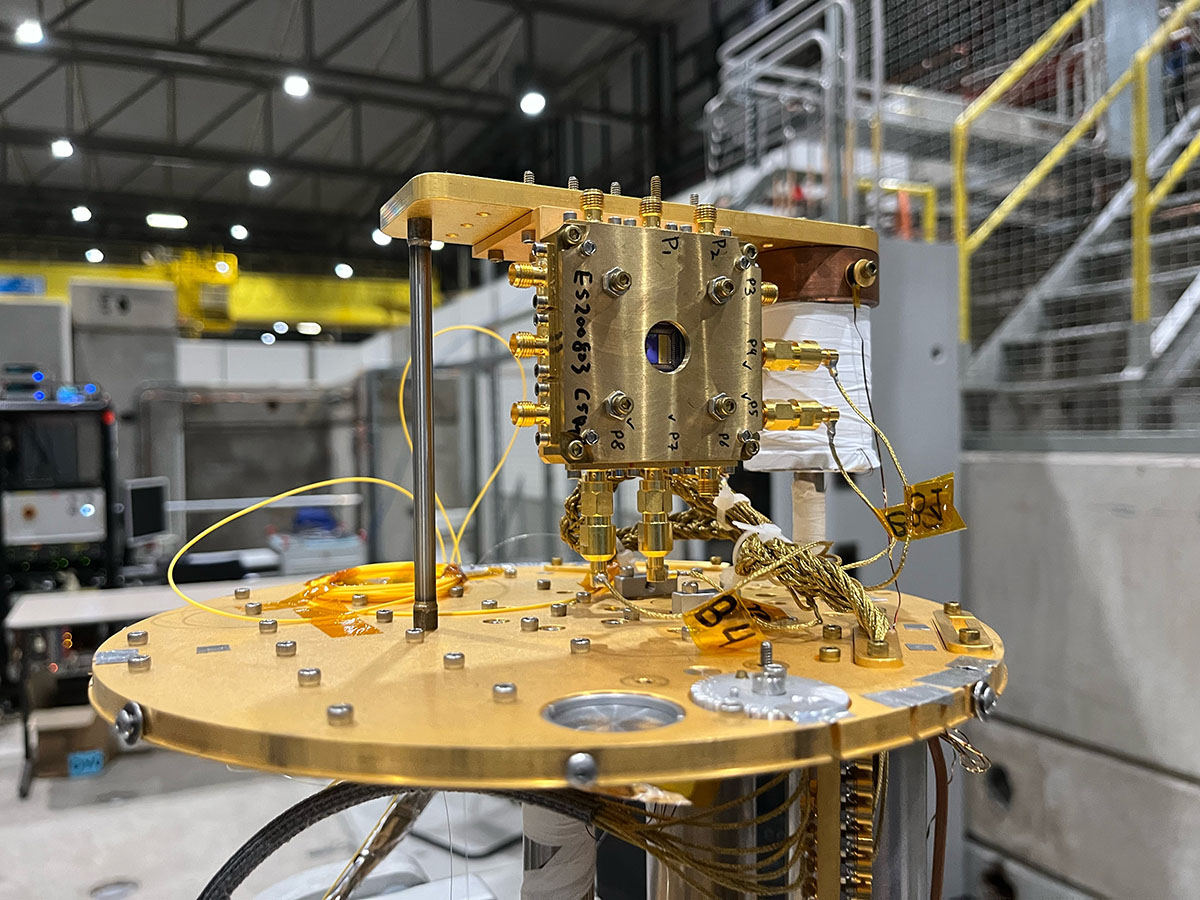
Key testing was conducted at CERN's testbeam facilities, where particle beams of precisely known energy and composition were directed at the prototype SMSPD arrays. This environment allowed for a controlled, quantitative comparison with prior detector designs, confirming the improvements were real rather than instrumental artifacts.
A related study, published simultaneously in the Journal of Instrumentation, showed how arrays of SMSPDs can be adapted for the temperature ranges and event rates required by the next generation of dedicated dark matter experiments. Such detectors must not only be extraordinarily sensitive but must also process millions of events per second without saturating — a challenge that rules out many classical detection architectures.
The work fits into a broader technological renaissance in dark matter detection. Fermilab's TESSERACT experiment recently achieved world-leading sensitivity in the search for ultra-light dark matter particles. Related experimental work confirming the Migdal effect — a quantum process by which a recoiling nucleus ejects an orbital electron — has opened search strategies for particles previously too faint to detect with any existing instrument.
The question of what dark matter actually is remains among the deepest in physics. Candidates range from hypothetical particles called weakly interacting massive particles, or WIMPs, to far lighter and more exotic possibilities like dark photons, axions, or primordial black holes. SMSPDs, with their combination of sensitivity, timing precision, and scalable area, may be best suited to hunting the lighter end of that spectrum — the particles whose subtle signals would be washed out entirely by less capable instruments.