CERN Discovers New Doubly Charmed Baryon at 7-Sigma Significance — 80th Particle Found at LHC
The LHCb collaboration's discovery of the Ξcc⁺ resolves a 20-year prediction gap in quantum chromodynamics and is the first new particle found since the detector's 2023 upgrade.
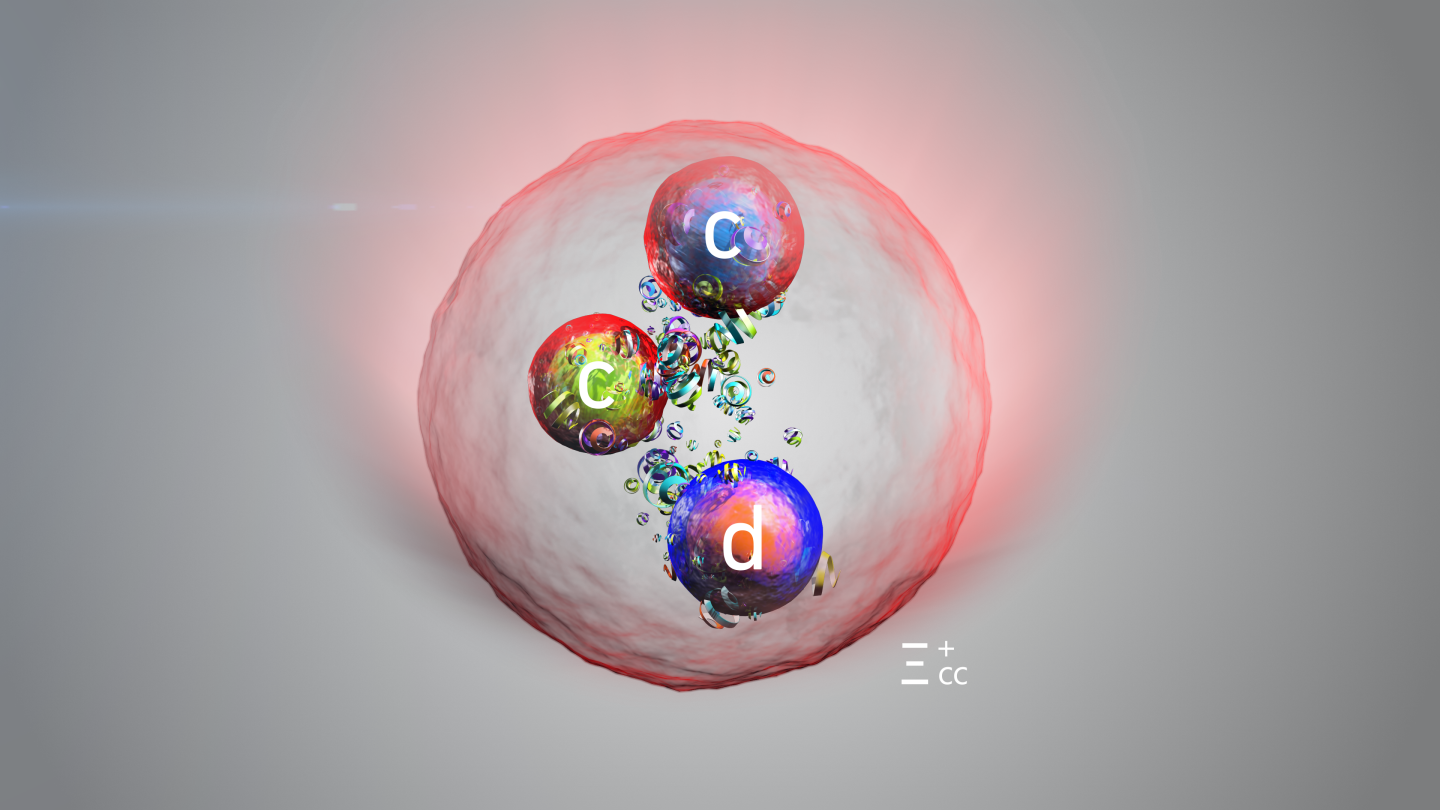
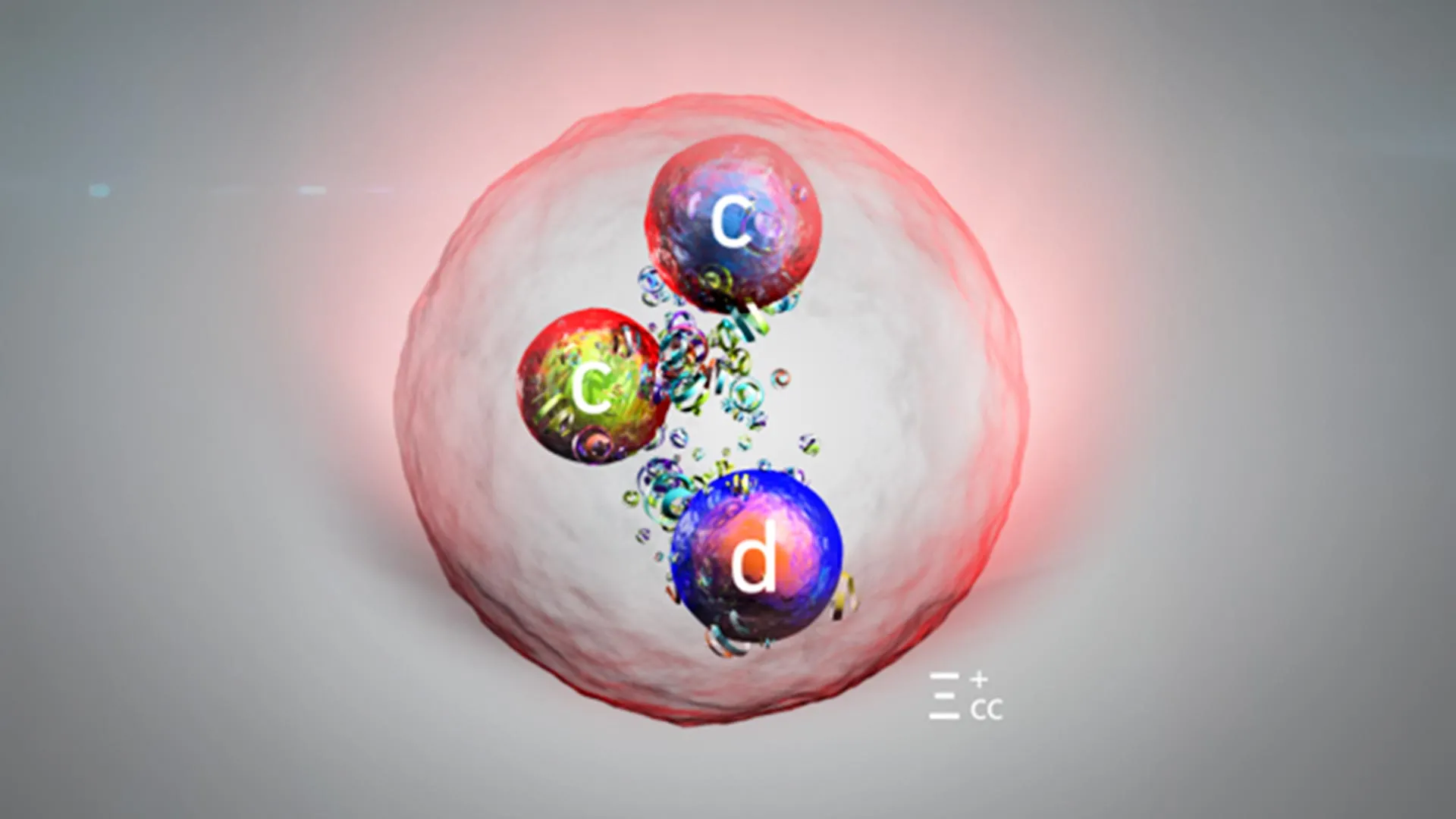
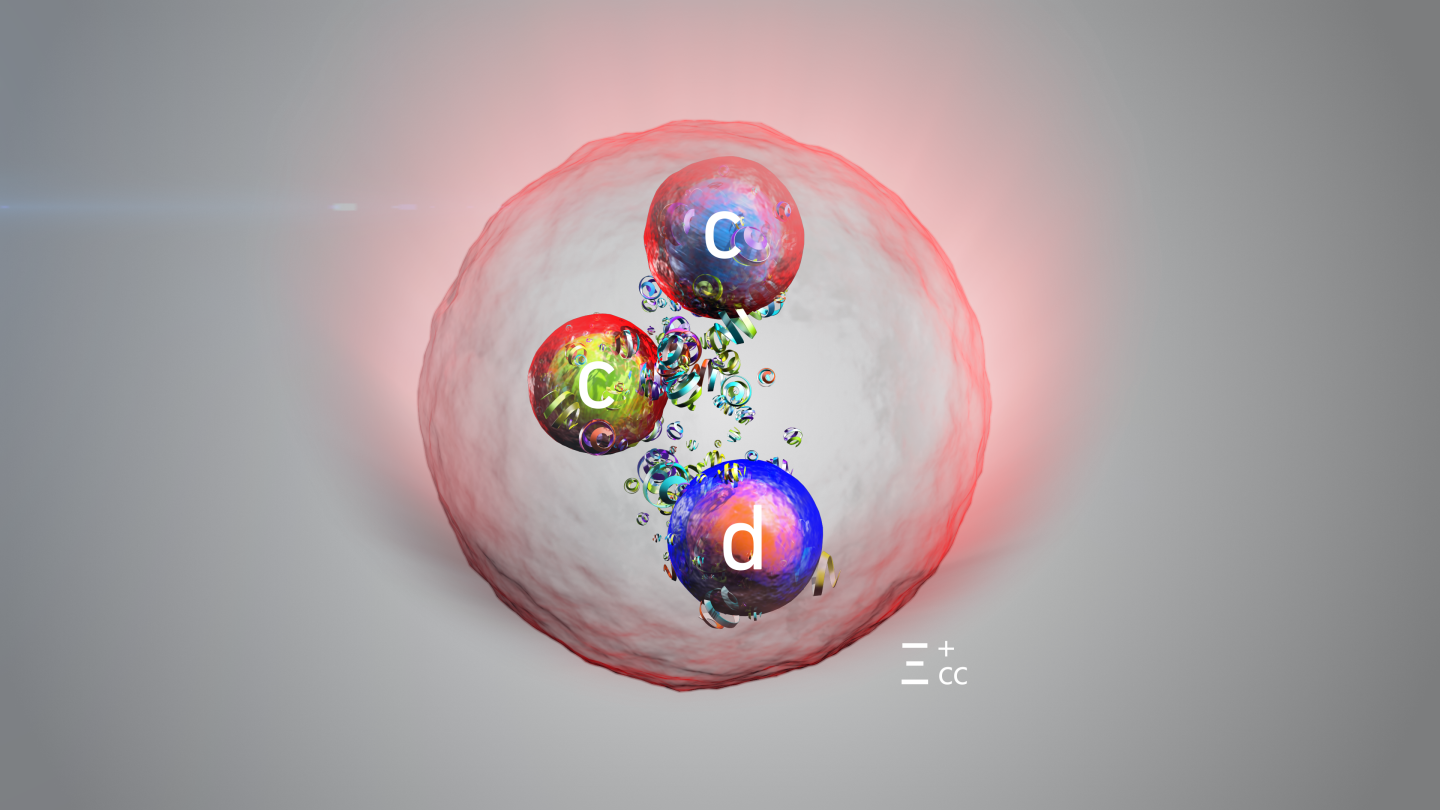
GENEVA — Scientists at CERN's Large Hadron Collider have discovered a new subatomic particle — a doubly charmed baryon designated Ξcc⁺ — marking the 80th composite particle identified at the LHC and the first new particle discovered since the LHCb detector was upgraded in 2023. The finding, announced on March 17 at the Rencontres de Moriond Electroweak conference in La Thuile, Italy, resolves a 20-year discrepancy in theoretical particle physics predictions and opens new windows into one of nature's most powerful and least understood forces: the strong nuclear force.
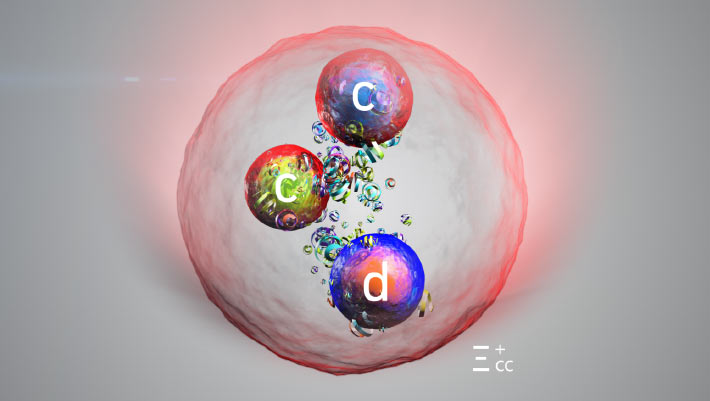
The particle contains two charm quarks and one down quark, making it structurally analogous to a proton — which contains two up quarks and one down quark — but approximately four times heavier. Charm quarks are among the heavier quarks in the Standard Model of particle physics, and particles containing two of them are extraordinarily rare and short-lived. The new baryon's discovery carries a statistical significance of 7 sigma, well above the 5-sigma threshold conventionally required to formally claim a particle discovery in physics.
"This is the first new particle identified after the upgrades to the LHCb detector that were completed in 2023, and only the second time a baryon with two heavy quarks has been observed," said LHCb Spokesperson Vincenzo Vagnoni. The first doubly charmed baryon — the Ξcc⁺⁺, containing two charm quarks and one up quark — was discovered at LHCb in 2017. Physicists predicted both particles should exist, but their extremely short lifetimes and the precision needed to distinguish them from background noise meant confirmation required years of upgraded detector performance.
The discovery has direct implications for quantum chromodynamics, the theory that describes how the strong nuclear force binds quarks into protons, neutrons, and other hadrons. The Ξcc⁺ has a predicted lifetime up to six times shorter than its sibling particle, due to subtle quantum interference effects between the decay pathways of its two charm quarks — effects that are extremely challenging to calculate and had never been confirmed experimentally until now. By measuring the actual lifetime and decay properties, physicists can now test QCD predictions with unprecedented precision.
CERN Director-General Mark Thomson said the discovery underscores the value of the LHC's ongoing upgrade program. "It highlights how experimental upgrades at CERN directly lead to new discoveries, setting the stage for the transformative science we expect," Thomson said in a statement. The LHCb collaboration, which involves more than 1,400 scientists from around the world, is continuing to analyze data collected since the 2023 upgrades. Physicists expect the improved detector sensitivity to reveal additional new particles in the coming years as the LHC continues its high-luminosity operation phase.