ATLAS Details Trigger System Upgrades That Tame 40 MHz Data Deluge
New paper summarizes how hardware and software upgrades kept pace with rising LHC luminosity during Run-3

The ATLAS collaboration at CERN has published a comprehensive overview of the trigger system upgrades that enabled the experiment to manage an extraordinary flood of collision data throughout Run-3 of the Large Hadron Collider, which spans from 2022 to 2026.
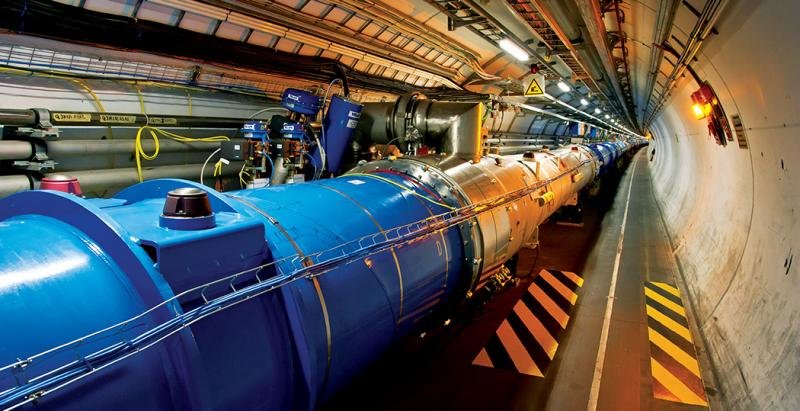
Authored by Leonardo Toffolin and posted to the arXiv preprint server on March 12, the paper describes how the ATLAS trigger system reduces the raw event rate from 40 million proton-proton bunch crossings per second down to a manageable stream suitable for offline storage and physics analysis. Without such a system, the sheer volume of data produced by the LHC — the world's most powerful particle accelerator — would overwhelm even the most capable computing infrastructure available to high-energy physics.
The upgrades documented in the paper span both layers of the ATLAS trigger architecture. The Level-1 trigger, which operates on custom hardware and makes initial accept-or-reject decisions in microseconds, received significant enhancements to handle the increased luminosity and pile-up conditions that characterized Run-3 operations. Pile-up — the simultaneous occurrence of multiple proton-proton interactions in a single bunch crossing — has been a growing challenge as the LHC has pushed to higher instantaneous luminosities. The software-based High Level Trigger, which performs more refined event reconstruction and selection downstream of Level-1, was also substantially upgraded to maintain physics sensitivity under these demanding conditions.
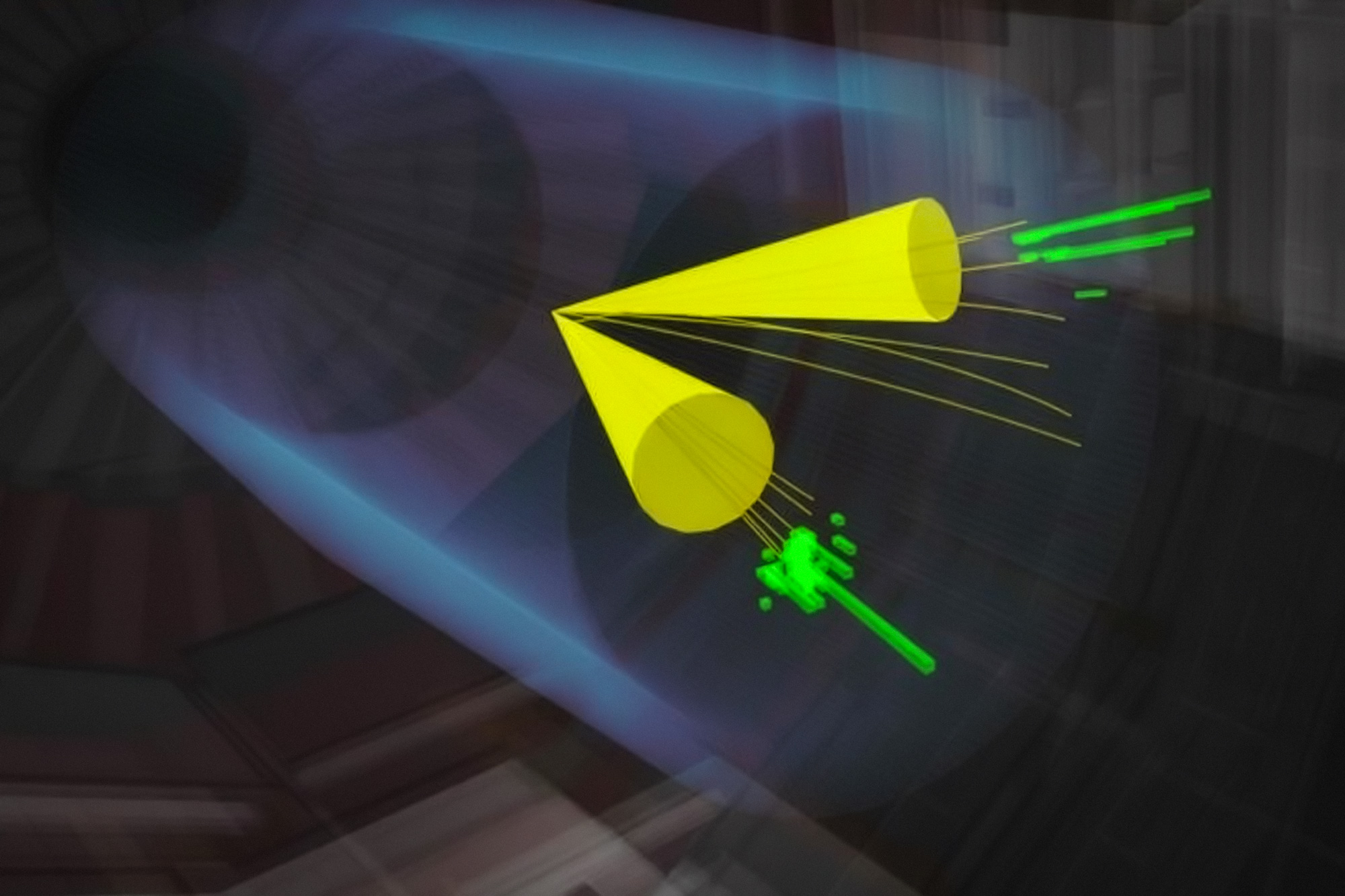
The trigger system's performance has direct consequences for the breadth and depth of ATLAS's physics program. Every precision measurement of the Higgs boson, every search for supersymmetric particles or other new physics signatures, and every test of the Standard Model depends on the trigger's ability to identify and retain the rare, interesting collisions while discarding the overwhelming background. A poorly performing trigger would effectively render the detector blind to the very phenomena it was built to study.
The paper arrives as the high-energy physics community looks ahead to the High-Luminosity LHC era, set to begin after the current long shutdown. The HL-LHC will increase pile-up conditions by roughly a factor of five compared to Run-3, demanding yet another generation of trigger innovations. The lessons learned and documented from Run-3 operations will serve as a critical foundation for the ATLAS collaboration as it prepares its Phase-II trigger system to meet that far more extreme data challenge.