CERN Physicists Discover New Subatomic Particle With Near-Certainty — A Doubly-Charmed Baryon
The LHCb collaboration announces the detection of a baryon made of two charm quarks at 7-sigma statistical significance, becoming the 80th particle ever found at the Large Hadron Collider.

Physicists at CERN have announced the discovery of a new subatomic particle — a doubly-charmed baryon — with statistical certainty well above the threshold required for a formal discovery in particle physics. The detection, announced by the LHCb collaboration at the Moriond conference on March 17, 2026, was made at 7-sigma significance, meaning the probability that the signal is a statistical fluke is less than one in a trillion. The finding marks the 80th particle discovered at the Large Hadron Collider and only the second time a doubly heavy baryon has ever been observed in nature.
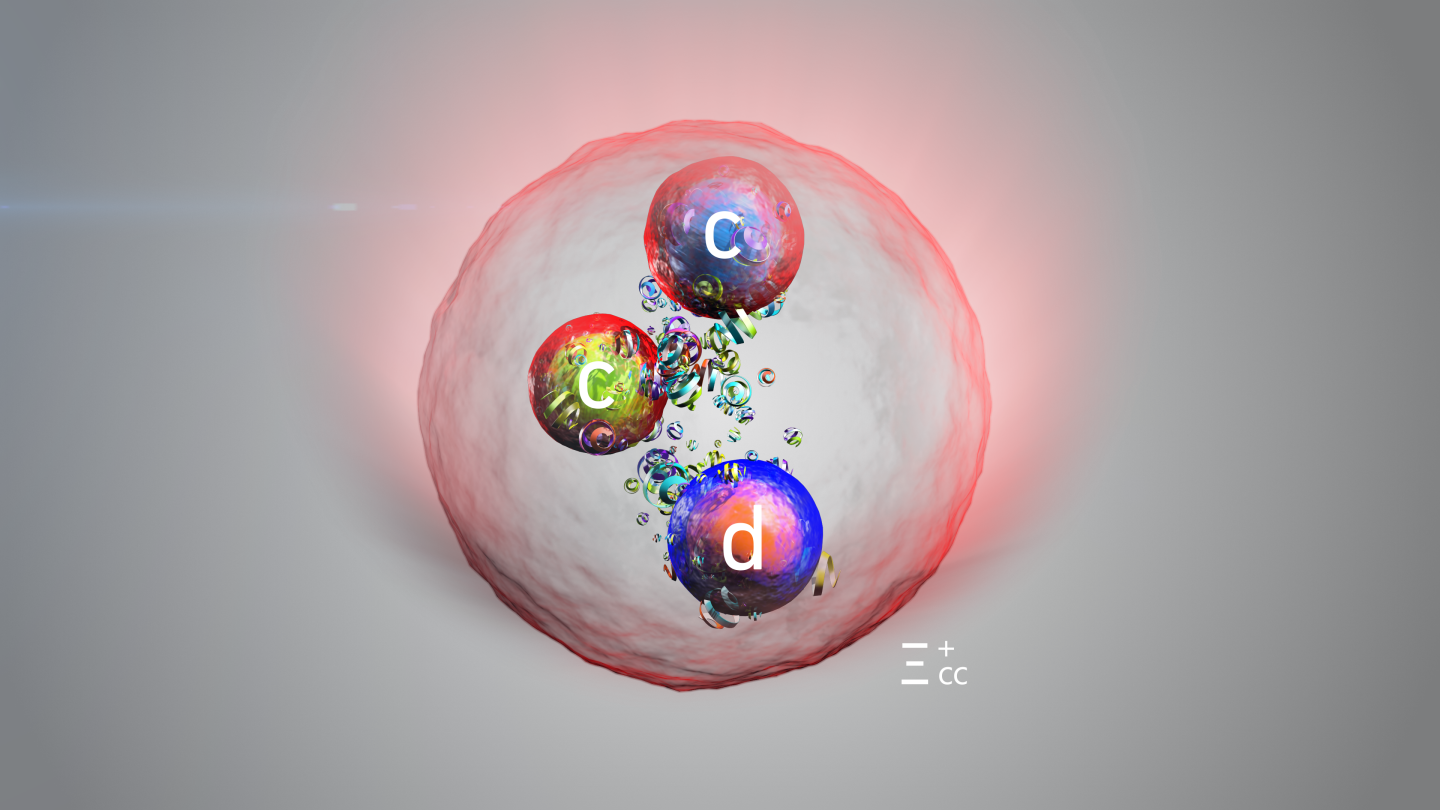
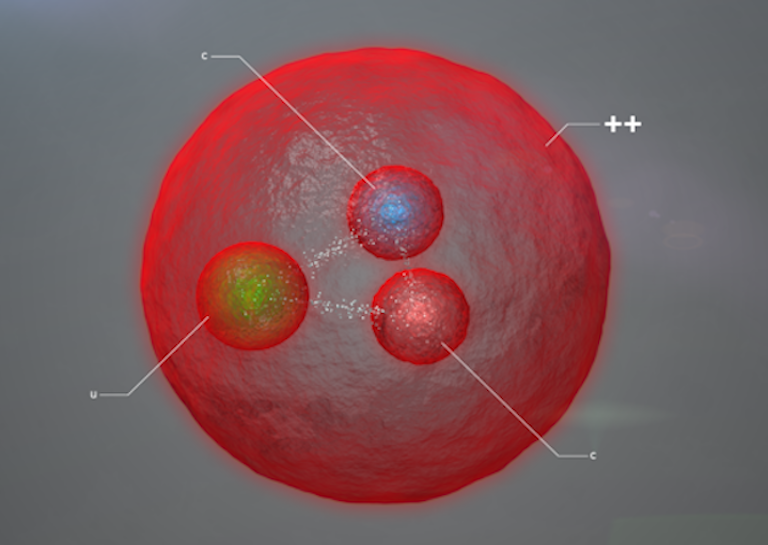
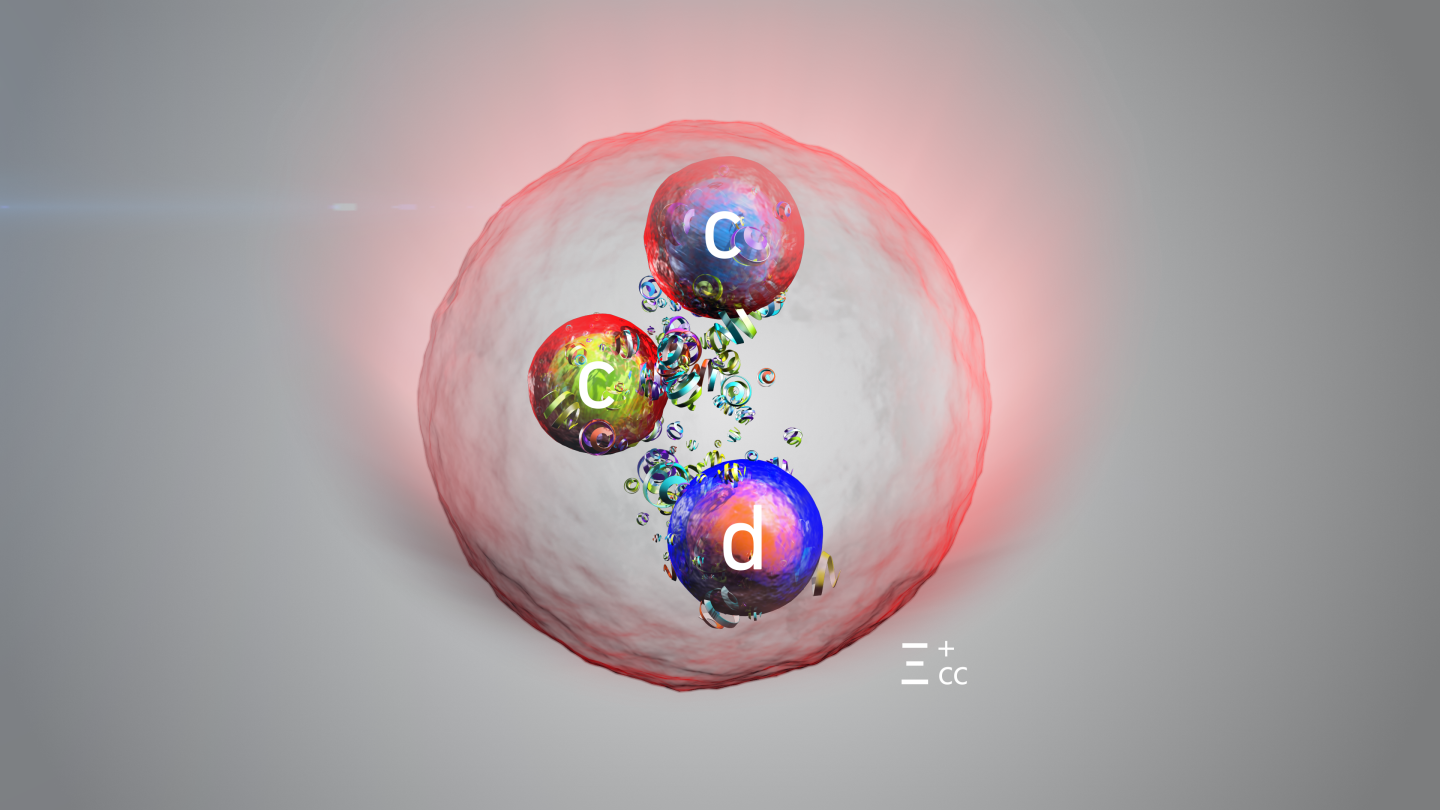
The particle, which researchers informally describe as a heavier cousin of the proton, is a baryon — a category that includes protons and neutrons — but with a striking difference in its internal quark composition. An ordinary proton contains two up quarks and one down quark. The newly discovered particle replaces both up quarks with charm quarks, which are approximately 1,000 times heavier than up quarks. This makes the overall particle roughly four times heavier than a proton, and gives it a predicted lifetime up to six times shorter than a previously discovered doubly heavy baryon found at the LHC in 2017, which contained one charm quark and one strange quark.
The LHCb collaboration, led by spokesperson Vincenzo Vagnoni, has been hunting for this specific configuration of quarks for years. The result was made possible by the 2023 upgrades to the LHCb detector, which significantly improved its ability to identify the fleeting signatures left by heavy particles before they decay. Because charm quarks are heavy, they decay rapidly, and the particle lives for an extraordinarily short time before transforming into lighter particles that can be traced back to the original decay chain. The collaboration sifted through an enormous number of collision events to extract the clean signal published this week.
The discovery matters beyond the headline number. Quantum chromodynamics — QCD, the theory describing the strong nuclear force that binds quarks together — makes specific predictions about particles containing multiple heavy quarks. Those predictions have been difficult to test because such particles are rare and decay quickly. The 2017 LHCb discovery of the first doubly heavy baryon provided one data point; this second discovery offers a new configuration to test theoretical calculations. The two particles together act as a comparative laboratory: same basic structure, different quark flavors, very different predicted lifetimes. Measuring how precisely the decay rates and masses match QCD calculations probes the theory at a level of detail not previously accessible.
"This brings the total number of hadrons discovered at the LHC to 80," said CERN in announcing the result, noting that hadron spectroscopy — the systematic cataloguing of particles made of quarks — remains one of the most productive lines of inquiry at the collider. Unlike the celebrated Higgs boson discovery, which required the entire LHC program to construct, hadron discoveries like this one can be made with existing detector capabilities and serve as precision tests of QCD rather than windows into entirely new physics. The LHCb collaboration is now analyzing data collected after the 2023 upgrades to search for additional members of the doubly heavy baryon family predicted by theory, including particles containing two bottom quarks — the heaviest flavor quark routinely produced in LHC collisions.