NYU Mathematicians Finally Settle Feynman's Sprinkler Problem With a Batch of 'Silly Sprinklers'
Richard Feynman made the puzzle famous after his own experiments failed. A team at the Courant Institute built looping, curved sprinklers, ran them forward and backward, and found the answer in the angular momentum of the water itself.
A lawn sprinkler spins one way when water shoots out of its arms. Run it in reverse, so that water is sucked in instead, and which way does it turn? That question has hung over physics for more than a century, and a team of mathematicians at New York University's Courant Institute of Mathematical Sciences says it has now answered it experimentally.
The puzzle is usually attached to Richard Feynman, who described wrestling with it as a graduate student at Princeton and made it famous in his memoirs after his own attempt to test it ended with an exploding carboy of water in the university's cyclotron laboratory. But the problem is older than Feynman. Ernst Mach posed a version of it in the 1880s, and the two men left behind competing intuitions about what should happen, neither of which had ever been settled by measurement.
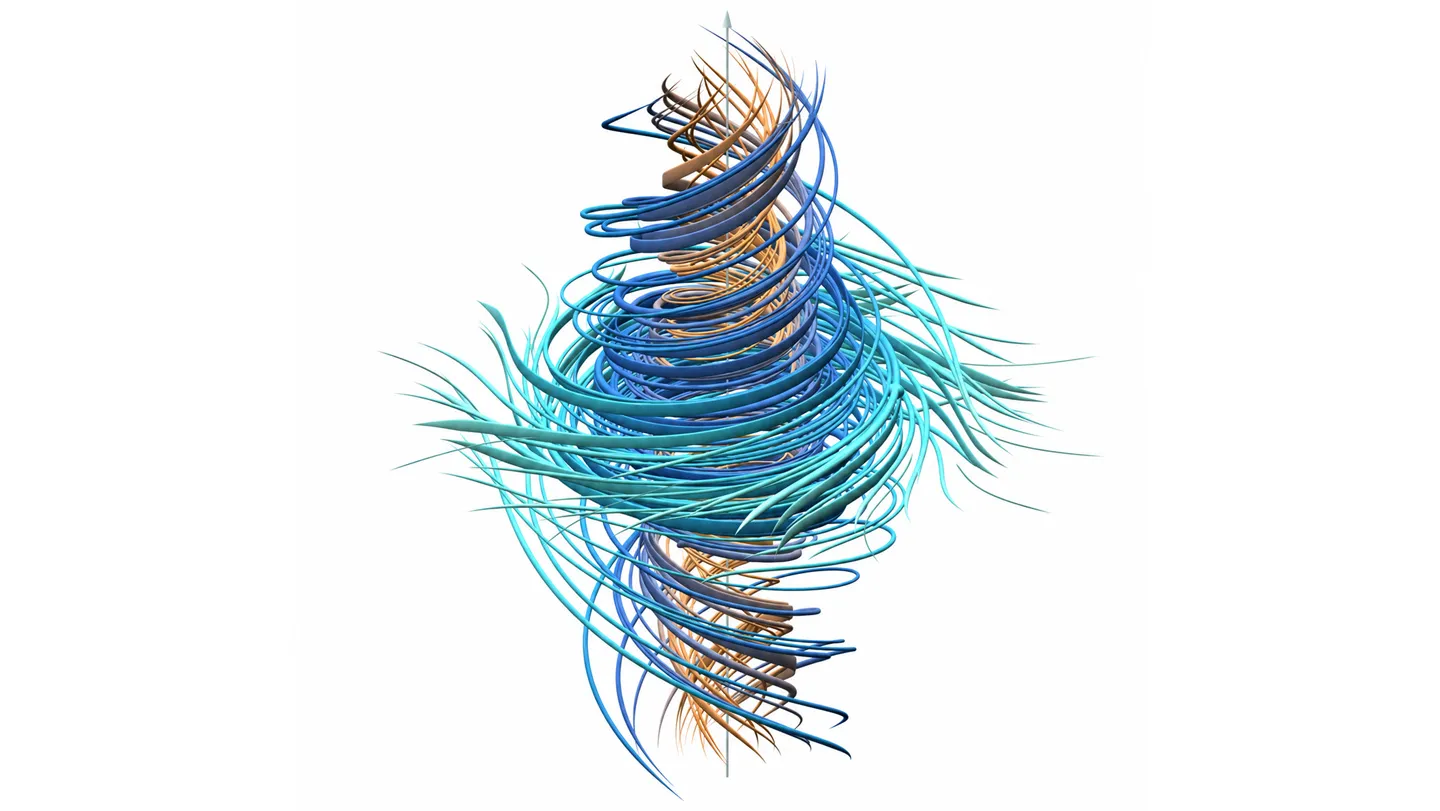
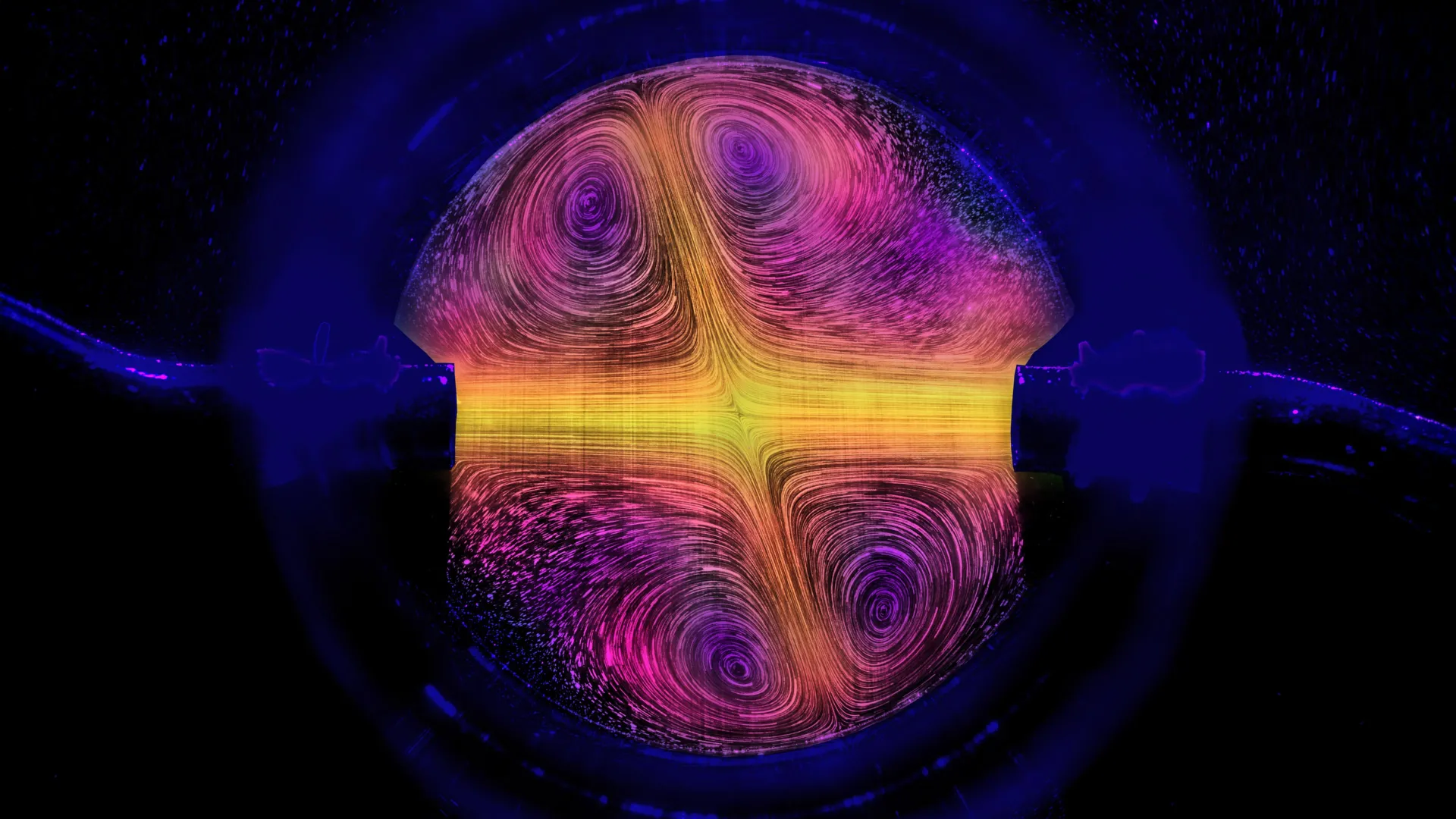
The NYU team, led by associate professor Leif Ristroph with graduate students Jesse Smith and Mingxuan Zuo, undergraduate Will Kuhlke, and Brennan Sprinkle of the Colorado School of Mines, took an approach that sounds less like theoretical physics than like a workshop project. They built what they call silly sprinklers: devices with arms bent into curves and full loops, shapes no one would ever put on a lawn, precisely because exotic geometries force any candidate theory to make sharp, falsifiable predictions. Each sprinkler was run both forward and in reverse. The researchers measured rotation rates, tracked the water flowing inside and outside the arms, and clamped the devices in place to measure the torque directly.
Across every geometry they tested, one explanation survived: momentum flux. The rotation is driven by the angular momentum carried by the water, and in the reverse case it comes principally from where the incoming jets collide with each other inside the sprinkler's central chamber. Both the Mach account and the explanation usually attributed to Feynman were ruled out by the measurements.
"This work provides the experimental answer for Feynman's Sprinkler Problem by showing, across several sprinkler types, how the angular momentum of water flows drives sprinklers' rotation," Ristroph said.
One number in the results explains why the question stayed open so long. A reverse sprinkler rotates roughly 50 times more slowly than a conventional one, even though the same physics governs both. That is a motion faint enough to be swamped by friction in a bearing, by a slight imbalance in the arms, or by the turbulence of a bucket of water, which is exactly the sort of noise that defeated generations of people who tried the experiment in a sink.
The findings appear in the Proceedings of the National Academy of Sciences, volume 123, issue 30. Beyond settling a famous argument, the work has a practical edge: the same accounting of angular momentum in and out of a rotating device governs the design of turbines and other machinery meant to extract energy from moving fluid, where the difference between a correct and an approximate torque model compounds across a machine's operating life.