Astronomers Find Omega Centauri's First Stellar-Mass Black Hole After a 20-Year Hunt
Sifting through two decades of Hubble images, a University of Utah team spotted a star being tugged by an invisible companion — the first of thousands of black holes thought to be hiding in the giant cluster.
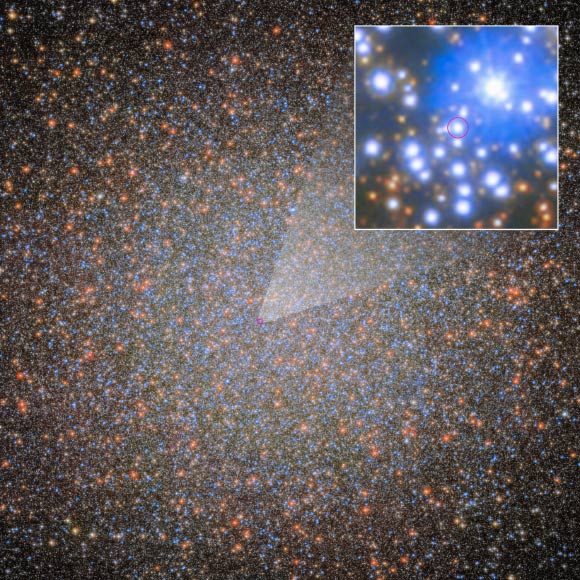
Astronomers have identified the first stellar-mass black hole ever confirmed in Omega Centauri, the Milky Way's largest and most enigmatic globular star cluster, ending a decades-long search for the compact remnants that theory says should riddle the sprawling swarm of stars.
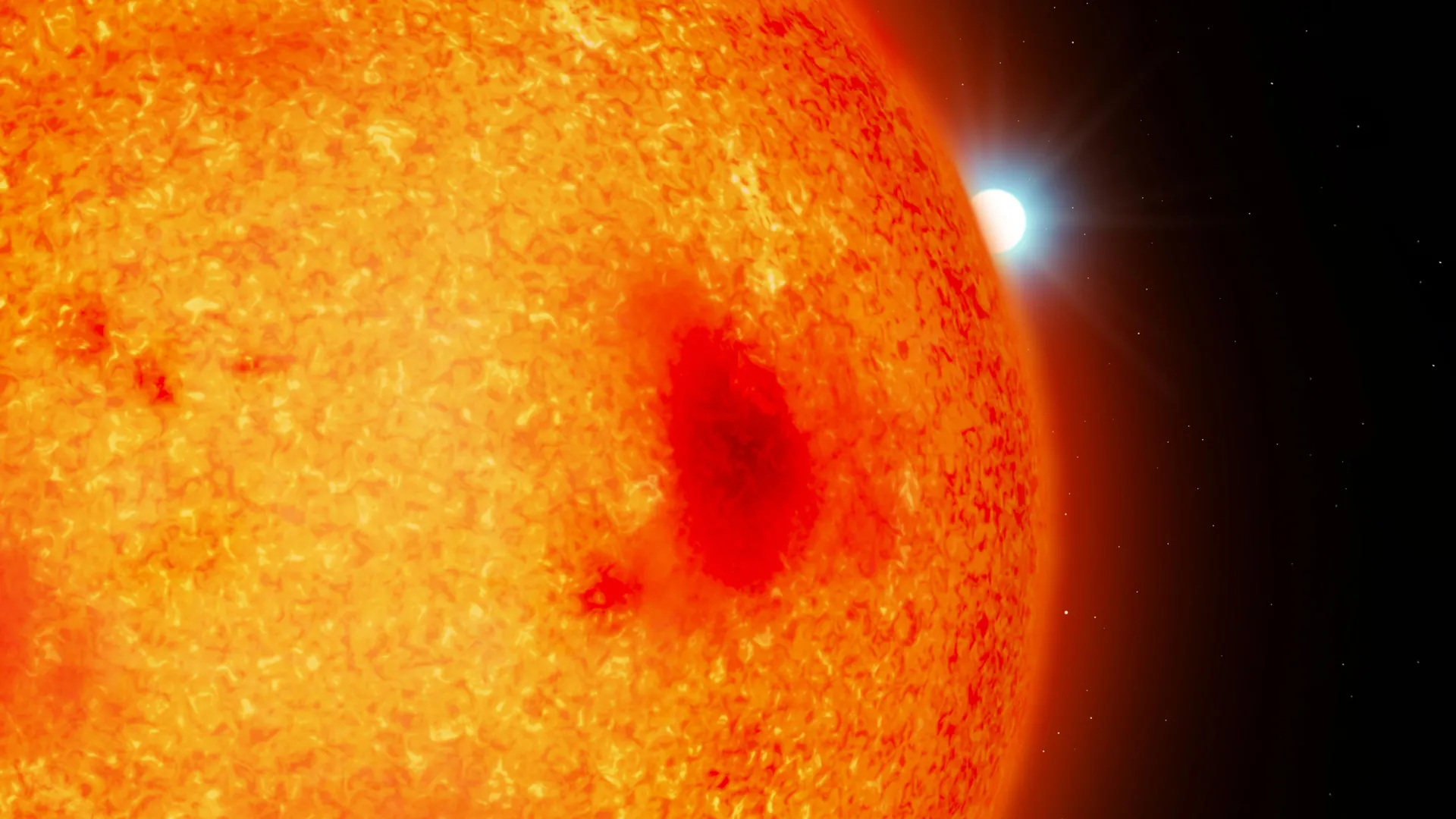
The object, dubbed oMEGACat BH-2, weighs about 4.46 times the mass of the Sun — the collapsed core of a star that ended its life long ago. A University of Utah-led team reported the discovery on July 13 in The Astrophysical Journal Letters, describing how they pinned down the black hole not by seeing it, but by watching a nearby star being yanked around by its powerful, unseen gravity.
The detection required extraordinary patience and precision. Researchers combed through more than 20 years of archival images from NASA's Hubble Space Telescope, then folded in fresh observations from the James Webb Space Telescope to sharpen their measurements of stellar positions. Tracking the subtle wobble of a visible star as it orbited an invisible mass, they concluded that the companion had to be a black hole — nothing else could pack so much heft into so small and dark a package.
The find is more than a first for Omega Centauri; it is also a curiosity in its own right. The black hole's mass is lower than astronomers had expected, and the star-and-black-hole pair traces out the longest orbital period of any known black hole binary system, taking many years to complete a single loop. That leisurely dance is precisely what made the object so hard to catch and so easy to overlook.
Omega Centauri has long vexed astronomers. With roughly 10 million stars packed into a dense ball, models predict it should harbor about 10,000 stellar-mass black holes, the fossils of its most massive early stars. Yet direct evidence for even one had remained frustratingly elusive — the "missing black holes" problem that oMEGACat BH-2 begins, at last, to address.
The result also feeds a livelier debate about whether Omega Centauri harbors a single, much larger black hole at its center or a crowd of smaller ones like oMEGACat BH-2. Pinning down that population matters because it shapes how the cluster holds together and how often its black holes might collide and merge, releasing the gravitational waves now being detected on Earth.
Finding the first of those hidden remnants gives researchers a template for locating the rest, and a new tool for probing how dense star clusters forge and retain their black holes over cosmic time. The team says continued monitoring with Hubble and Webb could turn up more of Omega Centauri's dark residents, gradually filling in a population that has hidden in plain sight for billions of years.