Supreme Court Lets New Hampshire Ban Student IDs at the Polls in the Midterms
An unsigned order cited the Purcell principle against late changes to election rules; Justice Ketanji Brown Jackson dissented, and the ruling comes less than two weeks before a tight Senate race.
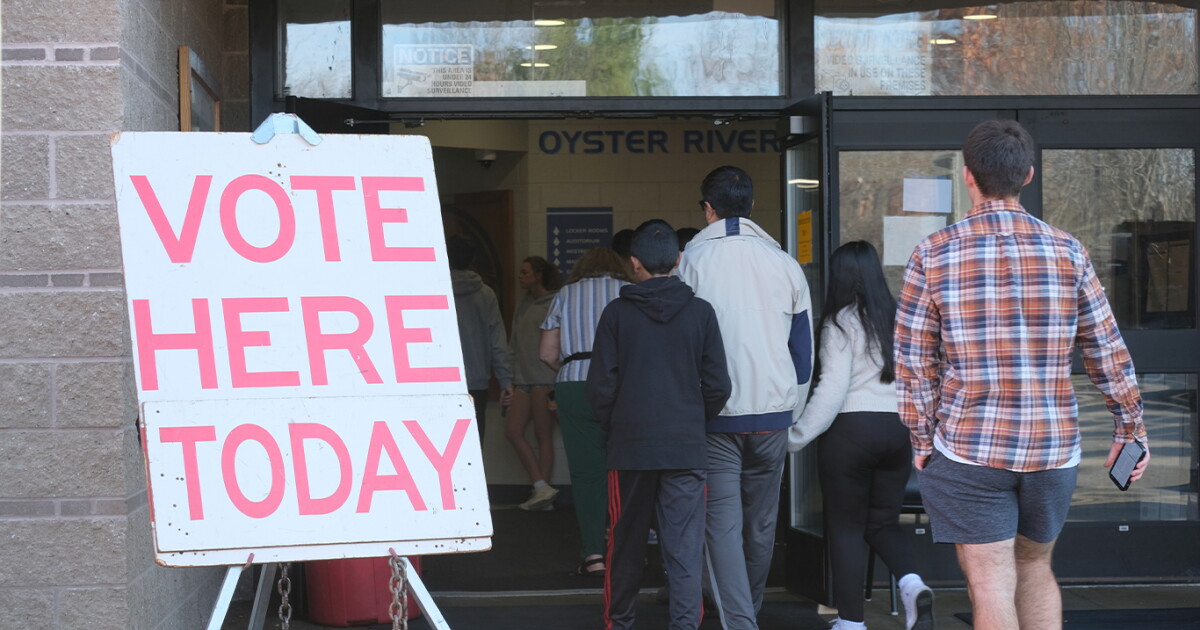
The Supreme Court cleared the way Thursday for New Hampshire to fully ban the use of student IDs for voting during the midterm elections, siding with Republicans in an emergency dispute that arrives less than two weeks before voters cast ballots.
The justices granted a Republican-backed emergency appeal and blocked the use of student IDs as a backup method of identification. New Hampshire passed a law this year saying student IDs would no longer be an expressly accepted form of identification for obtaining a ballot. The secretary of state then issued guidance barring them as a backup way for voters to prove their identity. A judge left the law in place but blocked that guidance in early October, which prompted the appeal. The Republican National Committee weighed in to support the state.
In a brief, one-paragraph, unsigned decision, the court invoked the longstanding Purcell principle, quoting a 2020 ruling that said the high court "has repeatedly emphasized that lower federal courts should ordinarily not alter the election rules on the eve of an election." The court wrote that the lower court "did not point to anything that would justify deviating" from that principle.
Justice Ketanji Brown Jackson was the only justice to publicly dissent. She argued that Purcell does not necessarily apply here. "It seems to me that a case involving a court order like the one at issue here—which left the state election rule untouched—does not necessarily fall within the ambit of Purcell and its concern about federal courts 'changing the election rules' at the last minute," Jackson wrote.
New Hampshire Attorney General John Formella, a Republican, praised the outcome. "New Hampshire has a responsibility to protect the integrity of its elections and ensure that election laws are applied as written," he said in a statement, calling the ruling an important victory in the state's effort to defend its election laws and "prevent last-minute court orders from creating uncertainty for voters and election officials."
The practical effect is that students who planned to rely on a campus ID as a fallback at the polls will have to bring another accepted form of identification. The timing adds weight to the decision: New Hampshire voters are about to decide a closely contested U.S. Senate race, and the order means the state's stricter rules will govern that vote. The ruling also shows how far the Purcell principle reaches. Here the court used it to stop a judge's order that left the law itself intact and only blocked the secretary of state's guidance, a distinction Jackson pressed in her dissent.