Chinese Underground Observatory Delivers Precision Neutrino Measurements in Record Time
The JUNO experiment achieved breakthrough results using just 59 days of data, improving measurement accuracy by 60% compared to decades of previous research combined.
The Jiangmen Underground Neutrino Observatory in China has achieved a remarkable scientific milestone, delivering highly precise measurements of fundamental neutrino properties using just 59 days of data collection. The international JUNO Collaboration, published as a cover article in Nature on June 10, demonstrated measurement precision that surpassed the combined results of previous experiments conducted over several decades.
Using validated data collected between August 26 and November 2, 2025, the massive underground detector reduced uncertainties in two key neutrino oscillation parameters by a factor of 1.6 compared to all prior research. The achievement marks a significant step toward solving one of particle physics' biggest mysteries: determining the true mass hierarchy of neutrinos, those elusive particles that pass through matter virtually undetected.
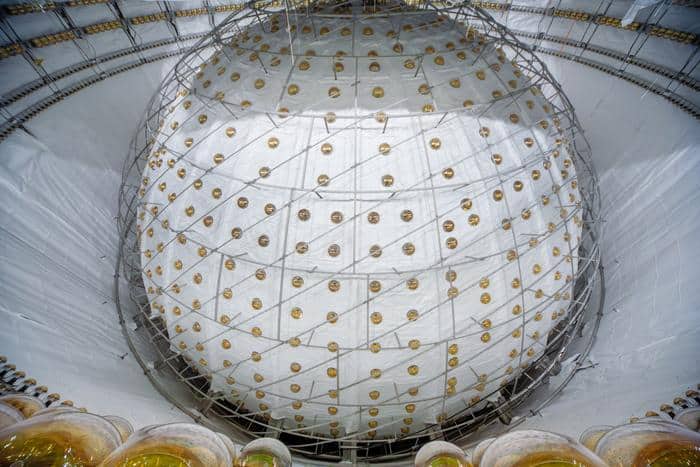
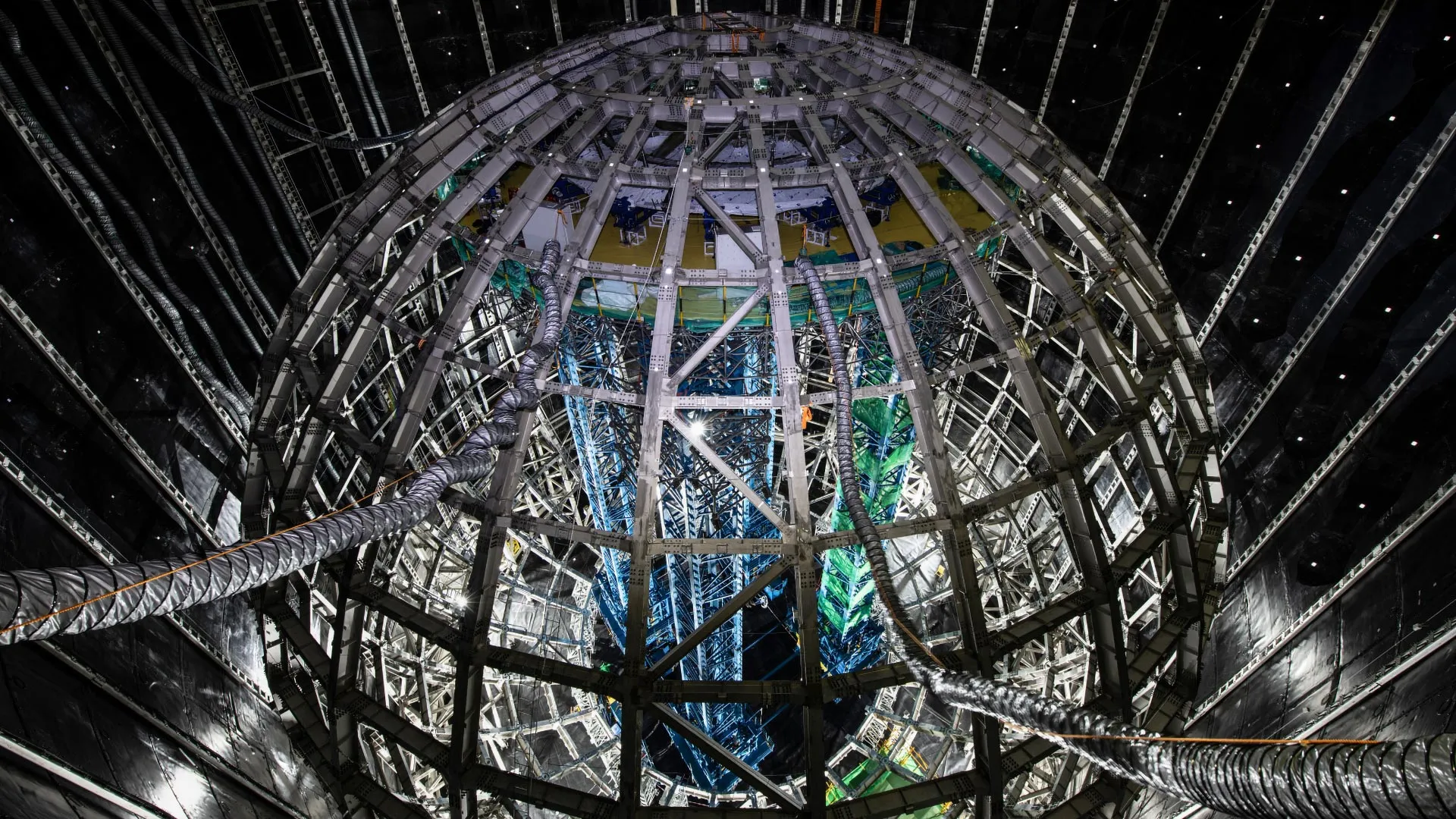
Located deep beneath the ground in China, JUNO represents the next generation of neutrino detection technology. The experiment began collecting data in August 2025 with the primary goal of measuring neutrino mass ordering with unprecedented precision. The detector is specifically designed to study neutrinos produced by nuclear reactors, supernovae, Earth's interior, the Sun, and atmospheric interactions.
The scientific community has responded with considerable enthusiasm to JUNO's early results. During peer review, one reviewer noted that the findings "not only validate the detector performance and analysis methodology but also establish JUNO as a key player in the emerging precision era of neutrino oscillation physics." Nature highlighted the work in a separate News & Views article, emphasizing its significance for understanding matter and forces at the smallest scale.
Professor Arthur McDonald, winner of the 2015 Nobel Prize in Physics for discovering solar neutrino oscillation, praised the achievement, stating that "JUNO has met its design objectives, achieving exceptional radiopurity, energy resolution, and detector stability." The experiment's early success builds confidence that it will accomplish its ambitious physics goals, including determining neutrino mass ordering and exploring physics beyond the Standard Model of particle physics.