Chinese Underground Observatory Achieves Breakthrough in Neutrino Physics Precision
JUNO detector delivers most precise measurements of neutrino oscillation parameters using just 59 days of data, advancing the quest to solve fundamental particle mysteries.
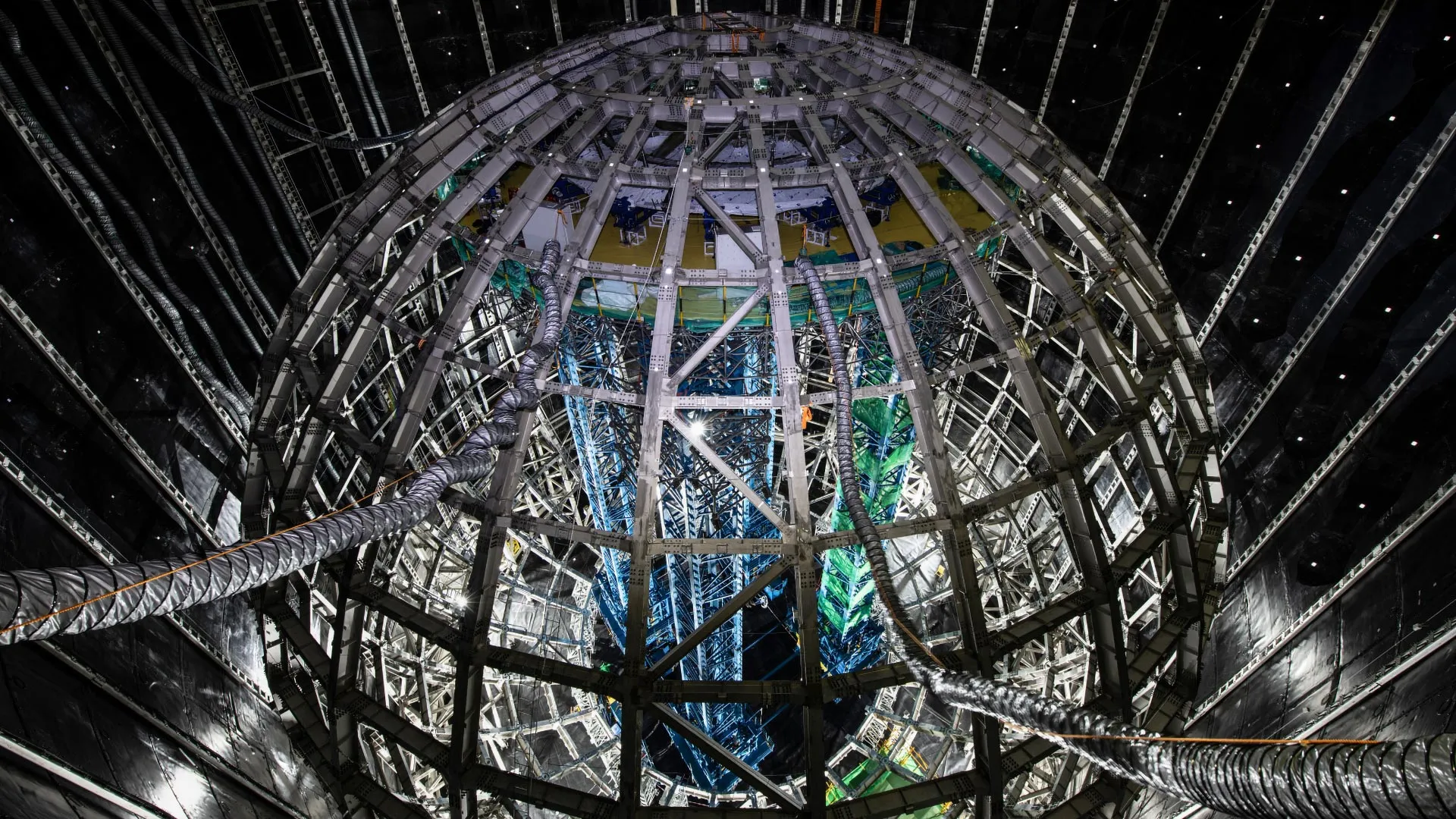
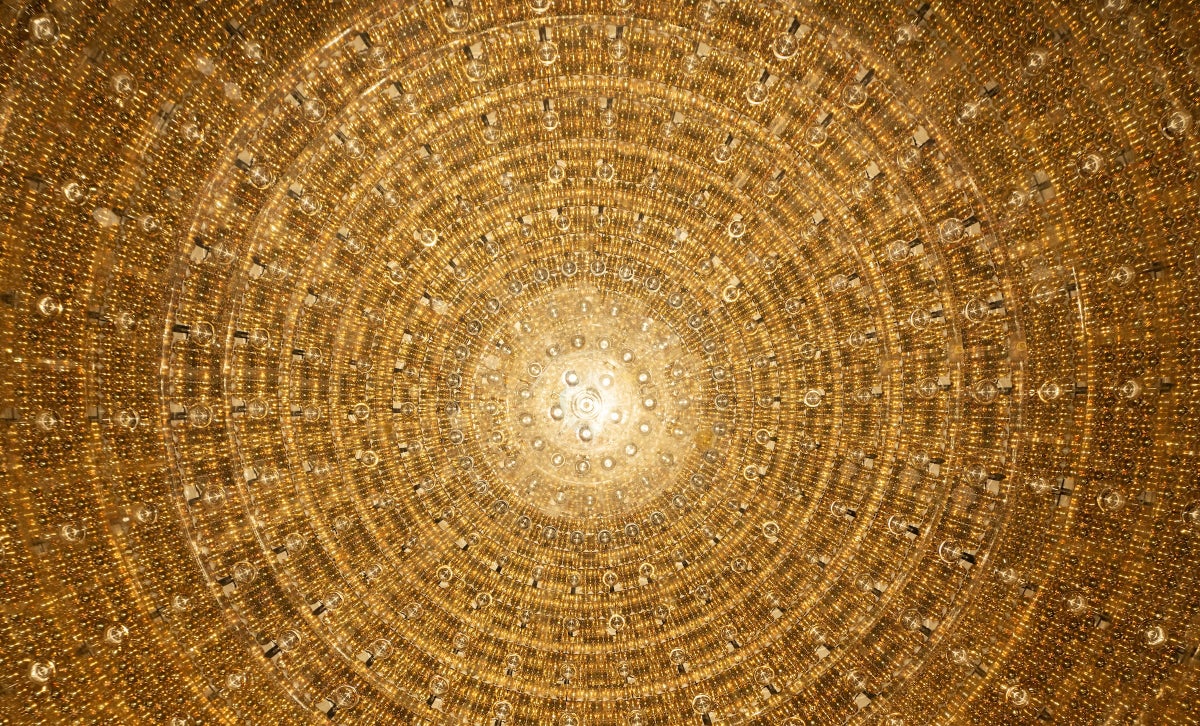
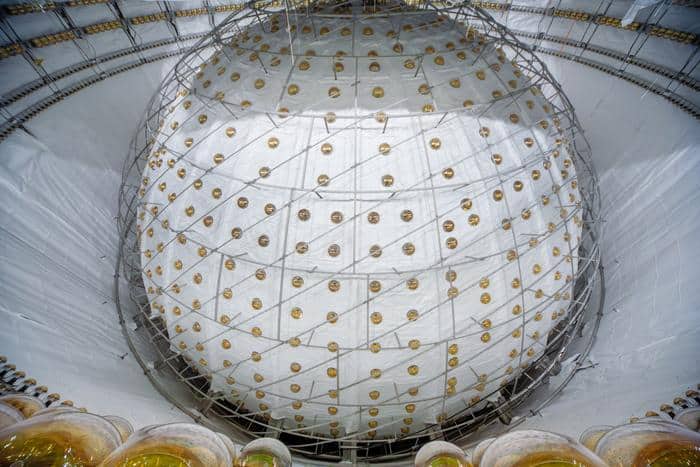
The Jiangmen Underground Neutrino Observatory (JUNO) has achieved its first major scientific milestone, delivering unprecedented precision in measuring fundamental neutrino properties that could unlock secrets of the universe's most mysterious particles. Using just 59 days of validated data collected between August and November 2025, the international collaboration led by the Chinese Academy of Sciences has reduced uncertainties in key neutrino oscillation measurements by a factor of 1.6 compared to decades of previous experiments combined.
Neutrinos represent one of the greatest puzzles in modern physics, carrying no electric charge and possessing extremely small masses while interacting only weakly with matter. Vast numbers of these elusive particles pass through Earth and human bodies without leaving any detectable trace, making them extraordinarily difficult to study. The JUNO detector's remarkable sensitivity has allowed researchers to observe neutrino behavior with previously impossible precision, opening new avenues for understanding these fundamental building blocks of the universe.
The facility's primary scientific goal involves determining the mass ordering of neutrinos, a critical question that has eluded physicists for decades. JUNO is specifically designed to measure three of the six neutrino mixing parameters with better than 1% precision, while also studying neutrinos produced by supernovae, Earth's interior, the Sun, the atmosphere, and other cosmic sources. The detector's exceptional radiopurity, energy resolution, and stability have exceeded design objectives, positioning it as a key player in the emerging precision era of neutrino physics.
The groundbreaking results have earned significant recognition from the scientific community, with Nature featuring the work as a cover article and highlighting its implications for testing fundamental physics theories. Reviewers praised the findings for validating detector performance and establishing JUNO's role in advancing global oscillation measurements. The work has direct implications for understanding the three-flavor paradigm of neutrino physics and future determinations of neutrino mass hierarchy.
Nobel Prize winner Professor Arthur McDonald, who discovered solar neutrino oscillation, commended JUNO for meeting its ambitious design objectives and demonstrating readiness to pursue groundbreaking physics goals. The observatory's success marks the beginning of a new era in neutrino research, with the potential to reveal insights into physics beyond the Standard Model and deepen understanding of these enigmatic particles that hold keys to fundamental questions about matter and the universe itself.