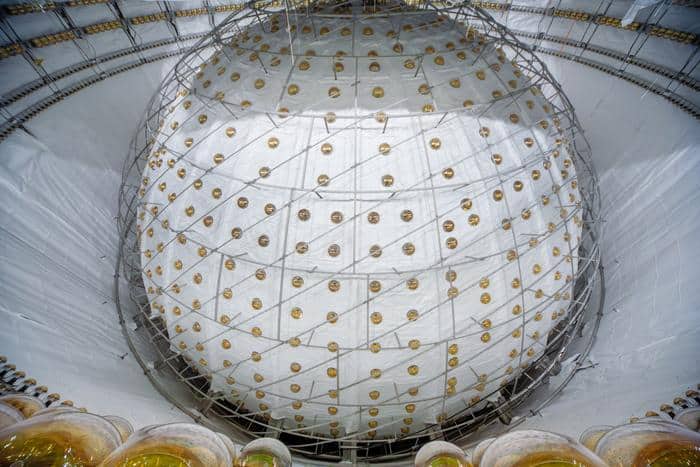
Giant Underground Observatory Brings Scientists Closer to Cracking Neutrino Puzzle
China's JUNO detector achieves breakthrough measurements using just 59 days of data, boosting confidence for solving neutrino mass mystery.
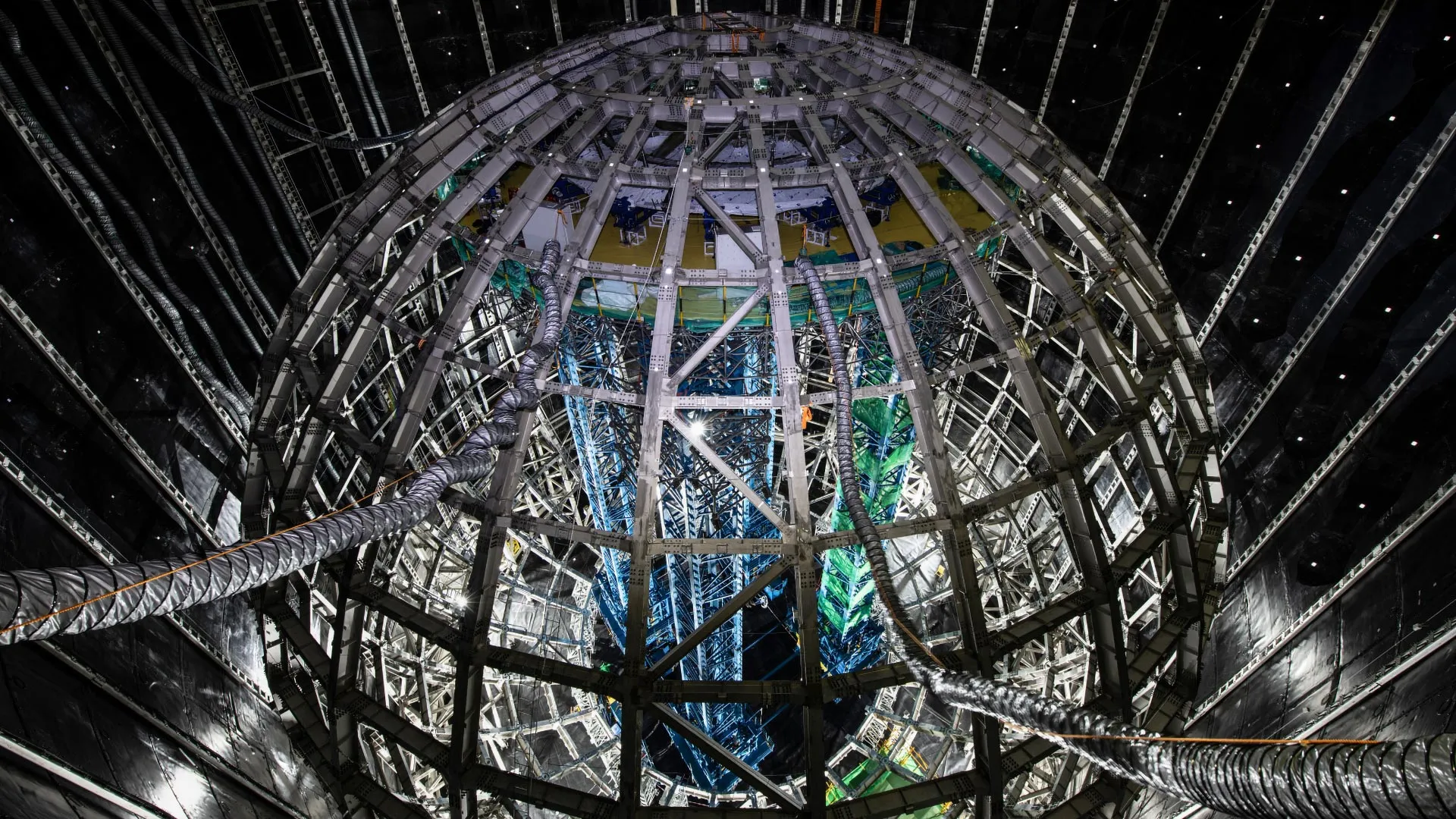
The Jiangmen Underground Neutrino Observatory (JUNO) in China has delivered its first major scientific breakthrough, achieving some of the most precise measurements ever made of how neutrinos change as they travel through space. Using just 59 days of validated data, the international collaboration has dramatically improved our understanding of these mysterious particles.
Published as a cover article in Nature on June 10, the study represents a landmark achievement for neutrino physics. The research reduced uncertainties in two fundamental neutrino oscillation parameters by a factor of 1.6 compared with the combined results from previous experiments conducted over several decades. This extraordinary precision was achieved with data collected between August 26 and November 2, 2025.
Neutrinos are among the most enigmatic particles in the universe, carrying no electric charge and having extremely small masses while interacting only weakly with matter. Vast numbers of neutrinos pass through Earth and even human bodies without leaving any trace, making them extraordinarily difficult to detect and study. JUNO's primary scientific goal is to determine the mass ordering of neutrinos, one of particle physics' biggest remaining mysteries.
The study received exceptional praise during peer review, with one reviewer noting that the results "not only validate the detector performance and analysis methodology but also establish JUNO as a key player in the emerging precision era of neutrino oscillation physics." Nature highlighted the work in a News & Views article, stating that the first result "marks the dawn of the next era of precise neutrino oscillation measurements."
Professor Arthur McDonald, who received the 2015 Nobel Prize in Physics for discovering solar neutrino oscillation, praised JUNO's achievement, saying the experiment "has met its design objectives, achieving exceptional radiopurity, energy resolution, and detector stability." The observatory is now fully operational and ready to pursue its ambitious physics goals, including determining neutrino mass ordering and detecting neutrinos from various cosmic sources.