The World's Largest Solar Telescope Found Whirlpools on the Sun Just 12 Miles Wide — Like Spotting a Euro Coin From 110 Miles Away
The vortices had never been resolved before. Researchers think they twist magnetic field lines tight enough to power nanoflares and move magnetic energy through the Sun's atmosphere faster than models allow.
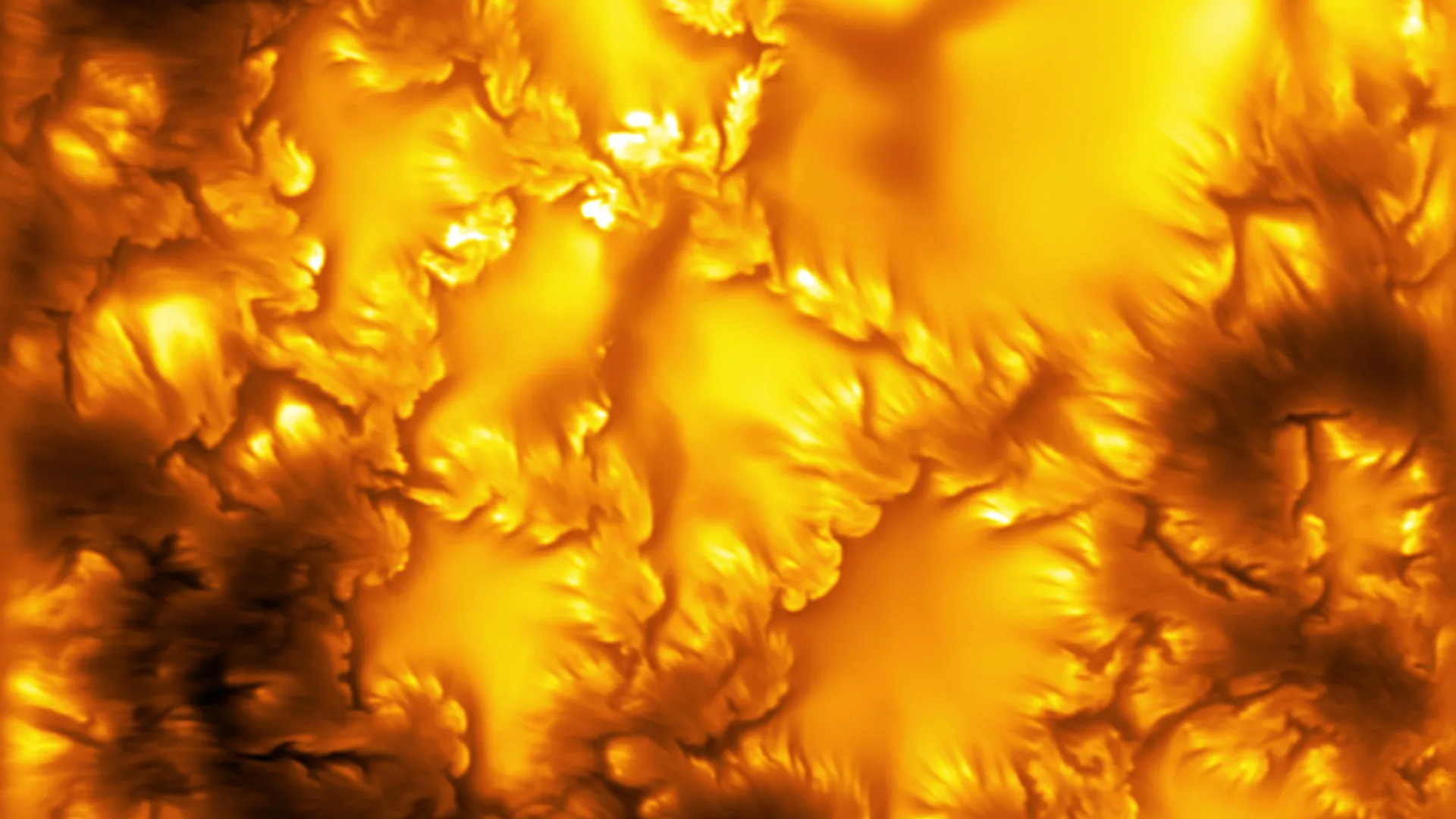
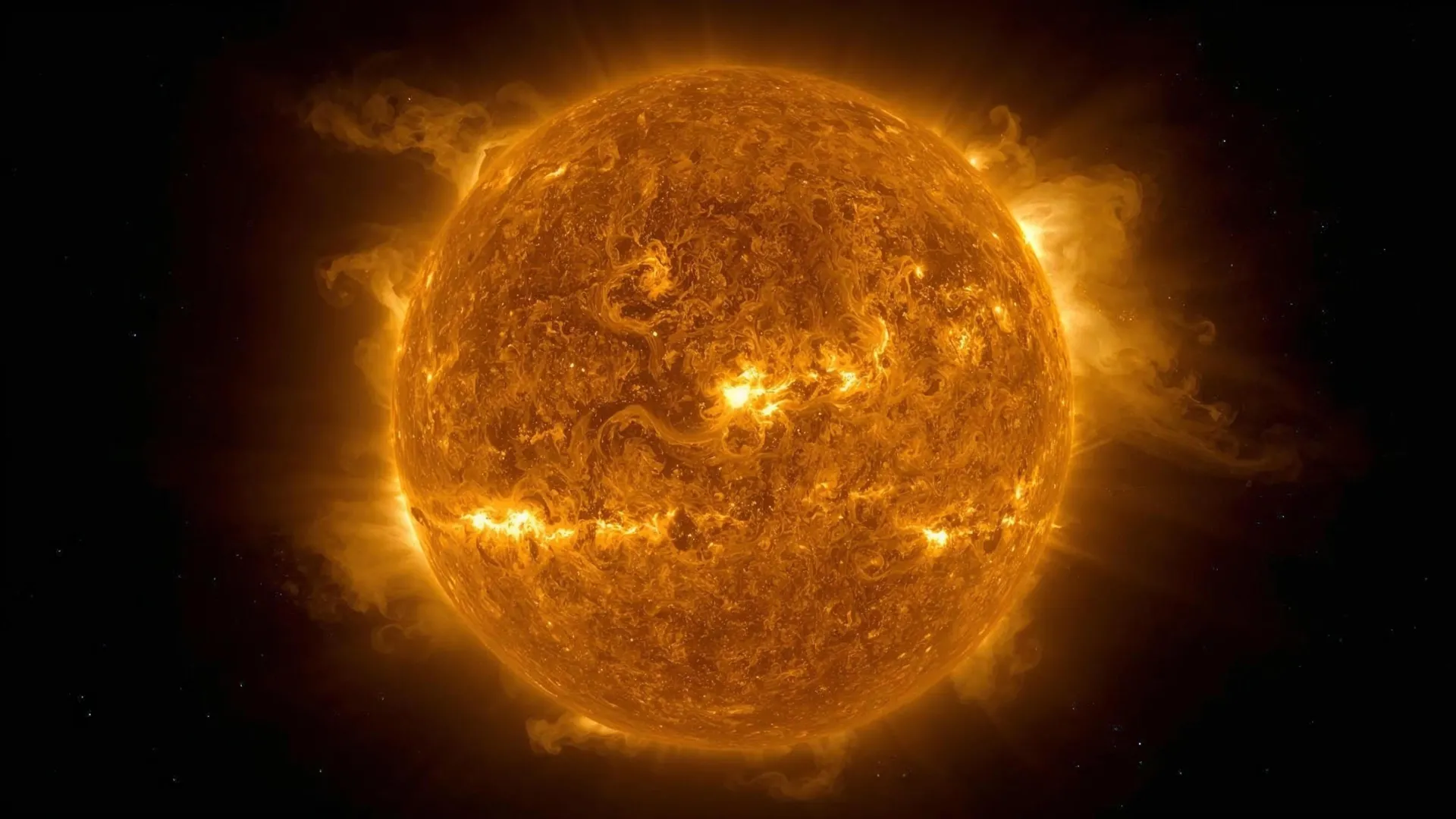
Astronomers have resolved a population of tiny plasma whirlpools swirling across the surface of the Sun, some of them barely 20 kilometers — about 12 miles — across. They had been invisible until now, and the researchers who found them think they may be doing a meaningful share of the work of moving magnetic energy through the solar atmosphere.
The observations come from the U.S. National Science Foundation's Daniel K. Inouye Solar Telescope on Haleakalā in Hawaii, the largest solar telescope in the world, combined with high-resolution computer simulations. The work was carried out by researchers at the NSF National Solar Observatory, the Max Planck Institute for Solar System Research in Germany, and the High Altitude Observatory in Colorado.
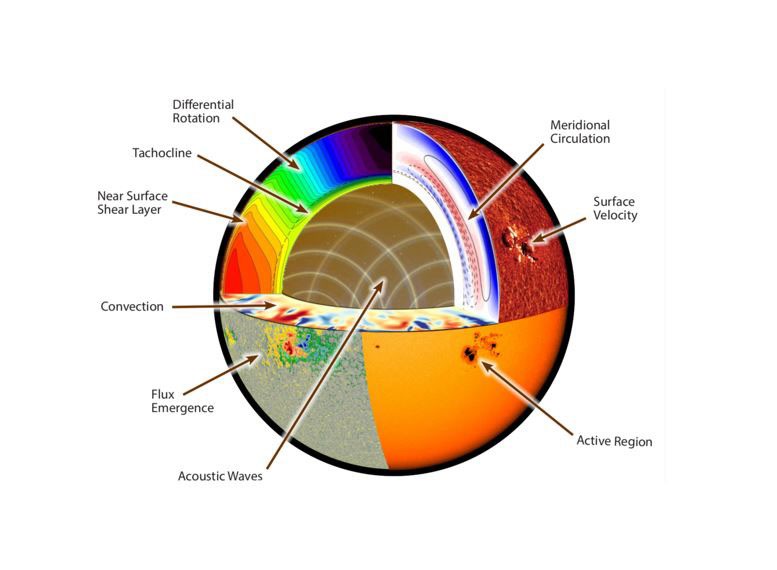
The difficulty is one of scale. The Sun is about 93 million miles away and 865,000 miles across, so resolving a 12-mile feature on its surface is, by the team's own comparison, like distinguishing a one-euro coin from 180 kilometers — roughly 110 miles. Structures this small had been predicted by simulations of solar convection, but no instrument had been able to separate them from the general roil of granulation, the boiling pattern of rising and sinking gas that covers the visible surface.
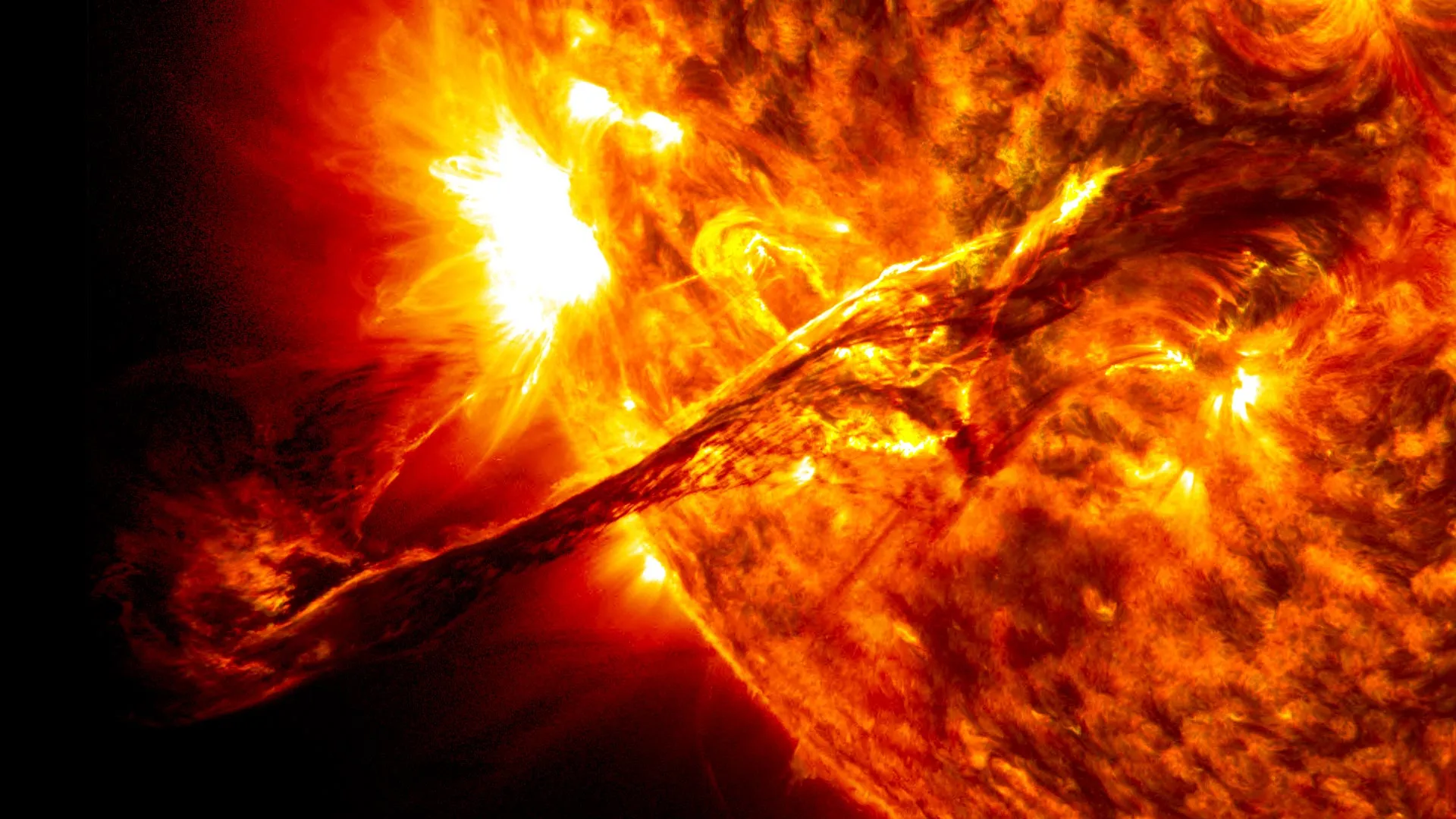
What makes the vortices interesting is not their size but what they do to magnetic field lines. The Sun's plasma is electrically conducting, so magnetic fields are effectively frozen into it: when the plasma swirls, the field swirls with it. A vortex that persists long enough winds the field into an increasingly tight, increasingly stressed configuration. When that stress releases, it does so as a burst of heat and particles. At the scales involved, those bursts are what solar physicists call nanoflares — events far too small to see individually, but numerous enough that they have been a leading candidate explanation for one of the oldest puzzles in the field: why the Sun's outer atmosphere, the corona, reaches millions of degrees while the surface below it sits at about 5,500 degrees Celsius.
The researchers also found that the swirls appear to help magnetic fields propagate outward through the atmosphere considerably faster than current models predict. The mechanism involves the Kelvin-Helmholtz instability — the same effect that produces the curling breaker shapes on the tops of some clouds and the ripples where wind drags across water — which in magnetized plasma can transfer, stabilize and transform energy as adjacent layers shear past one another. Vortices at this scale supply an enormous number of shearing boundaries.
The finding is less a single discovery than a change in what counts as the smallest relevant unit of solar physics. If a population of 12-mile whirlpools is continuously braiding and stressing the magnetic field across the entire visible surface, then models that begin at coarser scales are starting from an incomplete inventory of where the energy goes. That has practical consequences: the same magnetic reorganization that heats the corona also drives the eruptions and solar wind disturbances that reach Earth, disrupt satellites and stress power grids.