Astronomers Solve 50-Year Mystery of Crab Pulsar's Strange 'Zebra Stripes'
New research reveals that a cosmic tug-of-war between gravity and plasma creates interference patterns that form the striking radio wave stripes.
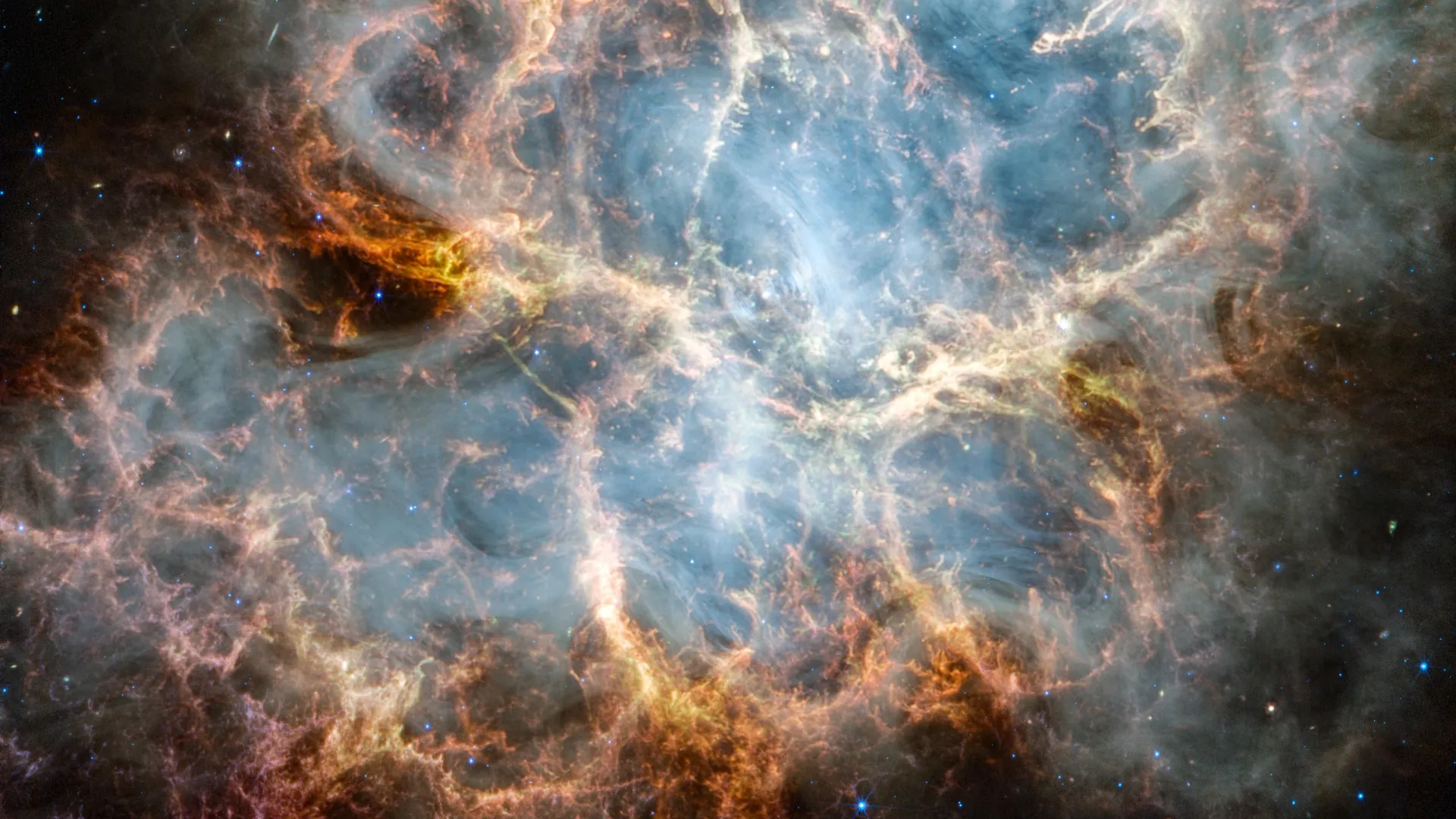
Astronomers have finally cracked a puzzle that has confounded radio telescope operators for half a century: why the Crab Pulsar, one of the most studied objects in the sky, emits radio waves with a pattern of evenly spaced, zebra-stripe-like frequency bands that appear in its emission spectrum at regular intervals. A new analysis using data from the Five-hundred-meter Aperture Spherical Telescope in China and the upgraded Very Large Array in New Mexico has revealed that the stripes are produced by a plasma interference mechanism in the pulsar's magnetosphere, operating under conditions that were theoretically predicted but never before confirmed observationally.
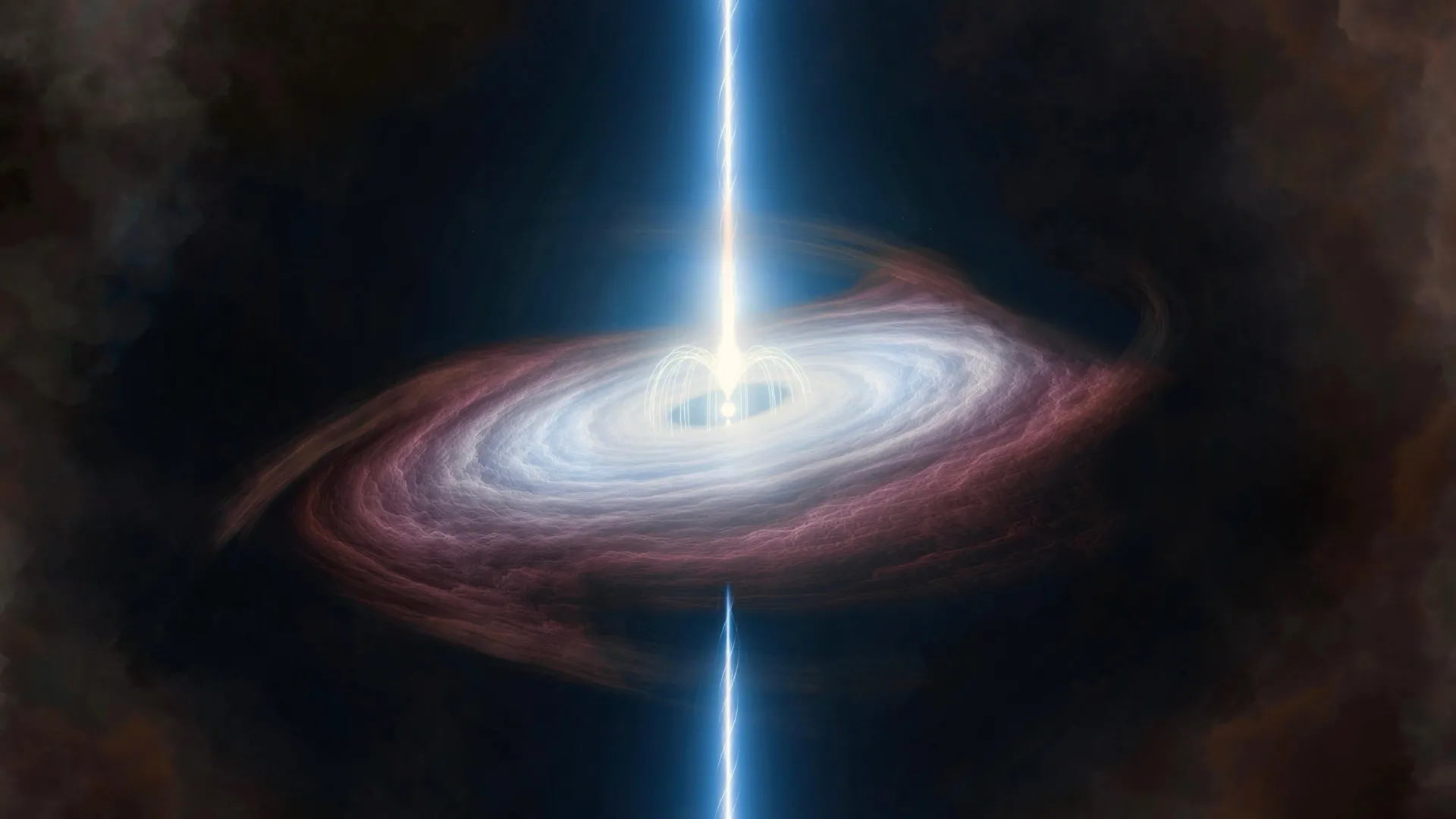
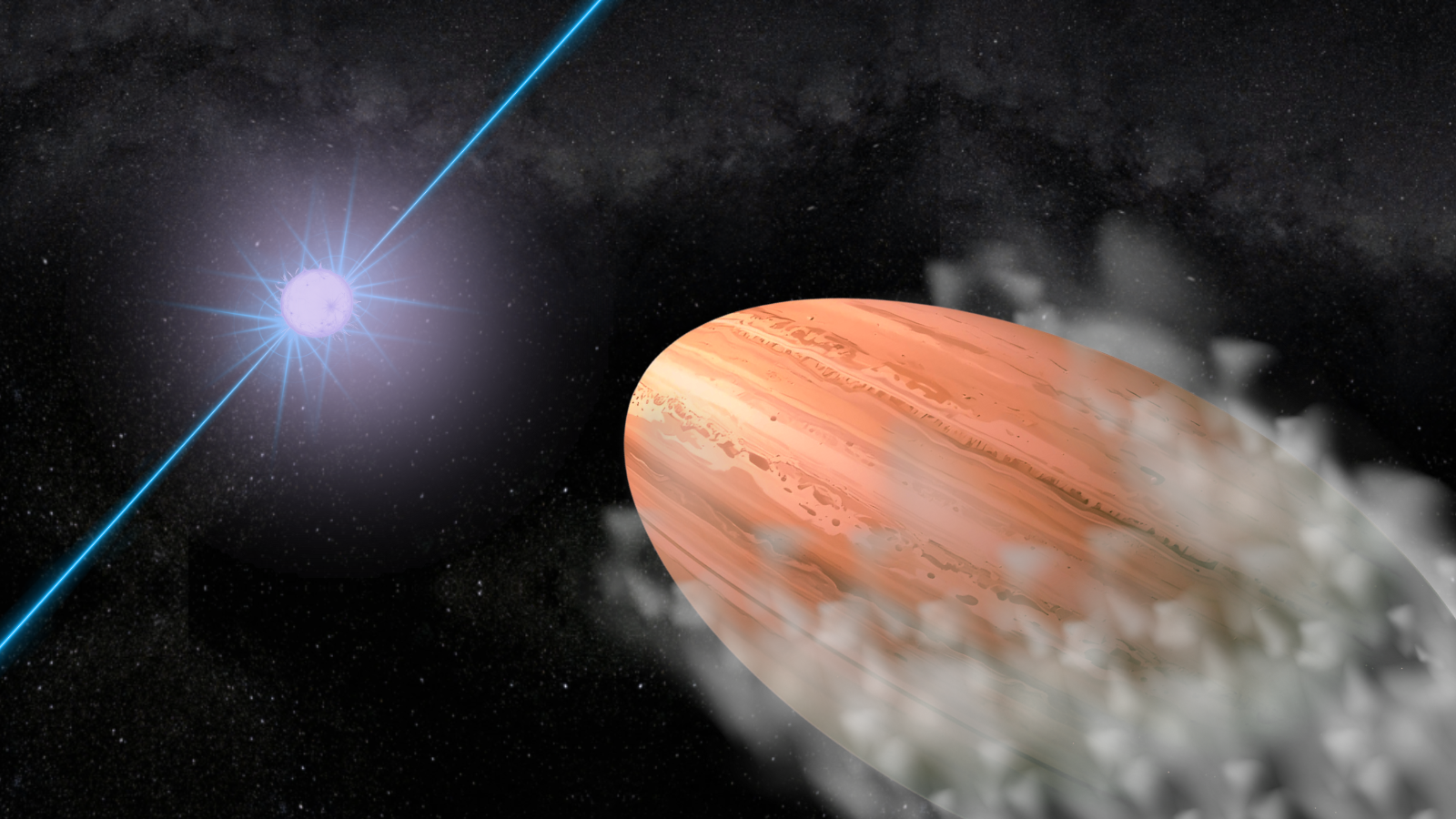
The Crab Pulsar was born in the supernova explosion of 1054 CE, an event recorded by Chinese and Arab astronomers as a 'guest star' visible in daylight for nearly a month. The resulting neutron star spins roughly 30 times per second and emits beams of radiation that sweep past Earth with each rotation — the signature 'pulse' that gives pulsars their name. But the Crab's radio emission has long displayed a bizarre modulation: at certain phases of its spin cycle, the radio spectrum shows discrete, equally spaced bands of enhanced emission, separated by bands of suppression, like the stripes of a zebra rendered in frequency space rather than spatial pattern.
Researchers led by Dr. Kejia Lee of Peking University identified the mechanism by analyzing hundreds of individual pulses at microsecond resolution across a wide frequency range simultaneously — a technical capability that only recently became available with the combination of FAST's sensitivity and improved backend instrumentation. They found that the zebra pattern arises from the interference of electromagnetic waves bouncing between two plasma layers in the pulsar's outer magnetosphere, separated by a precisely defined distance that acts like a natural Fabry-Pérot interferometer for radio waves. The spacing of the bands encodes the thickness of the plasma layer, allowing astronomers to measure the structure of the pulsar's magnetosphere directly for the first time.
'The Crab has been screaming the answer at us for decades and we finally have the instruments to hear it clearly,' Dr. Lee said in a statement accompanying the paper, published in the journal Science. The plasma layers producing the interference are thought to be generated by the pulsar wind — a flow of charged particles driven outward by the rotating magnetic field. The specific conditions required for stable layer formation explain why the zebra pattern appears only during certain rotational phases and not throughout the entire pulse cycle, a puzzle that had defied explanation even after theoretical models of pulsar magnetospheres became sophisticated enough to predict the interference mechanism in principle.
Beyond resolving the Crab's specific mystery, the findings have implications for understanding pulsars and neutron stars more broadly. The ability to measure plasma layer thickness from interference patterns provides a new diagnostic tool that could be applied to other pulsars showing similar but less pronounced spectral features. 'Every time we solve one of these long-standing puzzles about the Crab, it teaches us something about neutron star physics that applies across the population,' said Dr. Victoria Kaspi of McGill University, who was not involved in the study. 'The Crab is the best-studied pulsar in the sky precisely because it keeps offering new surprises.'