Hunter-Gatherers in Tanzania and the Bolivian Amazon Share 90% of Their Gut Bacteria, Nature Study Finds
Stanford researchers say the Hadza and Tsimane microbes were likely inherited from common ancestors in Africa and carried across the Bering land bridge, while outside experts caution the health implications are unproven.
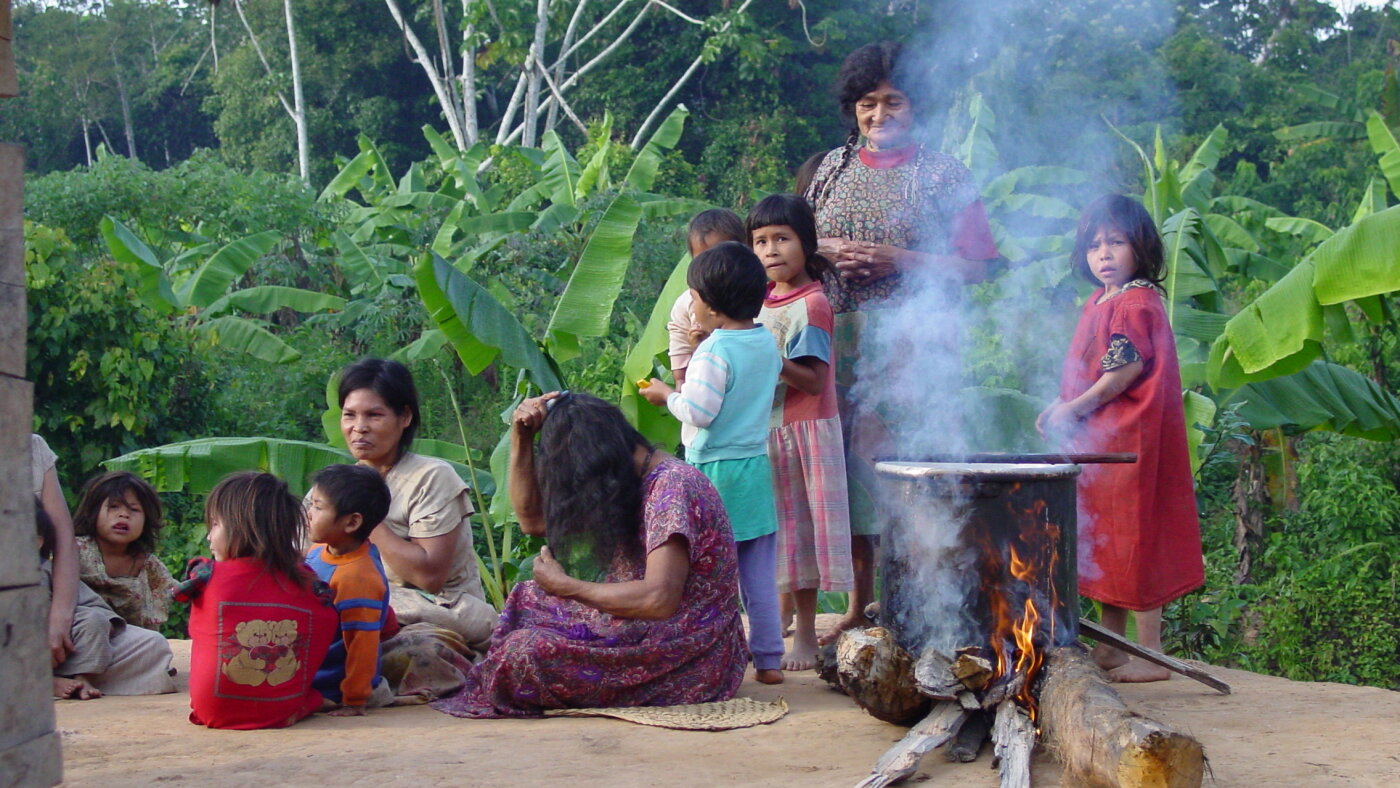
The Hadza people are hunter-gatherers who have roamed northern Tanzania for thousands of years. The Tsimane forage, fish and hunt in the Bolivian Amazon, some 7,000 miles away across an ocean. The two communities look to have little in common, yet a new study in the journal Nature finds they share about 90% of the bacterial species living in their guts.
Stanford University researchers compared genetic material in stool samples from dozens of Tsimane individuals, collected by the Tsimane Health and Life History Project, with earlier analysis of the Hadza. They found around 1,200 of the same bacterial species in both groups. Both microbiomes also differed markedly from those of city dwellers, even those living nearby. "This was startling to us," said Justin Sonnenburg, a Stanford professor of microbiology and immunology and the study's senior author.
That is surprising because gut microbiomes are dynamic and can change quickly with diet and medicine. The two communities eat different vegetables, fish and meats. The authors argue the overlap goes back to common ancestors in Africa, before some of those humans left the continent, passed through Eurasia and crossed a land bridge that once connected Russia with Alaska, eventually settling in South America. Using dating techniques based on the rates at which bacteria change, they estimate how long the strains have been separated. "Once the land bridge went away, we had a pretty clear picture that it was going to be very hard for them to exchange gut bacteria through traditional human contact means," said co-author Ben Good, a theoretical biophysicist at Stanford.
Babies begin with a blank-slate microbiome, said Taichi Suzuki, an evolutionary biologist at Arizona State University who was not involved. They get microbes first from the mother, then from household members and the community. Suzuki said the authors have made a good case that these bacteria have lived in humans for a very long time and formed a kind of partnership with them. "If you have a shared history for many, many generations, this idea of coevolution is we expect more potential dependencies between gut microbes and our genome," he said.
Sonnenburg draws a health hypothesis from that. "If we were inhabited by very similar microbes over a long period of time, it suggests that our human genomes may have come to expect a certain set of microbes and functions," he said. "When you start to lose biodiversity in your gut, there may be big issues for your human biology to adjust to and accommodate." He suggested the modern microbiome may be promoting inflammation. The microbes help digest food and secrete molecules that enter the bloodstream, and gut bacteria can influence mood, behavior and the response to infection.
Other scientists urge caution. Andrew Moeller, an associate professor of evolutionary biology at Princeton who was not part of the study, called the idea intriguing but unproven. "Another alternative is that the industrialized microbiome profile may actually be adapted to an industrialized lifestyle," he said. "From a health perspective, is it good or deleterious that industrialized humans have lost a lot of ancestral microbial taxa? We actually don't know."
Both sides agree on the next step. Documenting which microbes industrialized societies have kept and lost is the groundwork for testing whether losing them matters. The study does not show harm, but it gives researchers a long list of candidate microbes, and a clock for how long they have traveled with people.