CFTC Lost a Fifth of Its Staff as Crypto and Prediction Markets Boom, GAO to Investigate
Enforcement actions fell nearly 80% in 2025 at the agency overseeing hundreds of billions in weekly trading, and Sen. Elizabeth Warren asks whether the watchdog has been 'locked up somewhere back in the barn.'
The Commodity Futures Trading Commission, the small federal agency that polices crypto and prediction markets where hundreds of billions of dollars change hands every week, has lost a fifth of its workforce and nearly all of its enforcement momentum. Congress's watchdog is now preparing to look into it.
By the end of 2025, the CFTC had 21% fewer staff than its previous 10-year average, according to U.S. Office of Personnel Management data cited by NPR. Between January 2024 and January 2025 alone, staffing dropped 22%. The agency brought nearly 80% fewer enforcement actions in 2025 than its annual average over the previous decade, according to its own annual reports.
The Government Accountability Office is investigating the workforce reduction, according to a letter obtained by NPR. The probe follows a July request from Sen. Elizabeth Warren, D-Mass., for a federal review of the agency's staffing and fraud enforcement. The GAO says it is gathering staff and resources and will formally begin the work in December. "It's supposed to be out there regulating the market, but it doesn't appear to be doing it and frankly, doesn't appear to have the people to do it," Warren told NPR. The CFTC did not comment directly on the GAO probe.
Former enforcement lawyers say the cuts were not random. Jeff Le Riche, who worked at the CFTC from 2005 to 2025, said the Trump campaign ran on being friendlier to the crypto industry. Before the 2024 election, the Biden-era CFTC had brought fraud cases against Gemini, Mirror Trading, Voyager, Celsius, FTX and the prediction market Polymarket. Le Riche said that after the inauguration, "some people were punished for bringing those cases," and many who worked on them left or were forced out. Joe Konizeski, a 26-year enforcement veteran who was among dozens pushed out in 2025, said the acting chair at the time, Caroline Pham, said the agency was closing its crypto cases. Pham left in December 2025 and is now chief legal and administrative officer at the crypto firm MoonPay, which did not respond to NPR's request for comment from her. Since Trump took office the CFTC has rolled back its actions against Gemini, Celsius and FTX.
The effects reached beyond crypto. Konizeski said reduced staffing led the agency to dismiss other cases, including a foreign exchange fraud case against WorldWideMarkets Inc., which was accused of defrauding millions from users. He also pointed to prediction market advertisements aimed at young men as a growing concern.
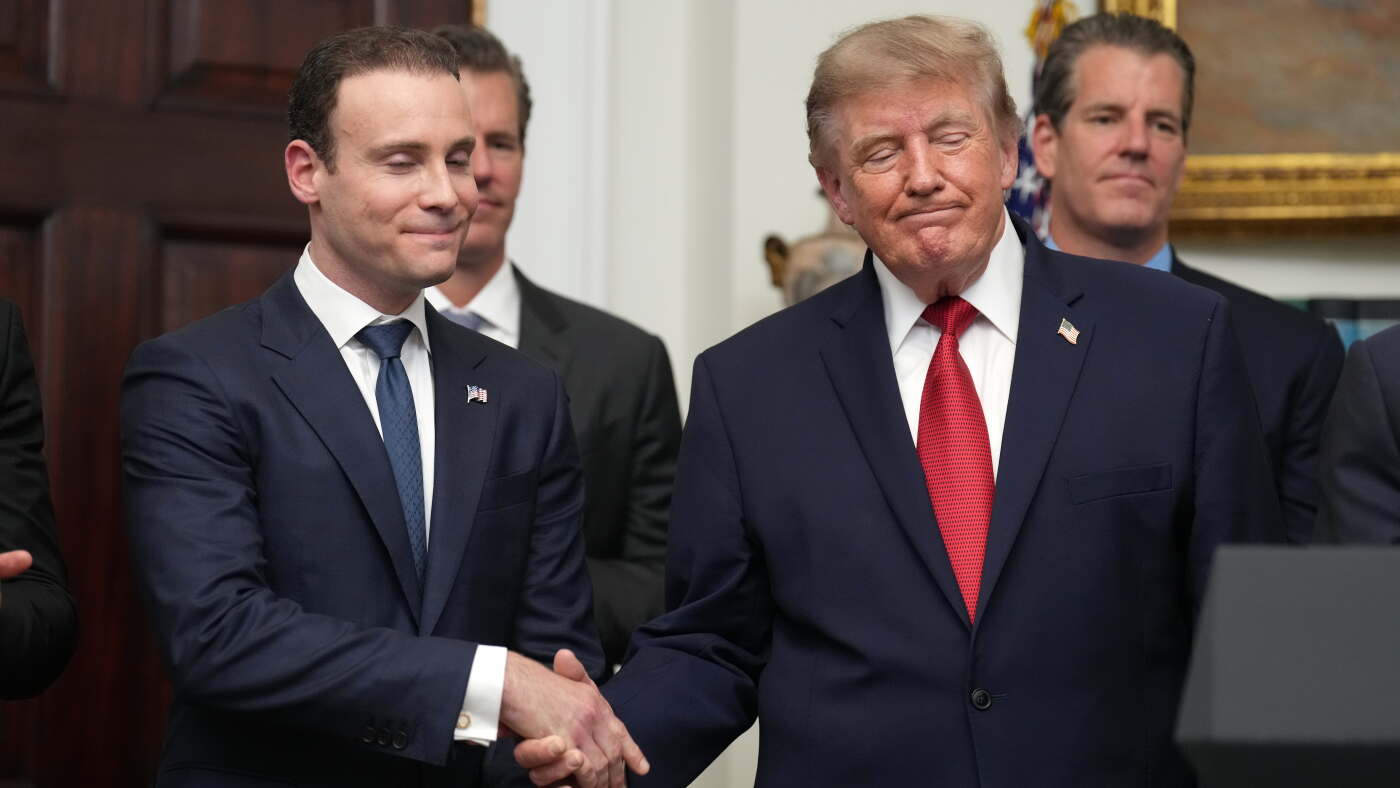
The agency's current chair, Michael Selig, is the only member of a normally five-member commission, giving him unchallenged control over its direction. In August, standing beside crypto executives in the White House Roosevelt Room, Selig said: "The era of political lawfare, debanking and regulation by enforcement is over." He said innovators should be "welcome to the White House — not railroaded to the big house." Before joining the CFTC, Selig was a corporate lawyer for crypto firms and prediction markets. His latest financial disclosure shows he sold between $65,000 and $150,000 in Bitcoin before becoming a commissioner.
Selig wants the agency to write new rules for these markets, but former CFTC director Brian Young says that takes people. "With the growth of prediction markets and digital asset trading, the [CFTC] really needs to augment staffing in order to meet these increased responsibilities," Young said. A former employee told NPR on condition of anonymity that the agency is so understaffed it is struggling to carry out Trump's 2025 executive order on cryptocurrency. Warren said Congress could use subpoenas and its control of the agency's funding, but doubted a Republican-led Congress would. Asked whether a Democratic Congress would subpoena the CFTC's leaders, crypto companies and prediction markets, she said, "it is our job to use all those tools to investigate."