Disney and ABC Take the FCC to Federal Court Over Trump-Backed Push to Review All Eight ABC Licenses
A Reagan-era FCC chairman called the agency's accelerated review unconstitutional as a D.C. judge heard Disney's bid to block it.
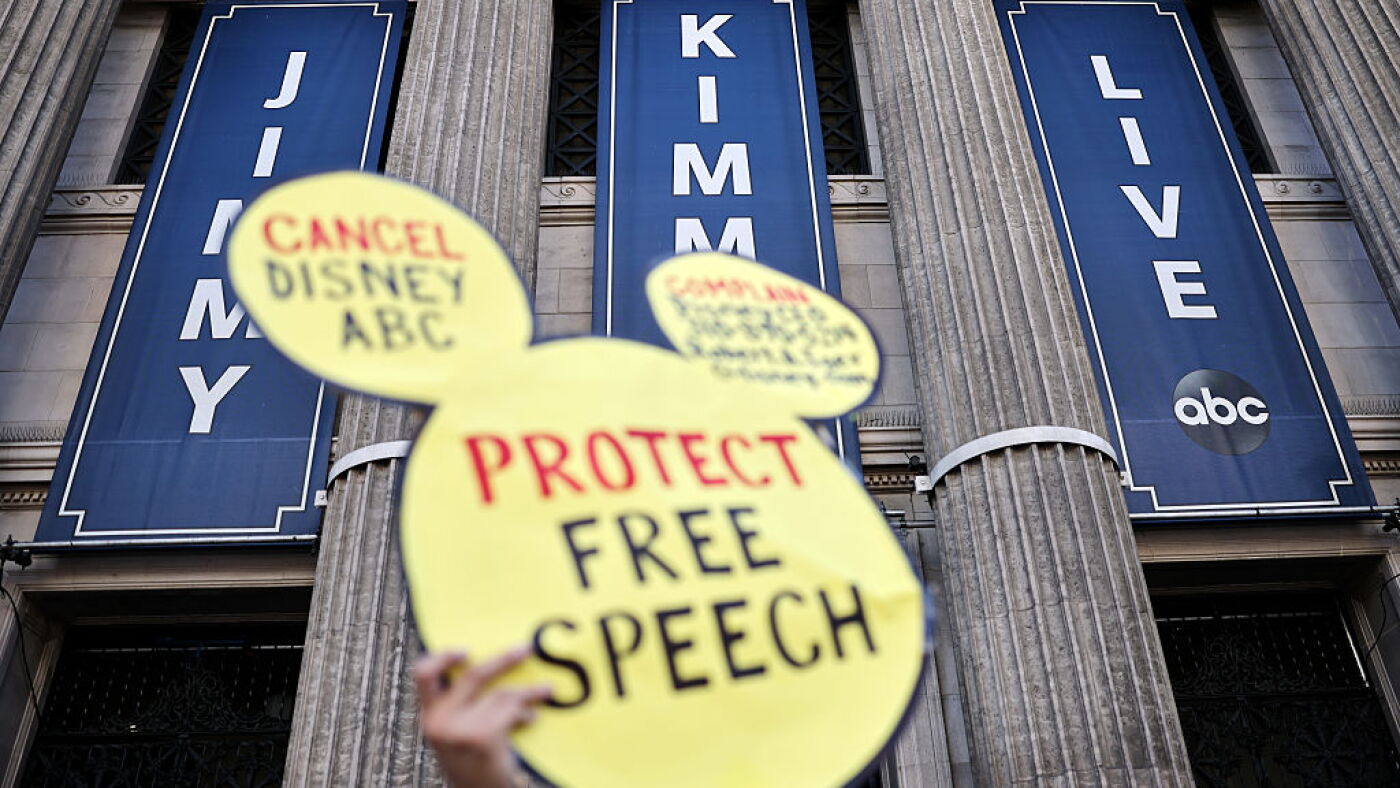
A federal court in Washington, D.C., heard arguments Tuesday in a legal battle pitting the Walt Disney Co. against the nation's chief broadcast regulator over how far First Amendment protections extend during Donald Trump's presidency. Disney and ABC are asking U.S. District Judge Loren L. AliKhan to bar the Federal Communications Commission from speeding up the review of the licenses for all eight television stations Disney owns.
Trump has repeatedly called for ABC to fire late-night host Jimmy Kimmel, who has consistently mocked him, and has denounced ABC's The View as liberal and unfair. Before returning to office he sued the network over incorrect statements anchor George Stephanopoulos made about verdicts in E. Jean Carroll's lawsuits, and ABC paid $16 million in a December 2024 settlement. New Disney CEO Josh D'Amaro has now authorized a high-stakes court fight against the administration.
FCC Chair Brendan Carr, whom Trump elevated to lead the agency, has echoed the president's complaints. Under Carr, the commission is moving to review licenses years ahead of schedule. Networks themselves do not need federal licenses, but local stations do in order to use public airwaves, and those licenses are normally renewed on a staggered basis without much fanfare. Carr has cited the requirement to serve the "public interest," opened investigations into Disney's diversity, equity and inclusion policies, and criticized ABC as biased, though he says the review is not linked to its content.
Mark Fowler, a Republican who chaired the FCC under President Ronald Reagan, filed a statement supporting ABC's suit. "What Carr is doing is unconstitutional," he told NPR, likening the actions to censorship. Media advocates, FCC veterans and legal observers say challenging all of ABC's local licenses at once is unprecedented. Six of the eight stations are in major markets and contribute significantly to the network's bottom line. AliKhan had earlier compelled the FCC to hold off until the hearing.
Carr told NPR in August that the agency has not decided whether to pull any licenses and has only sped up the review. That question may shape the case, because it helps determine whether Disney and ABC have standing to sue. The agency has taken no action against ABC's licenses so far.
Conservative groups, including the fundraising committees for Senate and House Republican candidates, filed briefs backing the FCC. They argue that evidence of intent to advance Democratic candidates on The View is "overwhelming." Yet the Cato Institute, the Competitive Enterprise Institute and the Institute for Policy Innovation, groups often affiliated with conservatives, have weighed in against the government's side.
Critics point to Carr's remarks on a right-wing podcast in September 2025, when he said ABC getting rid of Kimmel "can do this the easy way or the hard way." ABC suspended Kimmel hours later over comments about the killing of conservative activist Charlie Kirk, then lifted the suspension after a public outcry. Bruce Brown of the Reporters Committee for Freedom of the Press called the FCC's overreach "one of the greatest threats right now that's facing journalism." The group has filed a friend-of-the-court brief on ABC's behalf.
Brown also pointed to a pattern of other actions: FCC investigations of every major broadcast network except Fox, which is controlled by the president's allies, the Murdoch family; reduced press access at the White House and Pentagon; and federal agents seeking journalists' devices to identify anonymous sources. The judge has not yet ruled on Disney's request.