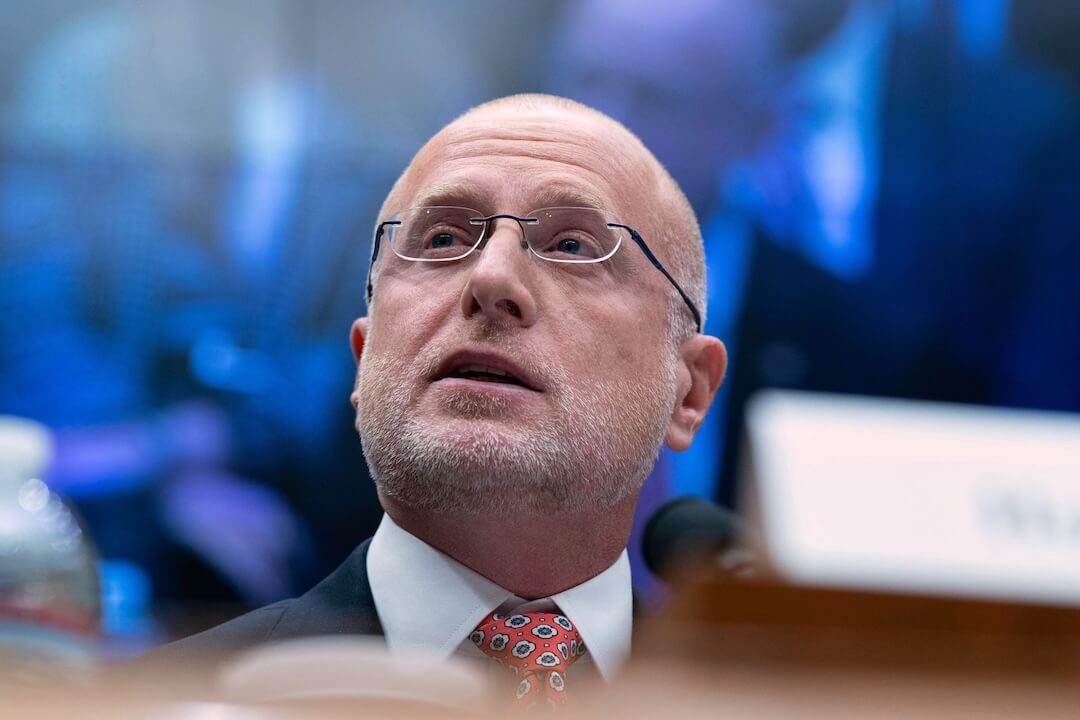
The FCC Just Erased the 39% Limit on How Much of America One TV Company Can Reach. The Vote Was 2-1
Chairman Brendan Carr and Commissioner Olivia Trusty repealed a national broadcast ownership cap that had stood since 2004. Anna Gomez dissented, saying the agency wants power, not balance.

The Federal Communications Commission voted 2-1 along party lines on Thursday to repeal the national broadcast television ownership cap, the rule that since 2004 has barred any single company from owning stations that reach more than 39% of U.S. television households.
Chairman Brendan Carr and Commissioner Olivia Trusty voted for the Report and Order. Commissioner Anna Gomez, the lone Democrat on the commission, dissented. In place of a fixed numerical ceiling, the FCC adopted a case-by-case review of acquisitions, station swaps and other transactions — meaning there is now no bright-line number a broadcaster can be told it has exceeded.
Carr argued the cap had been hamstringing an industry losing ground to national streaming platforms, and said lifting it would restore "a healthy counterbalance to the growing leverage of national programmers." The National Association of Broadcasters welcomed the vote, saying rules "adopted decades ago should not constrain local broadcasters' ability to invest in journalism." Gomez rejected that framing outright. "This was never about balance, because the FCC has no business balancing the ideological content of the news in the first place," she said. "What this commission wants is power."
The repeal formalizes something the agency had already been doing case by case. In March, the FCC's Media Bureau approved Nexstar Media Group's $6.2 billion acquisition of Tegna by waiving the national cap outright and requiring only six station divestitures within two years of closing. The combined company is set to own 265 stations across 44 states and the District of Columbia, with a presence in 132 of the country's 210 designated market areas. That approval was issued without a public vote of the full commission and drew criticism from members of both parties; a group of state attorneys general and DirecTV filed an antitrust suit seeking to block the deal. Sinclair, which has pushed for looser ownership limits so it can expand its own portfolio, urged the FCC to approve the Nexstar-Tegna transaction.
Legal challenges are expected, and Carr has said he would not be surprised if the order is appealed. The central argument against the repeal is statutory: critics contend Congress wrote the 39% figure into law in 2004 and that the FCC cannot delete a number the legislature set. Newsmax chief executive Christopher Ruddy has signaled his company may go to court.
What changes for viewers is not immediate. Nothing about Thursday's order alters a single broadcast schedule. What it alters is the ceiling on how much of the country a single owner's newsrooms can speak to at once — and whether that ceiling exists at all now rests on a case-by-case judgment call by a commission whose chairman has been explicit about wanting more consolidation, not less.