Alito, 76, Says Same-Sex Marriage Won't Be Overturned and He Isn't Retiring Yet
In a CBS News interview, the justice stood by Dobbs, said he feared assassination after the leak, and blamed Trump-era emergency appeals on a stalled Congress.
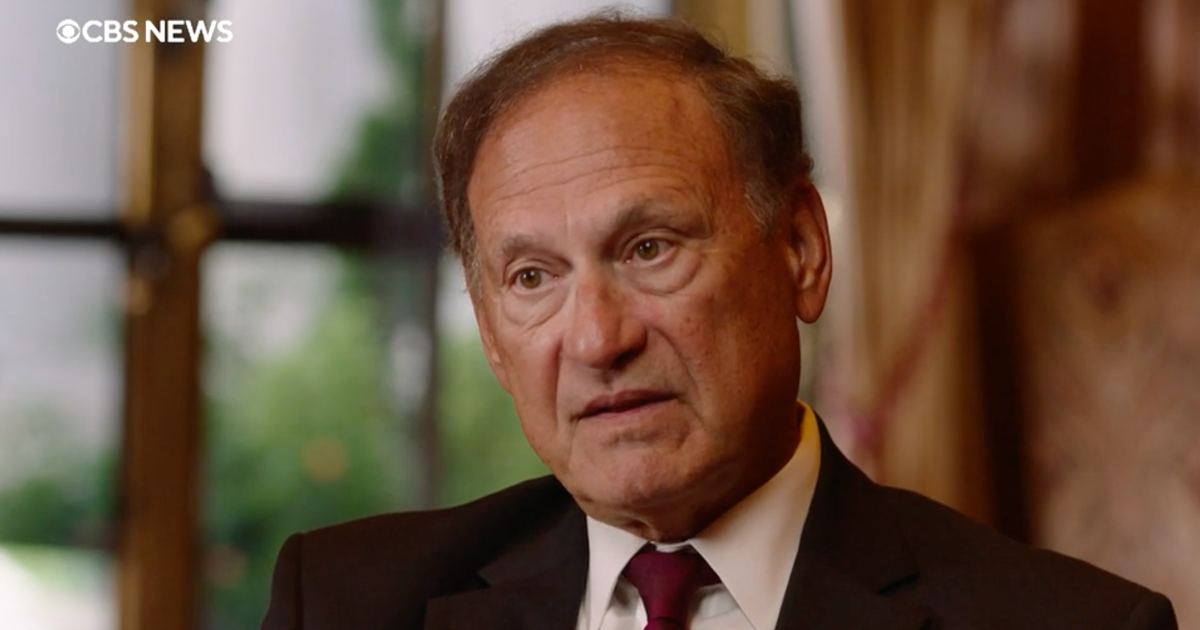
Justice Samuel Alito says there is no realistic chance the Supreme Court will overturn the right to same-sex marriage, that he does not regret writing the opinion that ended Roe v. Wade, and that he is staying on the court. The 76-year-old made the comments in an interview with CBS News chief legal correspondent Jan Crawford, recorded in his native New Jersey and released as the court prepares to open a new term.
On Obergefell v. Hodges, the 2015 decision Alito dissented from, he said it is settled. "I did not think that there was any realistic prospect that it would be overruled because of the passage of time and the developments in the country," he told Crawford. He drew a line between that case and Roe, arguing that people married, signed contracts and reorganized their lives around Obergefell, while Roe's effects were more abstract.
Alito said he has no regrets about Dobbs v. Jackson Women's Health Organization, the 5-4 ruling in June 2022. "No, not at all. It was a privilege to be able to write it," he said. "And I don't regret it, despite what it led to." He described the shock of learning in April 2022 that Politico had his draft opinion, when Chief Justice John Roberts told the justices at lunch. Within a short time, he said, he and the others in the majority realized that "this would endanger us. And it made us targets for assassination." Two months later a man armed with a gun, a knife and burglary tools was arrested near Justice Brett Kavanaugh's Maryland home after saying he meant to stop the ruling.
He also addressed the flag controversies that followed. An upside-down American flag flew outside his Virginia home and an "Appeal to Heaven" flag outside his vacation property, which critics tied to the January 6 movement. "My wife decided to fly a flag. I wasn't even aware of what she was doing until one of our police officers informed me," Alito said. He said he asked her to take it down and she eventually did. "I don't actually have the legal right to tell her what to do with a home that we own jointly," he said.
Alito called himself a "practical originalist" and said building a majority matters, but not at any price. "Getting to five is important. But you should not try to get a majority opinion if that means sacrificing something that is important," he said. In Dobbs, he said, he let justices write separate concurrences, because Clarence Thomas wanted to reexamine other precedents while Kavanaugh did not.
On the court's workload, Alito said emergency applications have "gone through the roof" in President Trump's second term. He blamed presidents' frustration with Congress. "They've said, 'Okay. I'm going to do everything that I can with my own power without needing any assistance from Congress,'" he said. Last term the court handled nearly as many emergency applications as full merits cases.
Asked about retirement, Alito said he thought about it earlier this year and decided against it. "I think I can still make a contribution," he said. He also spoke warmly about retired Justice Stephen Breyer, a friend across the ideological divide. Breyer told Crawford they can "be personal friends without always agreeing about legal results," though Alito acknowledged that outside pressures have strained the court's internal collegiality in recent years.