Justice Alito Drops Out of the Supreme Court's Big Climate Case, Raising a 4-4 Risk
A one-line letter Monday said Alito will not take part in the Exxon and Suncor fight with Boulder, Colorado, a week before arguments. He owns stock in two other oil companies.
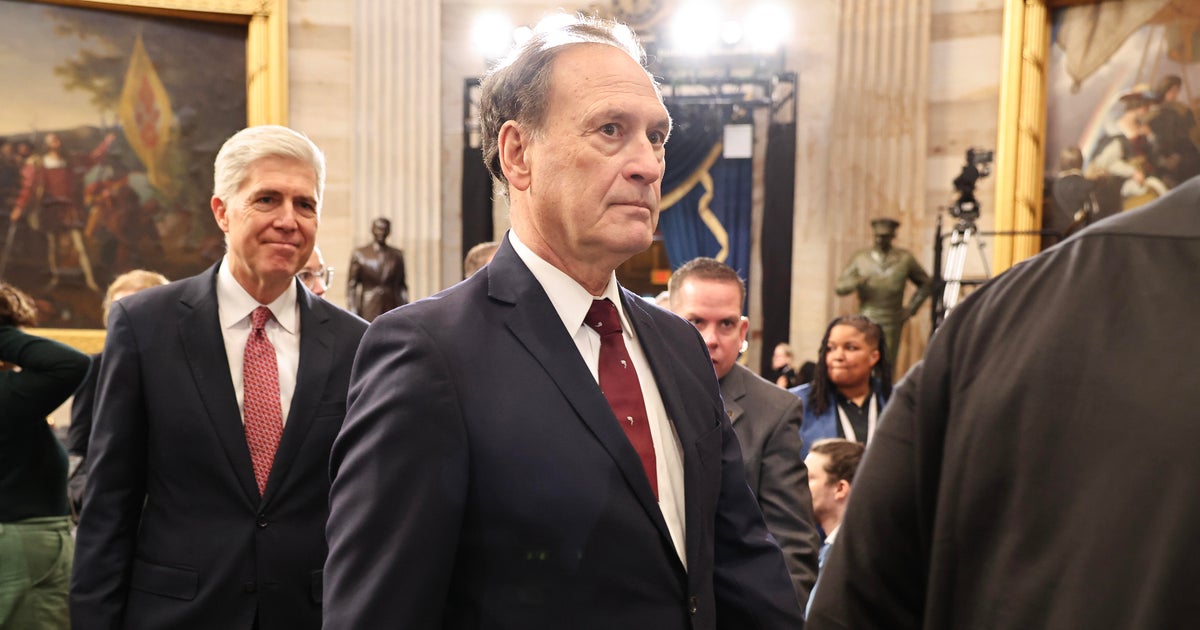
Justice Samuel Alito will sit out one of the most consequential climate cases ever to reach the Supreme Court, reversing his earlier position just a week before the justices hear arguments on the first day of their new term.
The court disclosed the move in a one-line letter dated Monday and signed by Clerk Scott Harris. "Justice Alito has determined that he will not continue to participate in this case," it said. No reason was given. Alito's 2025 financial disclosure shows he does not own stock in either defendant, Exxon Mobil or Suncor Energy, but he does hold shares in oil companies ConocoPhillips and Phillips 66 and in five other firms involved in the energy sector.
The case began in 2018, when the city and county of Boulder, Colorado, sued the two companies in state court. Boulder says Exxon and Suncor engaged in "unchecked production, promotion, refining, marketing and sale of fossil fuels" while hiding or misrepresenting the dangers, feeding a buildup of greenhouse gases that has warmed the air and oceans and driven extreme heat and bigger, more frequent wildfires. The local governments are seeking billions of dollars to cover property damage, emergency services, public health measures and the cost of adapting. Exxon is the nation's largest oil company; Suncor runs two refineries in Colorado.
The companies failed to move the case to federal court and then tried to have it thrown out, arguing the Clean Air Act and the Constitution bar Boulder's claims under state law. The Colorado Supreme Court let the suit proceed. The justices will now decide whether to stop it, and whether they even have jurisdiction to review the Colorado ruling. The answer could decide the fate of scores of similar suits filed by states and cities across the country, and the oil industry is hoping for a broad ruling that shuts them down.
Alito had previously told NBC News, through a court spokeswoman, that he saw no need to step aside. The court said then that he had no financial interest in any party and had been advised by the court's legal counsel that "his recusal is not required." Pressure built anyway. Earlier this month the advocacy group Consumer Watchdog pointed to shareholder disclosures in which ConocoPhillips and Phillips 66 warned of the risks they face from climate lawsuits like Boulder's, arguing Alito could benefit indirectly from a win for the defendants. "Justice Alito's recusal ... is the right decision, and one he should have made from the start," said Alexandra Nagy, the group's organizing director.
Alito had also recused in 2023, when the court turned away an earlier appeal in the same Colorado case and rejected similar appeals involving ConocoPhillips and Phillips 66. In May, a court spokesman described that step as an inadvertent recusal.
His absence changes the math on a court with a 6-3 conservative majority. With eight justices, a 4-4 split is possible, which would leave the Colorado ruling in place without resolving the national legal questions. Some conservatives have also urged Justice Elena Kagan to step aside over a climate chapter that was included in, and later pulled from, a reference manual for judges for which she wrote a brief foreword. Kagan has told lawmakers she never read the chapter.