Swiss Glaciers Lose 5.5% of Their Ice in 2026, the Second-Worst Melt on Record
Heat waves and a snow-poor winter stripped 2.2 trillion liters of water from the Alps between July and September. Only 2022 was worse.
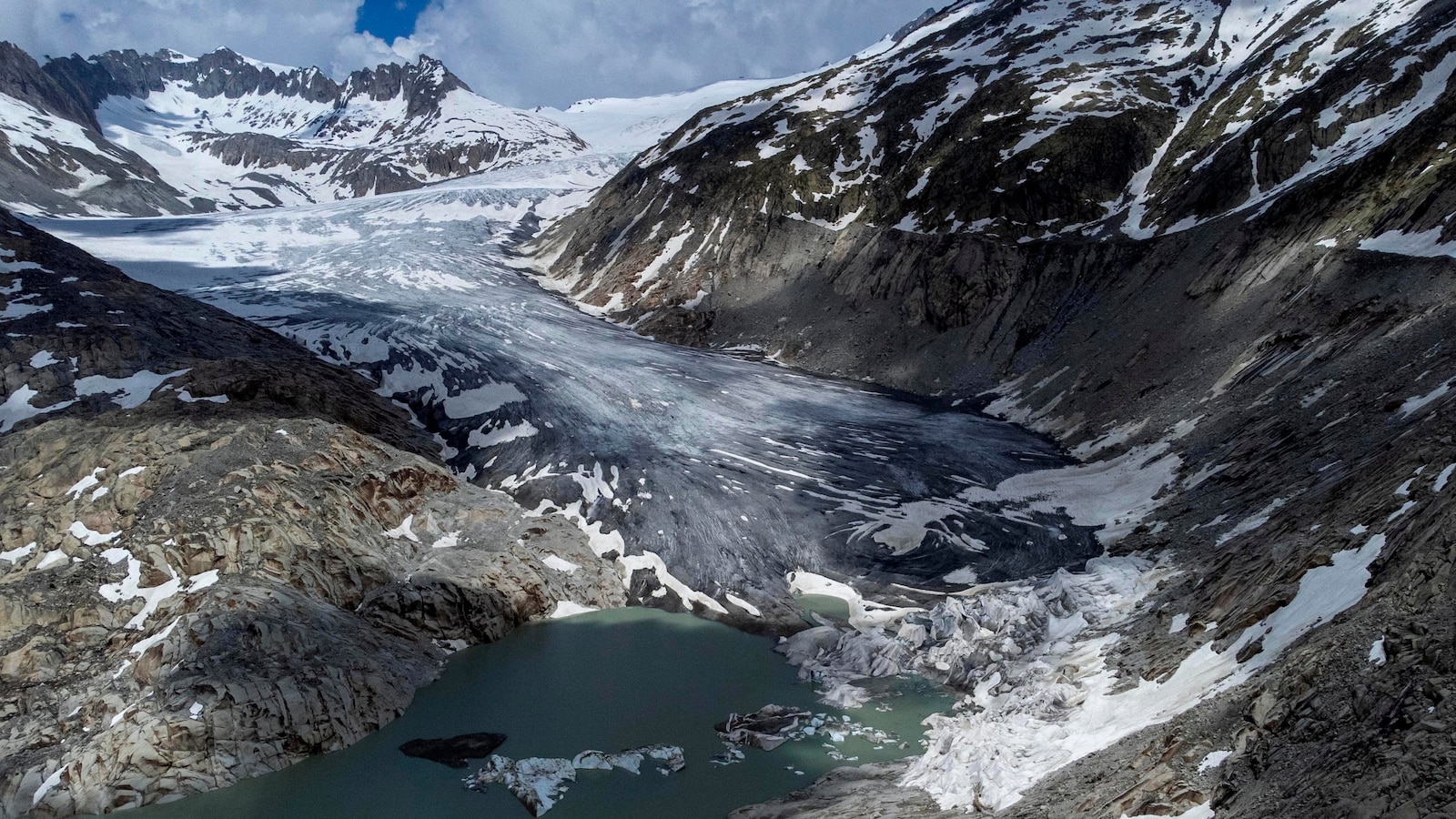
Swiss glaciers lost 5.5% of their ice volume in 2026, the second-largest percentage drop ever recorded, after heat waves and a winter with little snow left the Alps with almost no protection against summer sun, Swiss glacier monitors reported on Wednesday.
The only worse year was 2022, when Switzerland lost a record 6% of its glacier ice. Over the past five years, Swiss ice volume has fallen by nearly one-fifth.
Between July and September alone, 2.2 trillion liters of water, about 581 billion gallons, melted off. That is roughly four times the amount of water Switzerland's 9.1 million people use in a year. Individual glaciers thinned by 2.5 to 4 meters, or about 8 to 13 feet, on average, and the tongues of some lost as much as 10 meters, about 33 feet.
A mild winter left glaciers with less snow than normal, and the thin layer vanished quickly during early heat waves in May and June. Once bare ice is exposed it is darker and reflects less sunlight than fresh snow, so it absorbs more heat and melts faster, a feedback loop that sped up the loss. The Aletsch, Rhone, Allalin and Clariden glaciers saw record melting.
"The warming that we are experiencing now can be attributed 100% to anthropogenic climate change," said Matthias Huss of GLAMOS, the Swiss glacier monitoring network. Huss said it is "almost too late" to save the Alpine glaciers, though cutting emissions can still limit the loss from polar ice sheets and the sea-level rise that would follow.
The stakes reach well beyond tourism and postcards. Switzerland feeds the headwaters of major European rivers, including the Rhine, the Rhone, the Danube and the Po. The country also generates more than half of its electricity from hydropower, and glacier melt now supplies extra water in dry summers that will not be available once the ice is gone.
Short-term melt can actually raise river flows, which hides the problem. As the ice shrinks past a tipping point, flows eventually fall. Planners in the Alpine region are already looking at how to store water and how to manage floods and landslides when thawing permafrost destabilizes mountain slopes.
The 2026 figure, taken with the Greenland and Antarctic ice losses reported earlier this month, shows that melting is running ahead of the long-term trend. Switzerland's measurements are among the most detailed in the world, so the result is a reliable gauge of what is happening across the European Alps.