Climate Tipping Points Get Wildly Uneven Research, and Low-Threshold Ones Are Not Favored, Study Finds
A PNAS analysis of 20,736 papers found Greenland drew 20% of the attention while boreal permafrost thaw, with a similar 1.5C threshold, got 0.7%.
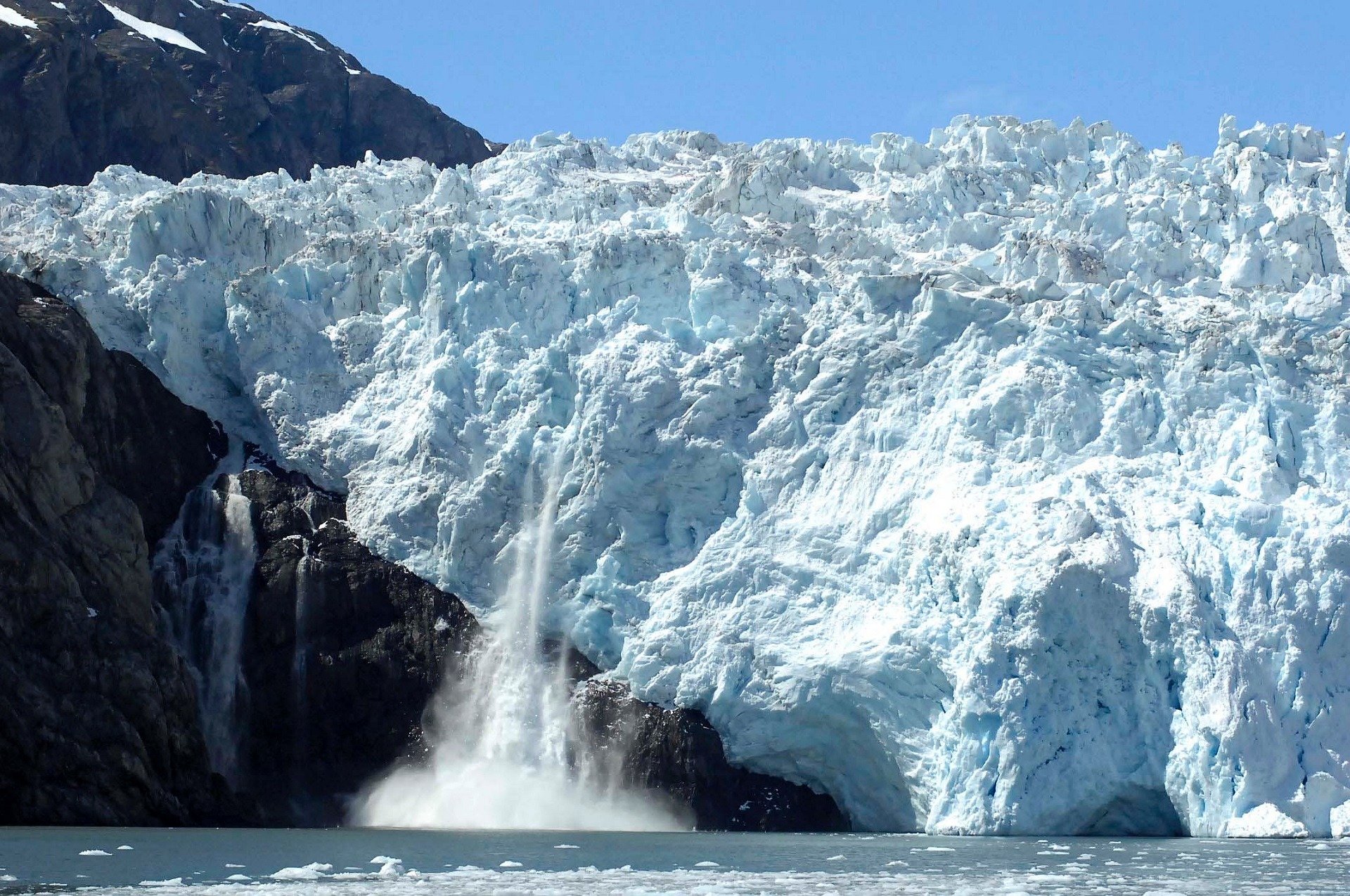
Scientists have studied some of the planet's potential climate tipping points far more than others, and the ones that may tip at the lowest warming levels are not getting extra attention, according to a new analysis in the Proceedings of the National Academy of Sciences.
The team, led by Heming Wang and including Asaf Tzachor, who described the work in The Conversation, examined 20,736 scientific publications on 14 climate tipping elements published between 2000 and 2025. Tipping elements are parts of the climate system that can change abruptly once warming pushes them past a threshold. They include the Greenland and Antarctic ice sheets, the Amazon rainforest, coral reefs and major ocean currents.
Greenland dominates the literature. It appeared in 4,141 publications, 20% of the entire data set. By contrast, abrupt thaw of permafrost in boreal forests just below the Arctic appeared in only 139 papers, or 0.7%. The North Atlantic subpolar gyre, a system of ocean circulation south of Greenland, accounted for 649 papers, or 3.1%. Barents Sea winter ice and the East Antarctic subglacial basins also drew comparatively little work.
Uneven numbers alone are not surprising, the authors note. Some systems have been observed longer, are easier to measure or model, or sit inside larger and better-established fields. The more revealing comparison was with the warming levels at which each system might tip. Abrupt boreal permafrost thaw has a best-estimate threshold of about 1.5 degrees Celsius above preindustrial temperatures. The subpolar gyre's is around 1.8 degrees, and Greenland's is also around 1.5. Yet the team found no systematic tendency for elements with lower thresholds to attract more research. Some get thousands of studies, while others with similarly low thresholds get hundreds or fewer.
The researchers also looked at what the studies examined. What makes a tipping point distinctive is that change can be abrupt, can reinforce itself, and can leave a system in a new state that persists even if the original pressure is eased. Only 8.1% of the publications explicitly examined one or more of those traits. Across 26 years, the team found just 22 peer-reviewed studies on such dynamics in abrupt boreal permafrost thaw and in low-latitude coral reefs, and 53 on the North Atlantic subpolar gyre.
The authors take care not to overstate the findings. A warming threshold is not a timer counting down to a known date, they write, and the estimates carry substantial uncertainty. The count of publications measures scientific attention, not certainty, study quality or the relative importance of one element over another. There are overlaps too: the subpolar gyre is closely linked to the Atlantic meridional overturning circulation, so some relevant work may sit inside the much larger body of AMOC studies.
Nor do they argue that researchers on Greenland or the AMOC should shift focus. Large research communities form for good reasons, such as the ability to monitor and model a system. But priorities are also shaped by funding programs, institutions and choices about where to build new monitoring capacity.
The practical message is aimed at decision-makers. For elements with low thresholds and little research, the authors say, extra studies could clarify what is known and which uncertainties matter most. "Which potentially consequential climate risks remain difficult to assess because comparatively little scientific attention has reached them?" they ask. The paper is "Uneven attention to climate tipping points," DOI 10.1073/pnas.2618666123.