The FCC Is Quietly Drafting a Ban on Chinese Optical Transceivers, the Parts That Move Data Inside AI Data Centers
Four people familiar with the effort told Reuters the administration wants to bar imports of new Chinese models of the devices that shuttle data over fiber inside data centers. China's Zhongji Innolight holds a 27% global share.
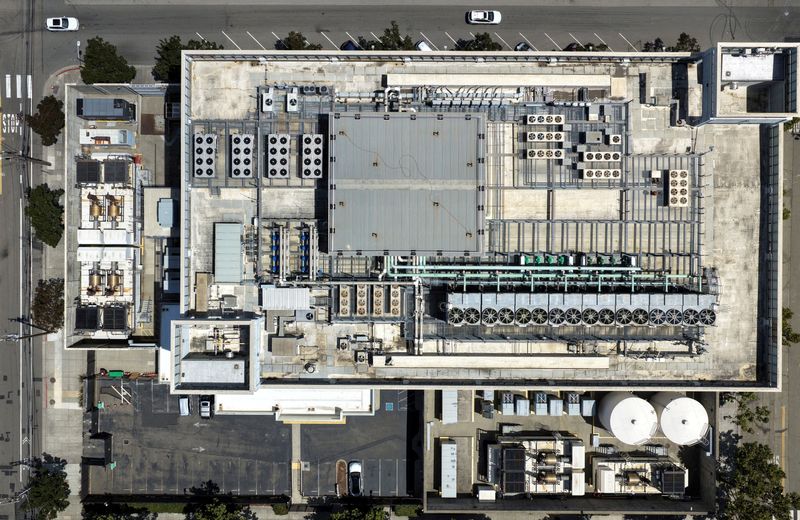
The Trump administration is drafting a ban on U.S. imports of new models of Chinese data center components, four people familiar with the matter told Reuters, in a move aimed at securing the physical infrastructure underneath the artificial intelligence boom before Chinese hardware becomes impossible to remove.
The Federal Communications Commission, which regulates the U.S. telecom industry, is writing the measure. It would bar imports of new Chinese optical transceivers — small devices that convert electrical signals to light and back, letting data move over fiber-optic cable at high speed between the racks of servers inside a data center. Officials hope to publish the rule this year, at which point it would take effect. The people spoke on condition of anonymity to discuss sensitive deliberations, and cautioned that the FCC could still modify or shelve the restriction.
The stated concern is that Chinese-made transceivers could be used to steal data, install malware or disrupt service at the American facilities that house the chips used to train and run AI models. "Transceivers definitely pose a risk," said Divyansh Kaushik, an AI policy expert at the Washington advisory firm Beacon Global Strategies. "As the data center buildout scales up, you want to make sure the data center supply chain is secure from the get-go."
Officials pushing the rule have a specific precedent in mind: Huawei. Telecom gear from the heavily sanctioned Chinese firm became so deeply embedded in U.S. networks that ripping it out proved slow, expensive and, in places, incomplete. The transceiver measure is an attempt to intervene earlier in the cycle, while the AI data center buildout is still under construction rather than already installed.
The company most exposed is Zhongji Innolight, one of the largest sellers of transceivers in the world, with a leading 27% share of the global data center transceiver market according to Counterpoint Research. Innolight was added in June to the Pentagon's list of alleged Chinese military-backed companies, a designation that has often preceded tougher action. The firm generates 90% of its revenue outside China, according to a report by the Foundation for American Innovation. Innolight did not respond to requests for comment.
Markets moved on the report. Shares of U.S.-based transceiver makers rose sharply: Lumentum gained 7%, Coherent 11% and Applied Optoelectronics 18%. But the same Foundation for American Innovation report notes that Coherent and Lumentum, while they sell competitive technology, lack the scale to replace Chinese vendors outright — which means a ban could raise costs for American cloud providers such as Amazon Web Services that would have to shift suppliers.
The Chinese embassy in Washington said Beijing urges the United States to "heed the objective and rational voices of the business communities in both countries" and to "stop smearing Chinese companies and threatening them with sanctions." It added that "China will take all necessary measures in response to any action that causes material harm to its interests." The White House and the FCC did not respond to requests for comment. The FCC has historically operated independently, but in June the Supreme Court upheld Trump's firing of a Democratic Federal Trade Commission member, expanding presidential control over certain regulatory agencies.
Originally reported by Reuters.