Octopus and Squid Genomes Were Scrambled in 3D Long Ago, Possibly Seeding Their Big Brains
A University of Vienna study in Nature Communications finds that ancient genome reshuffling pulled distant DNA together and created 'regulatory entanglement' around nervous-system genes.

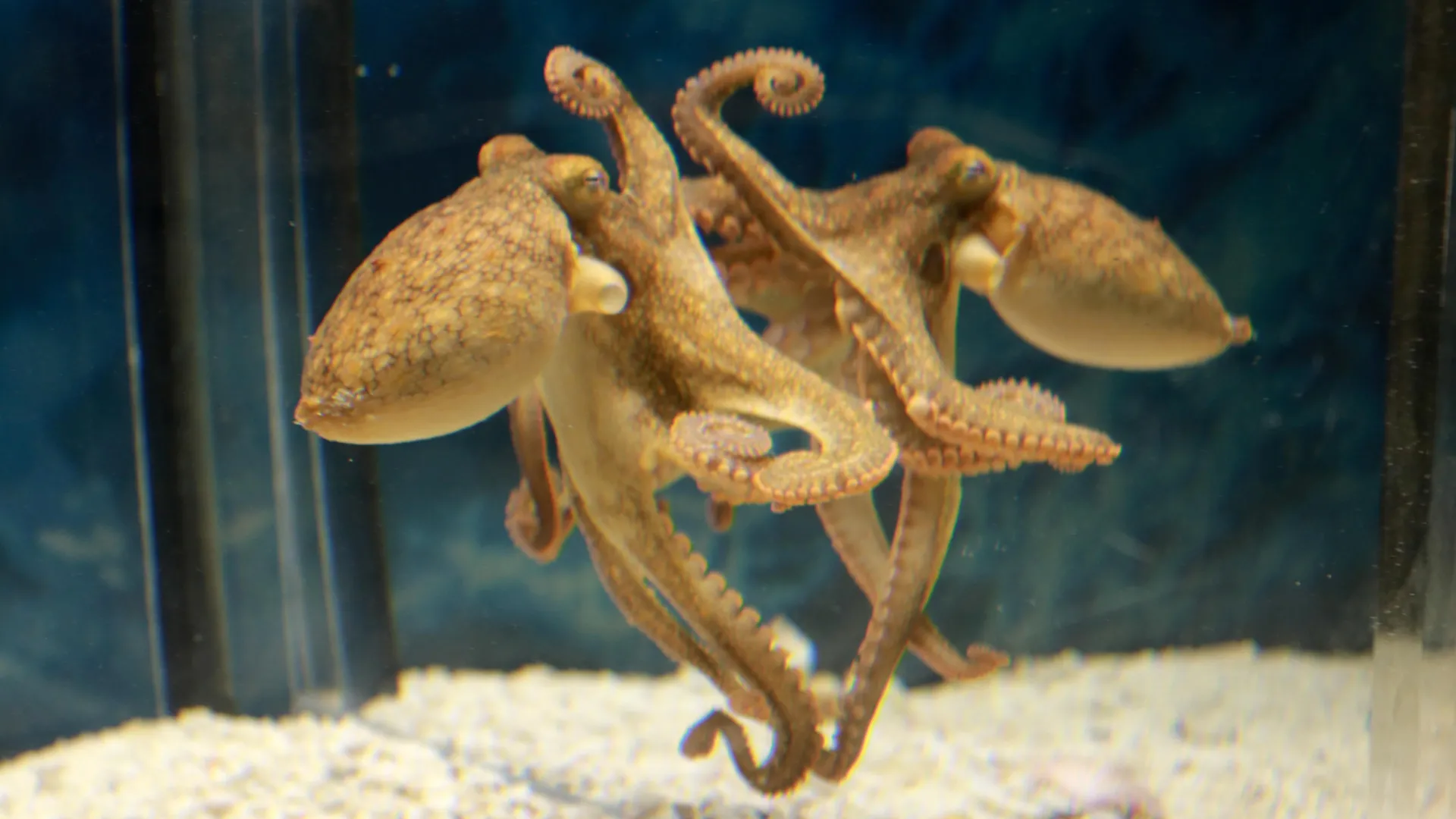
Octopuses, squid and cuttlefish have some of the largest and most elaborate nervous systems of any invertebrate, and they use them to solve problems and change their camouflage in an instant. A new study from the University of Vienna suggests the roots of that complexity may lie less in individual genes than in how their genome is folded in three dimensions.
The findings, published in Nature Communications, come from a team that mapped the 3D structure of the genome in octopuses, squid and cuttlefish, together known as coleoid cephalopods, and combined that map with data on gene activity. Their conclusion is that a massive burst of genome reorganization, which occurred hundreds of millions of years ago, changed how DNA is arranged inside the cell.
"The genome isn't just a sequence of genes. It's folded into a complex three-dimensional structure," said lead author Thea Rogers. "Understanding how that structure evolves is becoming increasingly important for understanding how new forms of biological complexity arise."
The reshuffling dramatically rearranged chromosomes and brought regions of DNA that were once far apart into close contact. When regions touch, they can begin to influence each other's activity. Over time, the researchers found, those interactions can become embedded, producing increasingly interconnected networks that control genes. They call the process "regulatory entanglement."
They argue that entanglement may help a genome strike a balance between innovation and stability. New patterns of gene expression can emerge, while the connections tying essential functions together make it harder for the system to be disrupted. It is a way of generating novelty without breaking what already works.
Not every layer of genome structure responded the same way. Large structural units known as chromatin domains stayed largely stable over evolutionary time. Finer-scale connections called chromatin loops, which bring distant stretches of DNA together, were far more dynamic. The loops varied widely across species, tissues and stages of development, and they were often found near genes involved in the traits that define cephalopods, including those linked to the nervous system.
The authors say the results challenge the idea that genome architecture is simply a passive consequence of evolution. Instead, they suggest the 3D organization of DNA can actively shape how evolution proceeds. In cephalopods, it may have played a key role in the emergence of their unusually complex nervous systems.
The paper is titled "Genome reorganisation and expansion shape 3D genome architecture and define a distinct regulatory landscape in coleoid cephalopods." The work does not prove that the folding caused the brains to evolve, and it studied living species rather than ancient ones. But it offers a concrete mechanism that could be tested in other animals, and it adds to a growing body of research showing that where genes sit in space matters as much as what they say.