Galápagos Giant Daisies Evolved the Same Leaf Four Separate Times — Using Four Different Sets of Genes
A genomic study of Scalesia plants shows evolution reaching an identical solution again and again by completely different routes, complicating a long-held assumption about repeatability.
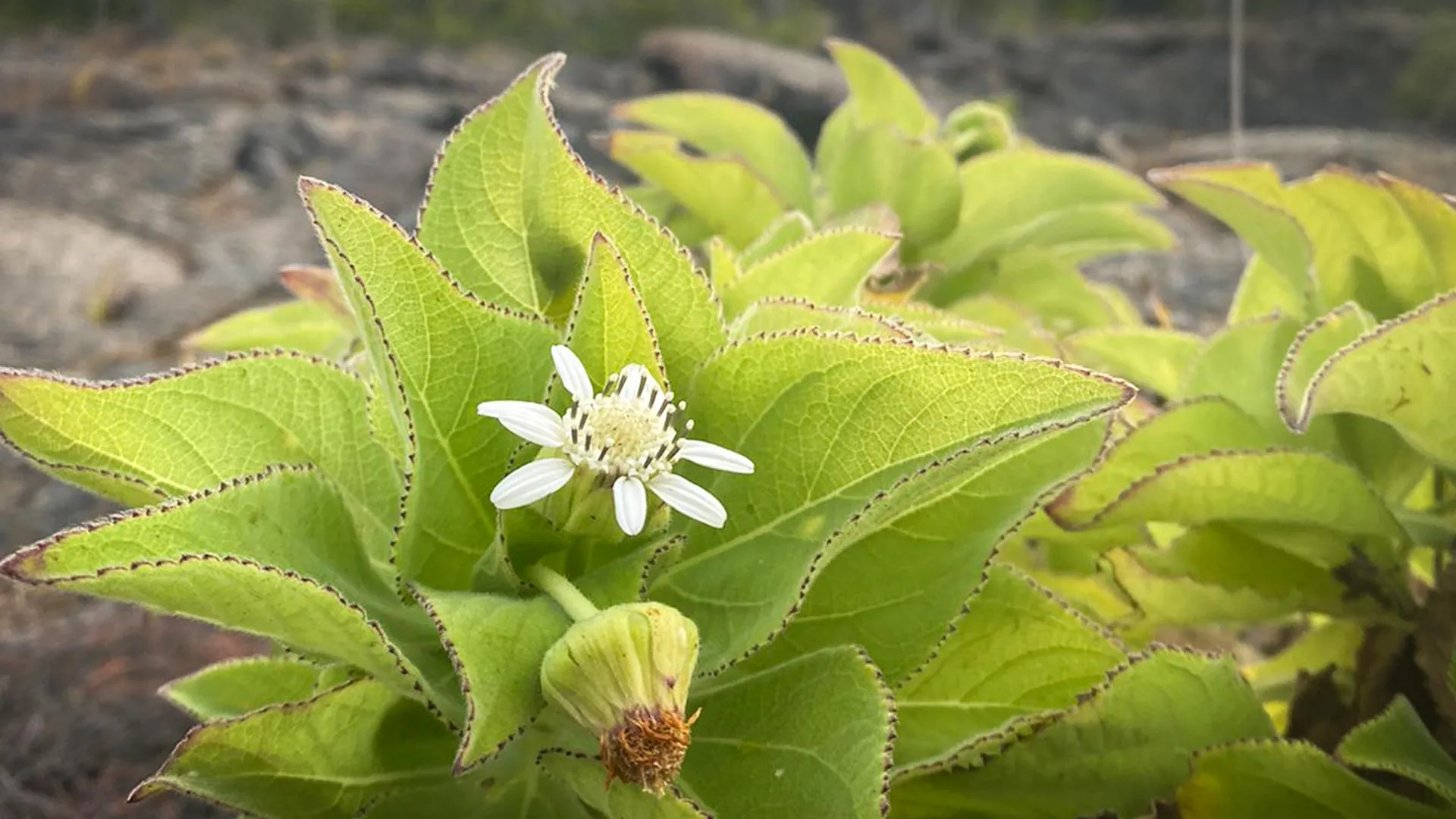
On the Galápagos Islands, a group of plants that Darwin would have recognized has done something that keeps turning conventional evolutionary thinking on its head. Giant daisies in the genus Scalesia repeatedly evolved the same heat-tolerant leaf shape on different islands — and each time, a different set of genes did the work.
The finding comes from a genomic study led by the Norwegian University of Science and Technology and published in Nature Communications. Researchers sequenced Scalesia lineages across the archipelago and mapped which stretches of DNA were responsible for the deeply lobed, finely divided leaves that let the plants shed heat in the islands' arid lowlands. Where separate populations had arrived at nearly identical leaf architecture, the underlying genetic machinery did not match.
That distinction matters more than it sounds. Biologists have spent decades debating whether evolution is repeatable — whether, if you rewound the tape and played it again, life would find the same answers. Scalesia says yes and no at once. The outcome is repeatable; the mechanism is not. Nature keeps arriving at the same destination without retracing its steps.
Scalesia is often called the Galápagos equivalent of Darwin's finches, and for the same reason: a single colonizing ancestor fanned out into many species occupying very different niches, from humid highland forest to bare lava fields. Some grow into trees more than 15 meters tall. Because the islands differ sharply in age, elevation and rainfall, the group offers something close to a controlled experiment in adaptation running in parallel across a dozen landmasses.
The research team was unusually large and international, spanning institutions in Norway, Denmark, Australia, Spain, Ecuador, the United States and Canada, with authors including Vanessa C. Bieker, Siyu Li, José Cerca, Patricia Jaramillo Díaz, Rasmus Nielsen, M. Thomas P. Gilbert, Loren H. Rieseberg and Michael D. Martin. Their paper, "The genomic basis of adaptive leaf variation in the Galápagos giant daisies," appears in volume 17 of Nature Communications.
For conservation, the result carries a practical edge. Several Scalesia species are endangered, squeezed by invasive blackberry, introduced goats and agricultural clearing. If adaptive traits in different populations rest on different genes, then each population holds genetic solutions the others do not — meaning a lost population is not interchangeable with a surviving one, even when the two look alike.
The work also sharpens a tool. Parallel evolution has usually been studied in animals with well-mapped genomes, such as stickleback fish or anole lizards. Doing it in plants, at the scale of a whole island radiation, gives researchers a second independent test of how often evolution reuses the same genetic parts — and the answer here is that it often does not bother.
Originally reported by ScienceDaily.