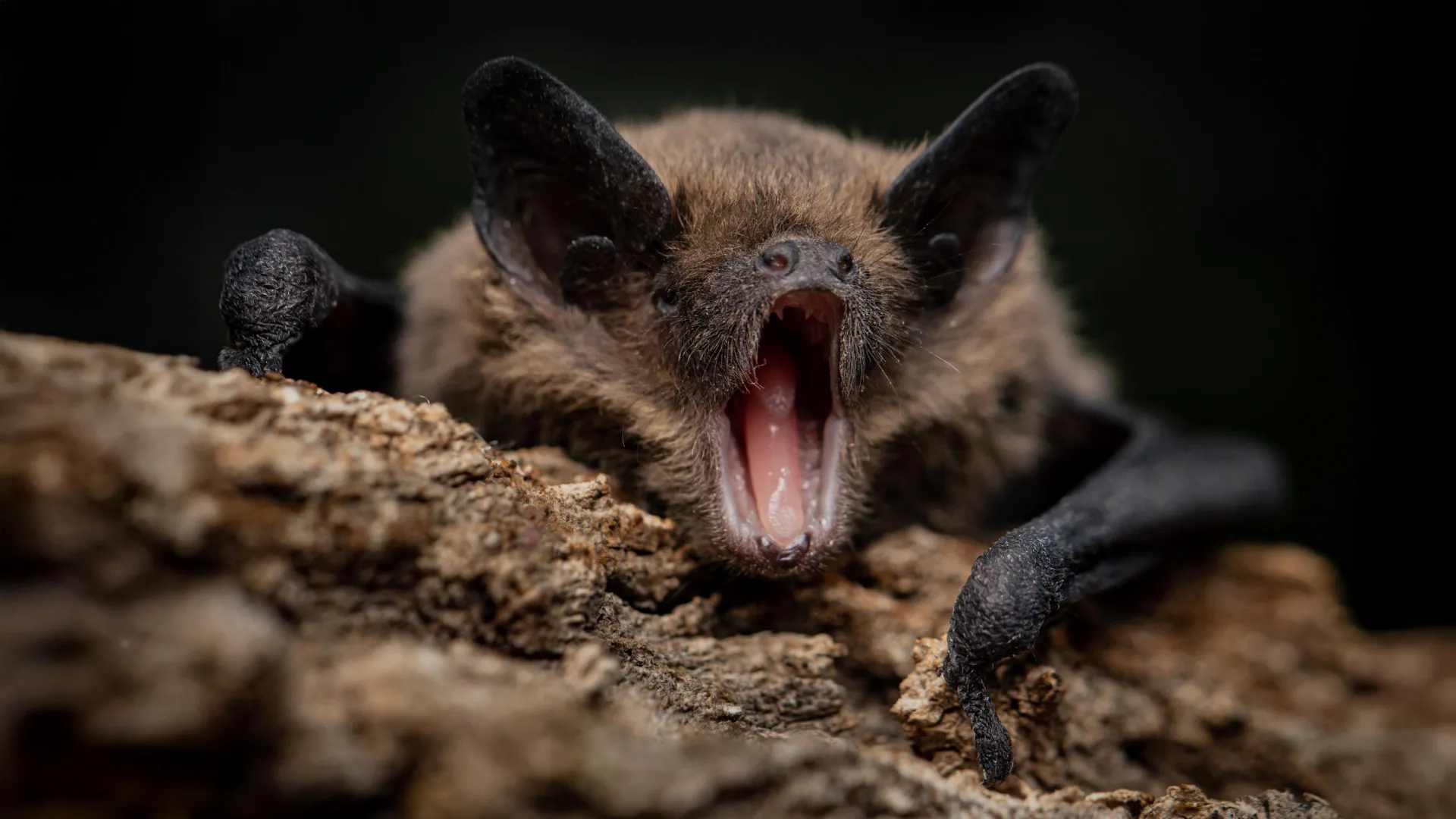
Bats Began in Europe 65 Million Years Ago, and Echolocation Came With Them, Nature Study Finds
A 137-scientist team combined genomes from 103 species with 44 fossils to redraw the bat family tree, overturning earlier theories of an African, Asian or North American origin.

Bats first evolved in Europe about 65 million years ago, in the aftermath of the mass extinction that ended the dinosaurs, according to the largest genomic study of the group to date, published in the journal Nature.
The work was led by Professor Liliana Davalos of Stony Brook University and carried out through the Bat1K consortium, a global effort to sequence the genomes of all living bat species. It involved 137 researchers from 64 countries. The team assembled high-quality genomes for 103 bat species covering all 21 recognized bat families and combined them with an analysis of 44 fossil bats.
The results overturn earlier ideas that bats arose in Africa, Asia or North America. After appearing in Europe, bats spread to Africa, and a Europe-Africa hub then seeded their expansion around the world. Bats are now the second-largest group of mammals, found on every continent except Antarctica.
The study also addresses a long-running debate about when bats gained two of their defining abilities. Powered flight and echolocation evolved close together near the origin of the group, the analysis found. "Our analysis shows that the oldest branch of bats already had species that unambiguously echolocated," Davalos said.
A fossil named Vielasia was key to that conclusion. Its placement within the oldest bat lineage showed that echolocation predates the diversification of modern bats, which means biosonar was not a later add-on to flight in separate branches but an early part of the bat toolkit. The Nature paper rewrites the bat family tree and resolves several points on which earlier trees disagreed.
Combining genomes with fossils is what made the answer possible. Living species alone can suggest relationships but are poor at pinning down where and when lineages began, while fossils alone are incomplete. Putting the two together allowed the team to place ancient bats on the tree and estimate the timing and geography of their spread.
The genomic resource has uses beyond evolutionary history. Bats are known for unusual disease resistance and for long lifespans relative to their size, traits that researchers believe could inform human health work on aging and immunity. Having reference genomes for every bat family gives scientists a map of where to look for the genetic changes behind those traits, and the early origin of echolocation gives them a clearer timeline for when the underlying adaptations arose.
The finding also fits the timing of the post-extinction recovery. When the asteroid impact wiped out the non-avian dinosaurs, many ecological niches opened to small mammals, and a flying insect-hunter with built-in sonar was well placed to fill the night sky. The study suggests bats had both tools from almost the start, which helps explain how quickly they spread across continents.