More Than 500 Bat Species Carry Two Complete Antibody Toolkits. No Other Mammal Has a Spare
Tulane researchers found that vesper bats have two separate sets of immunoglobulin heavy-chain genes, an arrangement never before documented in a mammal. It may be part of why bats host viruses that would kill us without getting sick themselves.
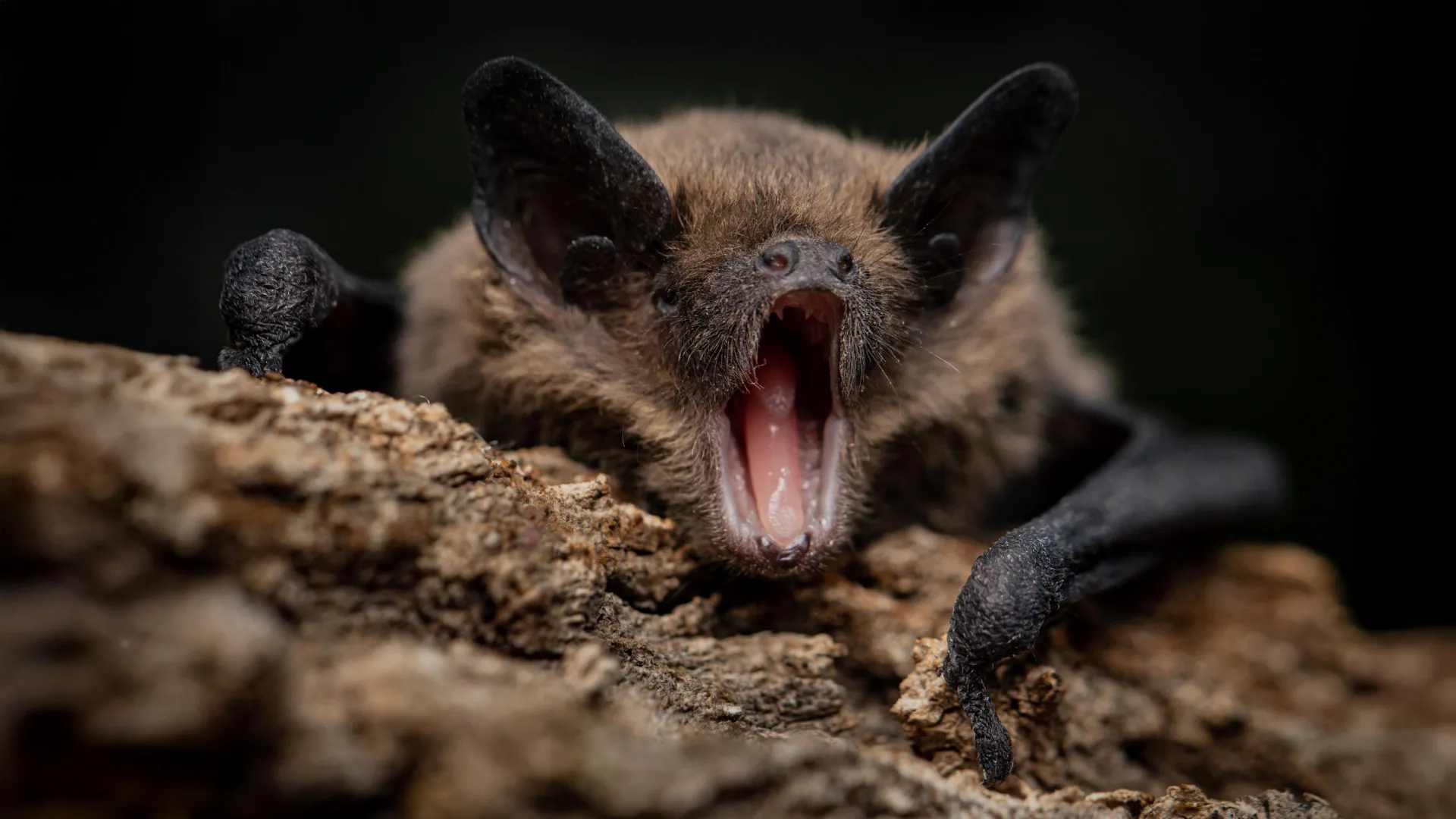
Bats are the standing puzzle of infectious disease biology. They carry a long list of viruses that are lethal in other mammals, they carry them at high prevalence, and they mostly do not appear to get sick. Explanations have piled up over two decades — unusual inflammation control, quirks of flight metabolism, a permanently primed antiviral response — without settling the question. A study published Thursday in Science Advances adds a structural one that nobody was expecting, because it concerns the part of the immune system textbooks treat as fixed.
Researchers led by Tulane University, working with collaborators at Stanford University and the U.S. Centers for Disease Control and Prevention, found that vesper bats carry two separate sets of immunoglobulin heavy-chain genes. Those genes encode the backbone of antibodies, and every other mammal ever examined has exactly one set. Vesper bats are not a fringe group either: the family takes in more than 500 species, roughly a quarter of all bat diversity, including the little brown bats and big brown bats common across North America.
"We've never seen anything like this in a mammal before," said Hannah Frank, an associate professor of ecology and evolutionary biology at Tulane and the paper's corresponding author. "This completely changes our understanding." The paper — by Taylor Pursell, Ashley Reers, Artem Mikelov, Prasanti Kotagiri, Brandon Lam, James A. Ellison, Scott D. Boyd and Frank — carries the DOI 10.1126/sciadv.aeb6714.
The functional implication follows from how antibodies are built. An animal generates its repertoire by shuffling gene segments, so a second, independent set of heavy-chain genes is a second combinatorial deck to draw from. That could let vesper bats produce a wider variety of antibodies than a single-locus mammal can, which is precisely the sort of capacity that would help an animal live alongside a large and shifting population of viruses rather than fighting each one to a standstill. The study establishes that the duplicate system exists; it does not yet establish how the two sets divide labor during an actual infection.
That is the next question, and it has a practical edge. Understanding how a reservoir species tolerates a virus is directly relevant to predicting when that virus jumps into humans, since spillover risk depends heavily on how much virus a host sheds and for how long. It is also relevant in the other direction: an immune architecture that generates more antibody diversity than the mammalian standard is worth studying on its own terms, whatever it turns out to do for the bats.