Why Gold Never Tarnishes: Its Own Atoms Rearrange Into a Shield That Blocks Oxygen
Tulane researchers found that atoms on gold surfaces reorganize into protective patterns that cut oxidation by a factor of up to a trillion, explaining the metal's centuries-long luster.
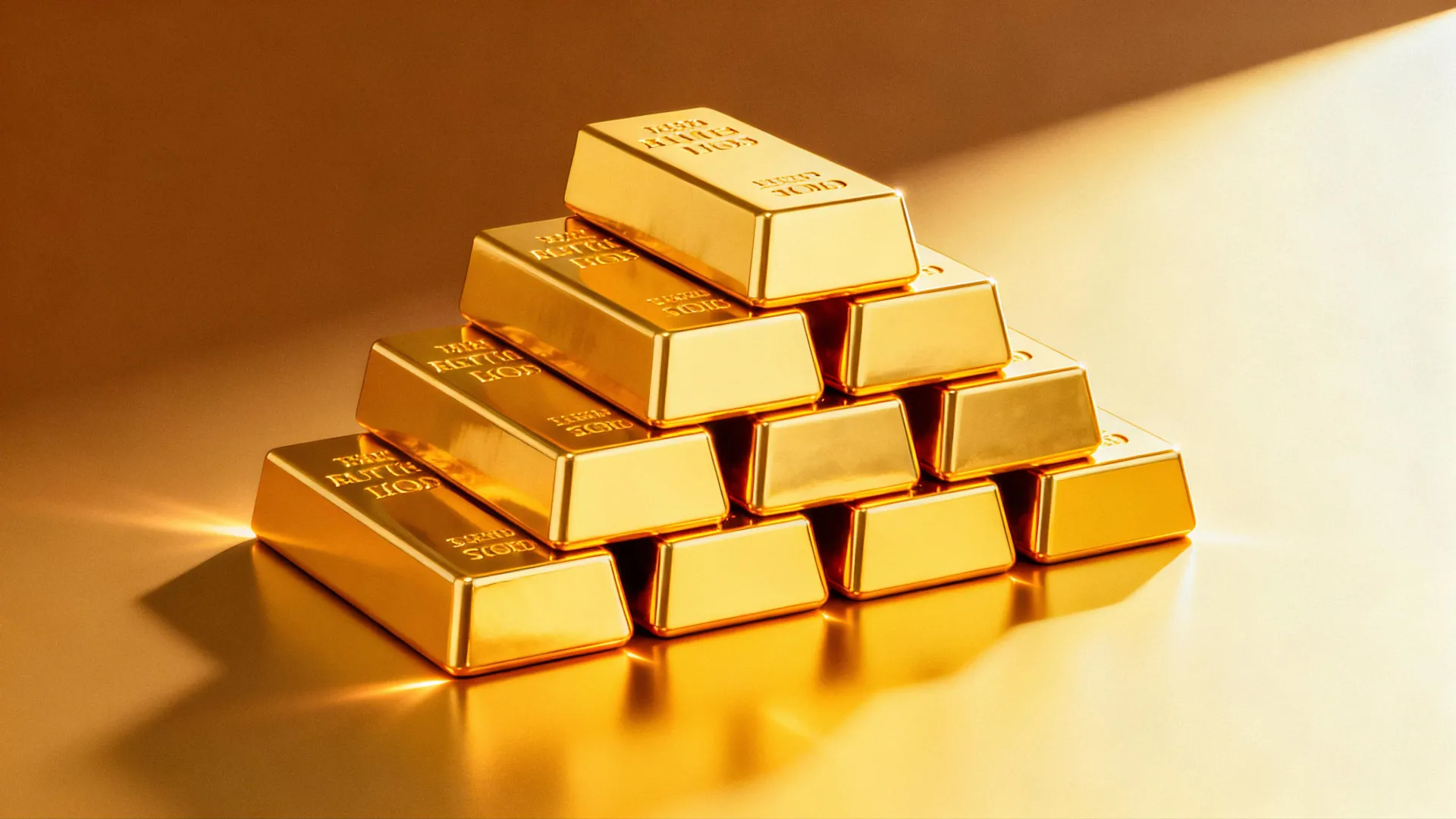
Gold coins pulled from ancient shipwrecks still gleam, and jewelry handed down for generations keeps its shine. Now researchers say they have pinned down the microscopic reason why: gold has a built-in self-defense mechanism in which its own surface atoms rearrange themselves into protective patterns that make it extraordinarily difficult for oxygen to attack the metal.
The finding comes from Tulane University's School of Science and Engineering, where associate professor Matthew Montemore and postdoctoral fellow Santu Biswas modeled how oxygen interacts with gold surfaces. They found that on two of the most common types of gold surface, the outermost atoms shift into a reconstructed arrangement that suppresses oxidation by a factor of roughly one billion to one trillion — in effect, an atomic-scale barrier that keeps the metal inert almost indefinitely.
"What we show is that for two of the most common gold surface types, the surface atoms actually rearrange themselves in a way that makes the gold much more resistant to oxidation," Montemore said. Without that rearrangement, the researchers found, oxygen molecules would break apart far more easily on the surface and go on to react with the gold. The reconstruction dramatically limits those reactions, denying oxygen the foothold it needs.
The work was published in the journal Physical Review Letters under the title "Role of Reconstruction in the Inertness of Gold toward Oxygen." The study addresses a puzzle that has quietly persisted for well over a century: chemists have long known that gold resists corrosion, but a precise, quantitative account of why its surfaces stay so stubbornly unreactive had remained elusive. By treating the surface reconstruction as the key variable, the Tulane team put hard numbers on just how powerful the effect is.
Beyond explaining the enduring sparkle of coins and jewelry, the results could have practical payoffs. Gold is a workhorse catalyst in chemical manufacturing and in emerging clean-energy technologies, where its surface chemistry governs how efficiently it can speed up reactions. Understanding exactly how and when gold surfaces reconstruct — and when that protective shield goes up — could help scientists design more effective, longer-lasting gold-based catalysts, tuning surfaces to be reactive where researchers want chemistry to happen and inert where they do not.
The study is a reminder that even a material as familiar as gold can still hold fundamental secrets, and that the answer to why something as ordinary as a ring never rusts lies in a restless, self-protecting dance of atoms too small to see.